Rectivas Materials · Flame retardant manufacturer and formulation partner sales@rectivas.com  ·  WhatsApp +86 180 3191 1520

Flame Retardant Additives for ABS

Rectivas supplies flame retardant ABS additives and masterbatch for ABS compounds. Compare halogen-free, halogenated, brominated, phosphorus-based, additive and masterbatch options for electronic housings, appliance parts, molded enclosures and UL94 V-0 / V-2 targets.

ResinABS · flame retardant ABS
SystemsBrominated · P-N · synergist
TargetsUL94 V-0 / V-2 · impact
FormsAdditive · ABS masterbatch
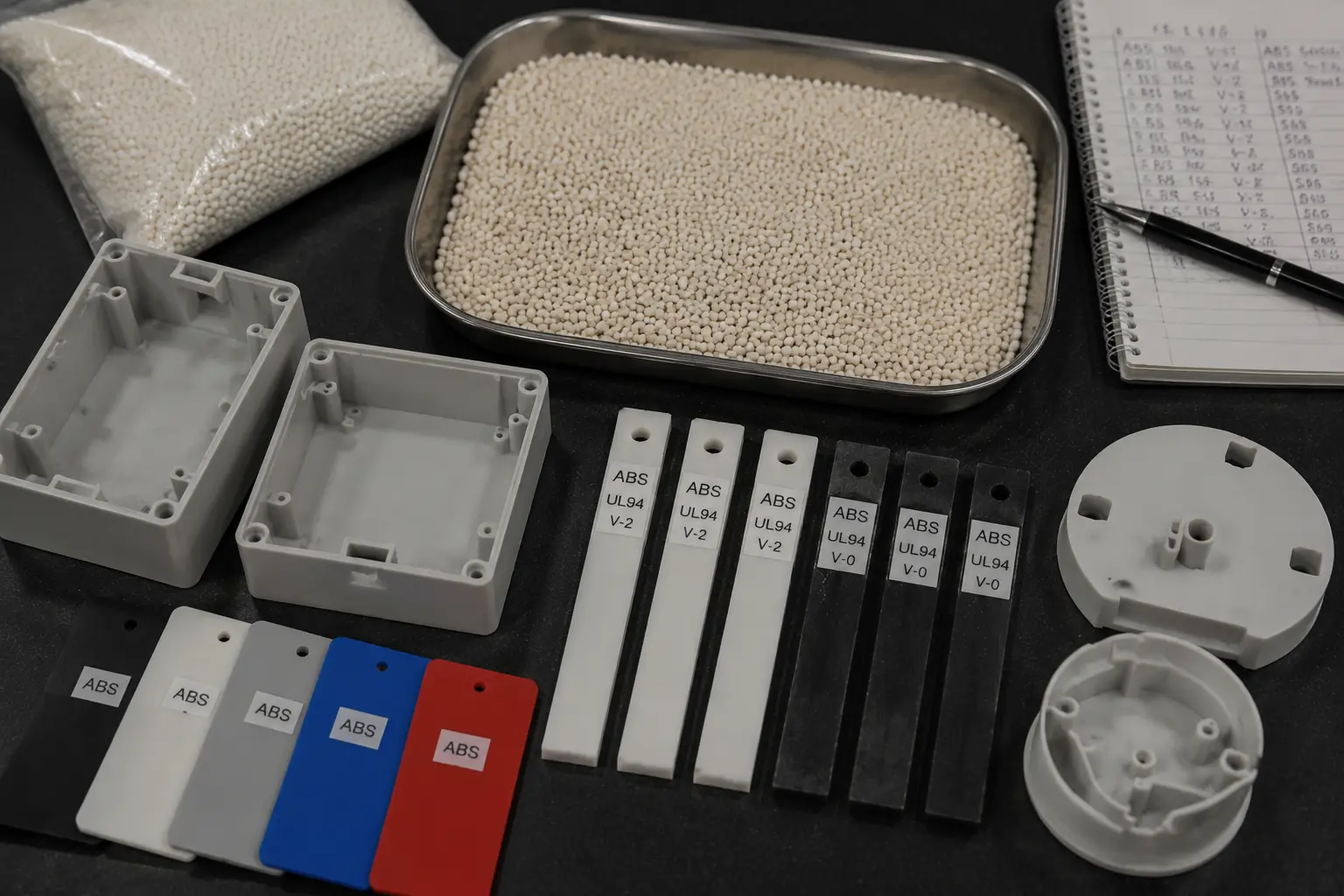
ABS flame retardant housing, color plaques and UL94 bars Fig. ABS01 — ABS flame retardant proof

Use a real image of ABS pellets, molded housing samples, UL94 bars, color plaques and impact test notes. The image should prove this page is specific to ABS, not a generic plastics page.

ABS selection
Resin — ABS compound
Goal — UL94 / impact balance
Form — additive / masterbatch
01 / 07Overview

Start ABS Flame Retardant Selection from UL94, Impact and Surface Requirements

ABS flame retardant selection is not only about passing a flame test. Electronic housings, appliance parts and molded enclosures also need impact retention, flow stability, color control, surface quality and compliance documents to match the buyer's end-use requirements.

Buyer use: choose ABS system direction before RFQ Search intent: ABS flame retardant application Next step: ABS additive or ABS masterbatch sample
ABS-01

For ABS Compounders

Use powder or blended flame retardant additives when you control ABS compounding recipes, active loading, impact balance, color and total cost internally.

  • Best for recipe control
  • Useful for UL94 V-0 / V-2 development
  • Requires dispersion and impact validation
ABS-02

For ABS Molders

Use ABS flame retardant masterbatch when cleaner dosing, pre-dispersion and simpler trial handling are more important than direct powder feeding.

  • Cleaner handling than powder
  • ABS carrier improves compatibility
  • Suitable for injection molding trials
ABS-03

For Halogen-Free ABS Projects

Use halogen-free ABS flame retardant directions when electronic or export buyers require non-halogenated chemistry, RoHS, REACH or restricted substance support.

  • Common for electronic housings
  • Requires ABS-specific validation
  • Often linked to UL94 and impact tests
ABS pellets, color plaques and UL94 barsFig. ABS02 — ABS pellets, color plaques and UL94 barsShows resin-specific ABS flame retardant testing.
ABS injection molding and housing samplesFig. ABS03 — ABS injection molding or housing samplesConnects ABS flame retardant selection to real molded-part conditions.
02 / 07ABS Matrix

ABS Flame Retardant Selection Matrix

Use this matrix to shortlist flame retardant additives for ABS before sample testing. Final selection depends on ABS grade, part thickness, target UL94 rating, color, impact strength, heat resistance, molding flow and compliance needs.

Coverage: ABS housings · appliance parts · electronic enclosures · ABS masterbatch Buyer value: fast ABS first-screen before samples Validation: final choice depends on testing
ABS RequirementRecommended DirectionHalogen-FreeHalogenatedTypical TargetsProcessing NotesBest Next Page
ABS electronic housingBrominated, phosphorus or compounded flame retardant systemAvailableCommonUL94 V-0 / V-1 · surface qualityCheck color, gloss, flow, warpage and impact strengthAdditives
ABS appliance partsBalanced additive package for flame rating and mechanical retentionAvailableAvailableUL94 V-0 / V-2 · impact retentionConfirm heat aging, odor, color and processing windowMasterbatch
Black ABS molded partsCost-effective halogenated or synergist-supported system where acceptedOn requestCommonV-0 / V-2 · stable moldingColor is easier than light shades, but impact and surface still need testingAdditives
Light-colored ABSLow-discoloration flame retardant package with careful heat stabilityAvailableAvailableUL94 · color stabilityCheck yellowing, heat exposure, plate-out and pigment compatibilityHalogen-free
ABS masterbatch trialABS carrier masterbatch with pre-dispersed flame retardant packageProject-specificAvailableFast trial · clean dosingConfirm carrier compatibility, let-down ratio and injection molding temperatureMasterbatch
Halogen-free ABSPhosphorus or phosphorus-nitrogen direction adjusted to ABSCore directionNot preferredUL94 V-0 · RoHS / REACH supportBalance loading, flow, impact, heat resistance and colorSystem comparison
Cost-sensitive ABSBrominated or synergist-supported package where acceptedOn requestCore optionUL94 V-0 / V-2 · cost balanceConfirm customer restrictions, smoke, odor and regulatory documentsAdditives
03 / 07Form Choice

ABS Flame Retardant Additives or ABS Masterbatch?

For ABS, the form decision depends on whether the buyer controls compounding or needs a production-friendly pellet concentrate. ABS compounders often prefer additives, while molders may prefer ABS flame retardant masterbatch for clean trials and simpler dosing.

Choose ABS Flame Retardant Additives When...

You need direct formulation control, active loading adjustment, color tuning or integration into an existing ABS compounding recipe.

  • ABS compounders with extrusion and formulation capability
  • Projects that need UL94, impact and flow adjustment
  • Cost, color, heat resistance and mechanical properties need close tuning
  • View flame retardant additives →

Choose ABS Flame Retardant Masterbatch When...

You need cleaner dosing, easier handling, better pre-dispersion and direct let-down on ABS injection molding or extrusion lines.

  • ABS molders without full powder premixing control
  • Projects that prioritize clean handling and dosing consistency
  • Applications where ABS carrier compatibility is important
  • View flame retardant masterbatch →
04 / 07System Choice

Halogen-Free or Halogenated Flame Retardants for ABS

ABS projects can use halogen-free or halogenated flame retardant directions depending on customer specifications, target flame rating, cost, color, impact retention and regulatory requirements. The right direction should be tested in the buyer's ABS grade and molded part thickness.

HF

Halogen-Free ABS

Common for export electronics or branded products where RoHS, REACH, non-halogenated chemistry and restricted substance lists matter.

LSZH

Phosphorus-Based ABS

Often considered for halogen-free ABS, but loading level, flow, heat resistance, surface appearance and impact strength must be validated.

HB

Halogenated ABS Systems

Brominated systems remain the most widely used efficient direction for ABS housings and E&E parts, usually paired with an antimony trioxide synergist, subject to customer and regulatory confirmation.

View brominated flame retardant options →
BAL

Balanced ABS Formulation

Most ABS projects need a balance of flame rating, impact strength, flow, color, surface quality, heat resistance and total cost.

05 / 07Selection

Information Needed for an ABS Flame Retardant Recommendation

A useful ABS recommendation requires more than the word ABS. Grade, part thickness, target UL94 rating, color, impact requirement, heat resistance, molding method and compliance needs all affect additive choice and loading level.

01ABS grade and MFI
02Injection or extrusion process
03Part thickness and geometry
04UL94 target and test thickness
05Impact and heat resistance limits
06Halogen-free requirement
07Color and surface requirement
08Flow, odor and plate-out limits
09Trial and annual demand
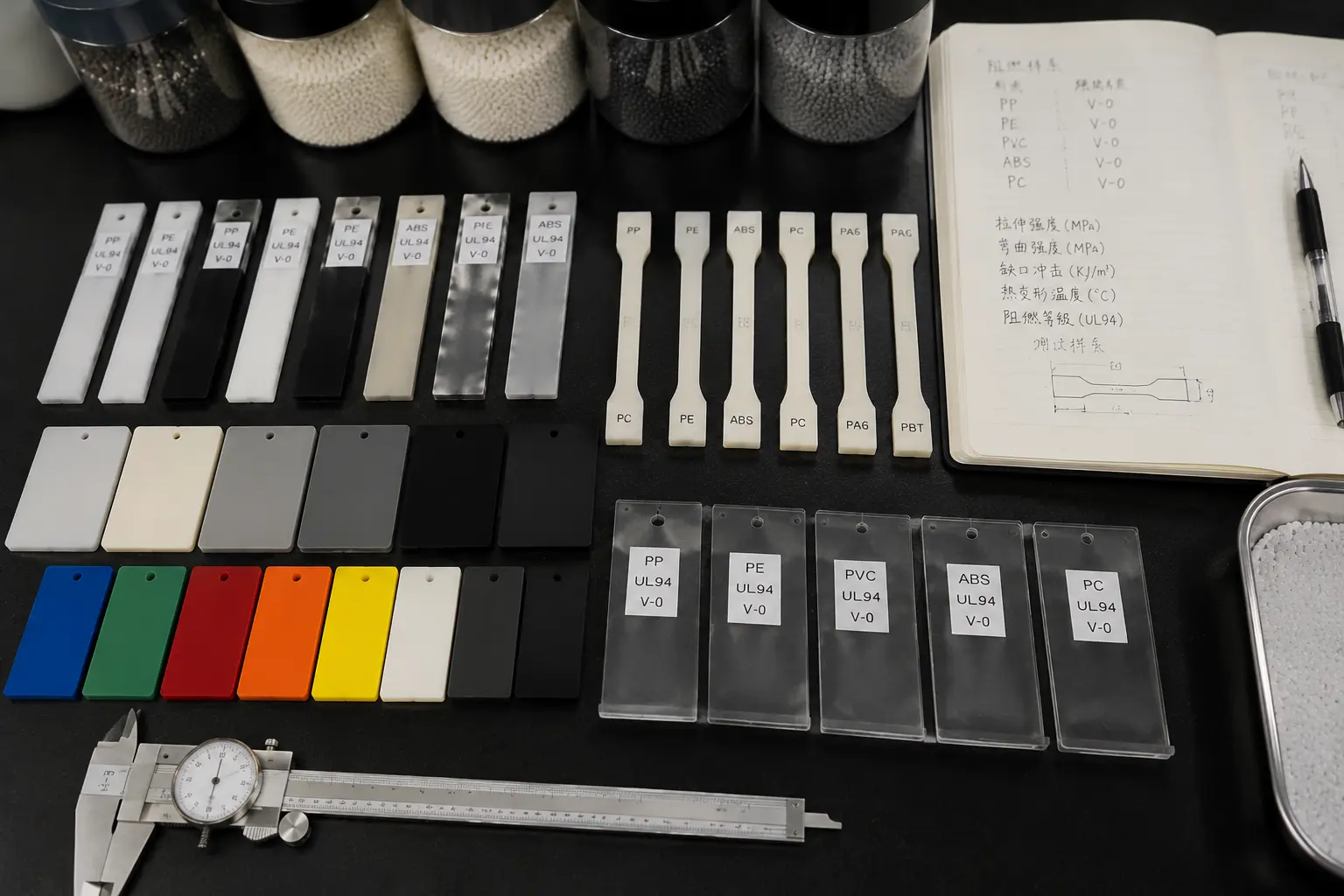
ABS UL94 vertical burn plaques and molded barsFig. ABS04 — ABS UL94 vertical burn plaques and molded barsSupports technical credibility for ABS flame rating and thickness validation.
ABS housings, pellets and sample bagsFig. ABS05 — ABS housings, pellets and sample bagsShows real ABS end-use and sample preparation scenarios.
07 / 07FAQ

Buyer Questions About Flame Retardant Additives for ABS

Direct answers help engineers and procurement teams compare ABS additives, ABS masterbatch, halogen-free systems and RFQ requirements before sample testing.

Which flame retardant additives are used for ABS?

ABS flame retardant systems may use brominated, phosphorus, nitrogen-phosphorus, synergist-supported or compounded additive packages depending on UL94 target, color, impact strength, flow, surface quality and compliance needs.

Should ABS use flame retardant additives or masterbatch?

ABS compounders often choose additives for formulation control, while molders and converters may choose flame retardant masterbatch for cleaner dosing, pre-dispersion and easier production trials.

Can ABS flame retardants be halogen-free?

Yes. Halogen-free ABS flame retardant systems can be considered when buyers need RoHS, REACH or non-halogenated requirements, but loading level, color, impact strength, heat resistance and molding behavior must be validated.

What information is needed for an ABS flame retardant recommendation?

Share ABS grade, application, molding method, target UL94 rating and thickness, color, impact and heat requirements, halogen-free or halogenated preference, additive or masterbatch form and expected trial volume.

Request an ABS Flame Retardant Recommendation

Send your ABS grade, application, target UL94 rating, part thickness, molding process and compliance requirements. We will recommend whether to start with ABS additives, ABS flame retardant masterbatch, halogen-free systems or halogenated systems.

Include in your inquiryFR-ABS-RFQ
  • ABS resinABS grade, MFI, recycled content, color and filler if any
  • ProcessingCompounding, injection molding, extrusion or molded housing trial
  • Target standardUL94 V-0 / V-1 / V-2, test thickness and end-use standard
  • RequirementHalogen-free, halogenated allowed, impact, heat, color and surface limits
  • Trial volumeSample quantity and expected annual demand