
 Français
 Deutsch
PP corrugated pipe
For conduit and corrugated pipe extrusion. Share the resin, smallest wall section, pipe construction and applicable conduit test.
Rectivas Materials sources flame retardant masterbatch through partner factories for plastics processors. Start with your base polymer and finished product, then match the carrier, concentrate and processing requirements. Send the application, thickness and required test method for grade review, sample selection and quotation.
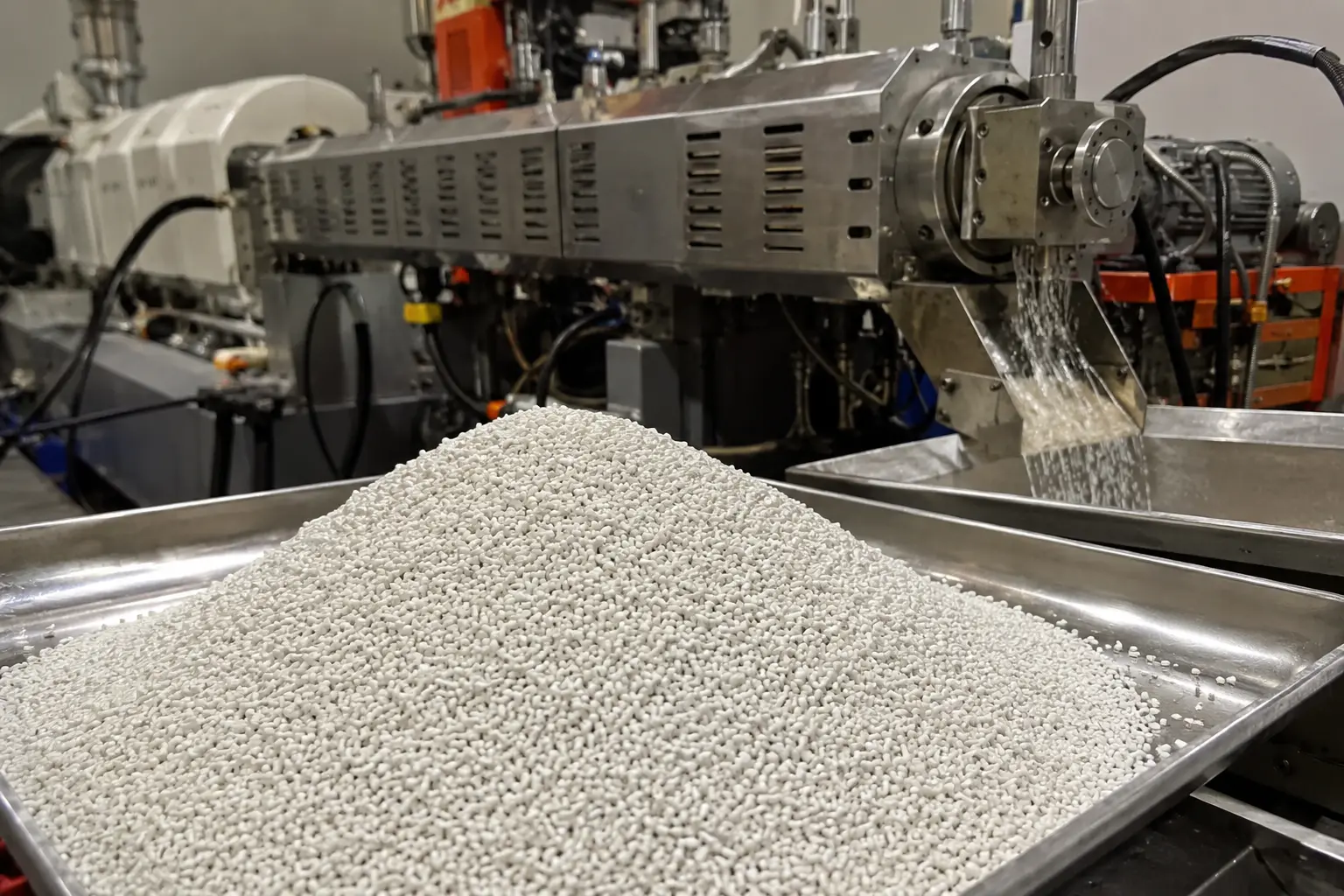 Fig. M01 — illustrative pellet and processing image
Illustrative application image; it is not evidence of Rectivas-owned equipment or a test result.
For a PP project, choose the finished-product route below. Each route needs its own processing review; a grade for a molded part is not automatically suitable for drawn yarn or nonwoven fiber.
For conduit and corrugated pipe extrusion. Share the resin, smallest wall section, pipe construction and applicable conduit test.
For process-specific spinning and fabric trials. Identify spunbond, meltblown or the relevant fiber route, basis weight and end-use requirement.
For filler yarn and rope manufacturers. Review drawing behavior, mineral filler content and the requirements of the cable construction.
For other projects, compare PP masterbatch options, PE masterbatch or halogen-free masterbatch. State the target polymer and application so the proposed carrier and chemistry can be reviewed together.
To request a sample: send the resin grade, current formulation, processing route, part thickness or product construction, color and named acceptance test. Include expected sample and order quantities. We confirm the candidate grade, available TDS/SDS and relevant test evidence, recommended trial conditions and quotation terms with the partner factory. Addition rate, minimum order and lead time are grade- and project-specific.
Flame retardant masterbatch is a pellet concentrate made by dispersing flame retardant additives into a compatible carrier resin. It helps buyers reduce dust, simplify dosing and improve consistency compared with direct powder handling.
Active flame retardant ingredients are compounded into a carrier resin to improve feeding, dispersion and repeatability on standard processing lines.
Carrier resin is selected according to the target polymer, processing temperature, compatibility, color and required mechanical performance.
Masterbatch can be dosed at the hopper by gravimetric or volumetric feeding, making it practical for extrusion, injection molding and conversion lines.
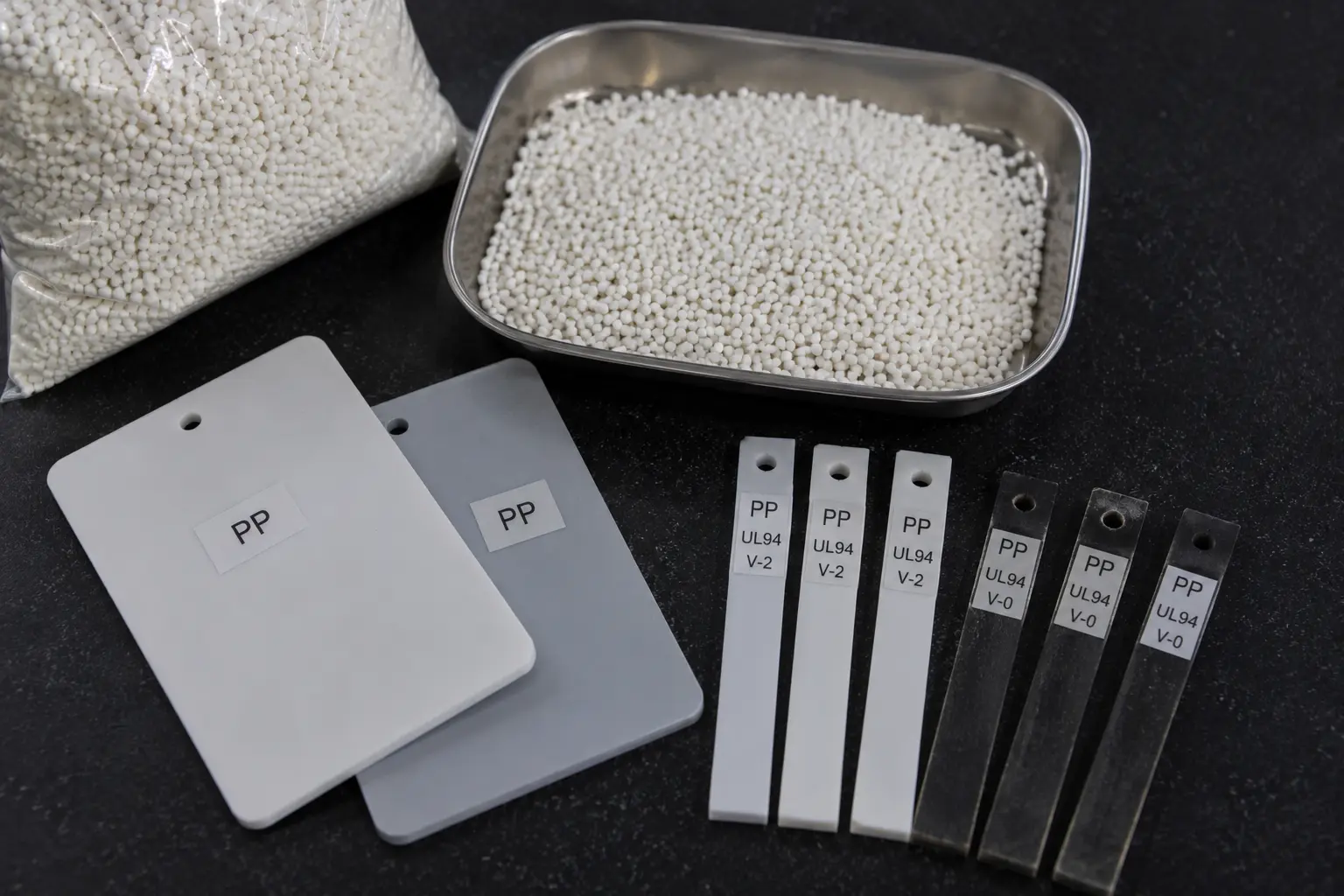 Fig. M02 — flame retardant masterbatch pellets in PP or PE carrierPellet form, carrier compatibility and low-dust handling.
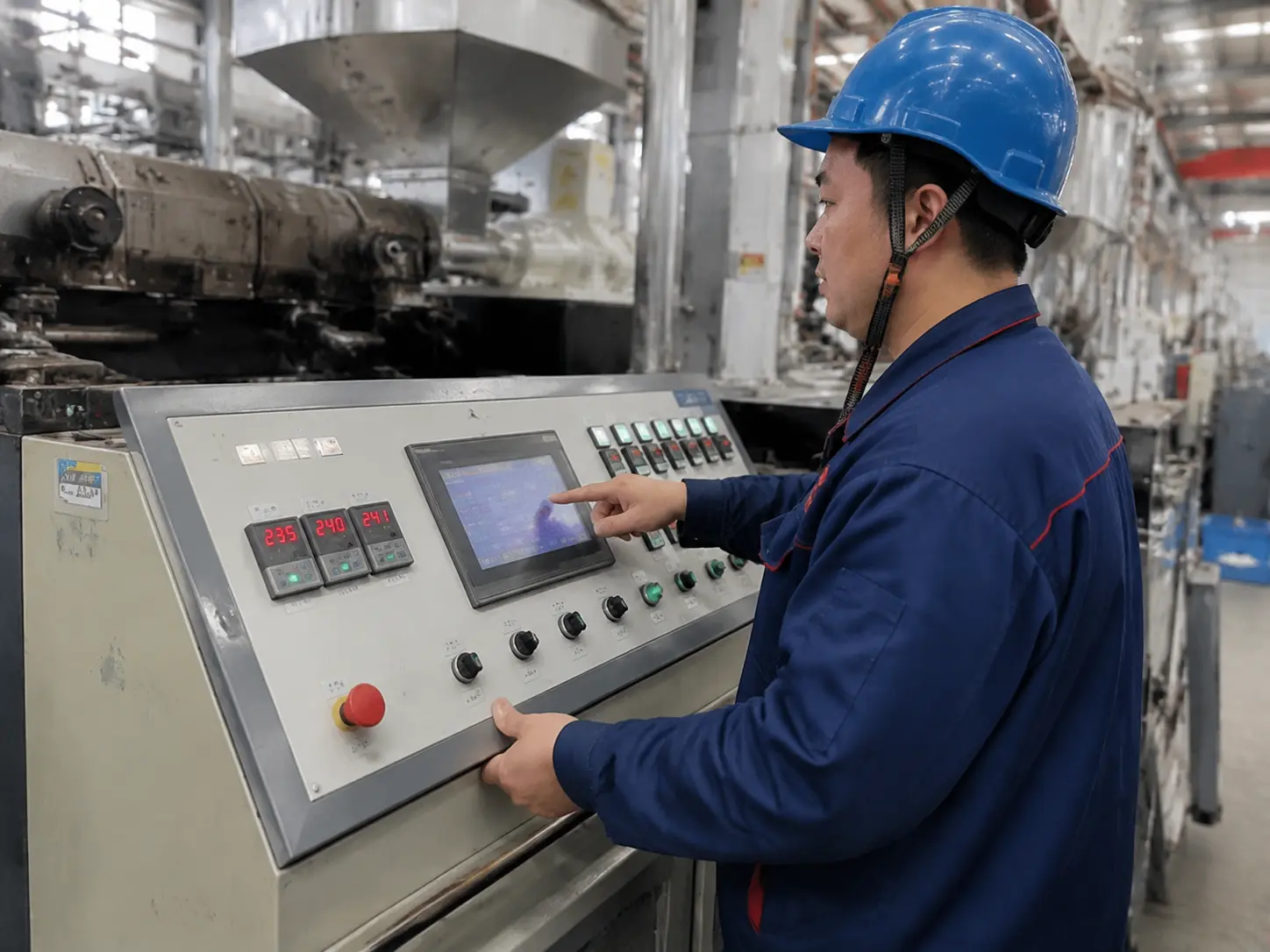 Fig. M03 — twin-screw compounding and pelletizing linePre-dispersion, compounding and scalable pellet production.
Masterbatch formulation should match both the flame retardant system and the carrier resin. The right direction depends on target polymer, flame rating, smoke requirement, compliance and processing temperature.
For low-smoke, RoHS/REACH-oriented and engineering plastic applications where halogen content must be avoided.
For applications where high flame retardant efficiency, cost control and direct dosing are important, subject to regulatory confirmation.
For selected polymers requiring efficient flame retardant performance, often combined with synergist systems and application-specific compliance checks.
For cable compounds and low-smoke applications where halogen-free performance, dispersion and mechanical balance need to be managed together.
Use this table as a first filter before sample testing. Flame retardant masterbatch polymers should be matched by base resin, carrier resin, let-down ratio, target flame rating and processing method.
| Polymer | Typical Masterbatch Direction | Common Carrier | System Options | Typical Targets | Processing Notes | Related Page |
|---|---|---|---|---|---|---|
| PP / Polypropylene | FR masterbatch for PP injection, sheet and extrusion applications | PP carrier | Halogen-free or halogenated | UL94 V-2 / V-0 · LOI 26–32 | Check dispersion, smoke and mechanical retention | PP masterbatch |
| PE / Polyethylene | FR masterbatch for PE extrusion, pipe, film and cable-related applications | PE / EVA carrier | Halogen-free, LSZH or halogenated | UL94 HB / V-2 · LOI 24–30 | Often linked to cable, pipe or film requirements | PE masterbatch |
| PVC | FR masterbatch for flexible or rigid PVC compounds | PVC-compatible carrier | Halogenated, low-smoke or custom | LOI 30–38 · low smoke | Confirm flexible/rigid PVC, plasticizer and smoke target | PVC masterbatch |
| PC / PC-ABS | FR masterbatch for PC and PC/ABS engineering plastics | PC-compatible carrier | Halogen-free or custom | UL94 V-0 @ 1.5 mm · heat resistance | Confirm heat resistance, color, transparency and UL94 thickness | PC / PC-ABS |
| PA / Nylon | FR masterbatch for PA6 / PA66 and reinforced compounds | PA carrier | Halogen-free or halogenated | UL94 V-0 · GWFI 960 °C | Confirm glass fiber, processing temperature and GWFI target | PA / Nylon |
| ABS | FR masterbatch for ABS housings and injection parts | ABS-compatible carrier | Brominated or custom halogen-free | UL94 V-0 / HB | Balance impact, color and injection molding stability | ABS application |
| LSZH Cable Compounds | LSZH flame retardant masterbatch for cable compounds | PE / EVA / POE carrier | Low-smoke halogen-free | IEC 60332 · low smoke zero halogen | Confirm cable standard, smoke density and mechanical needs | LSZH compounds |
Masterbatch is usually selected when buyers want cleaner dosing, better handling, easier feeding and more consistent dispersion on extrusion or injection molding lines.
You need maximum formulation control, direct compounding, flexible active ingredient adjustment or integration with an existing recipe.
You need cleaner dosing, easier handling, better pre-dispersion and direct let-down on extrusion or injection molding lines.
A useful recommendation requires more than a product name. Carrier resin, active loading, let-down ratio and processing conditions all affect final performance.
Working directly with the factories that produce our flame retardant masterbatch, we support carrier selection, compounding, pelletizing, sample trials, batch production, quality control and export packaging — with carrier compatibility and dispersion control confirmed before scale-up. See our flame retardant masterbatch manufacturer page for how production, OEM and RFQ are handled. When concentrate dosage, mixing limits or conversion costs make direct let-down impractical, consider a ready-to-mould flame retardant compound is usually the better economics — we supply both formats and will tell you which fits your line.
Fig. M04 — pelletizing line and finished FR masterbatch pelletsCompounding, pellet consistency and scalable masterbatch production.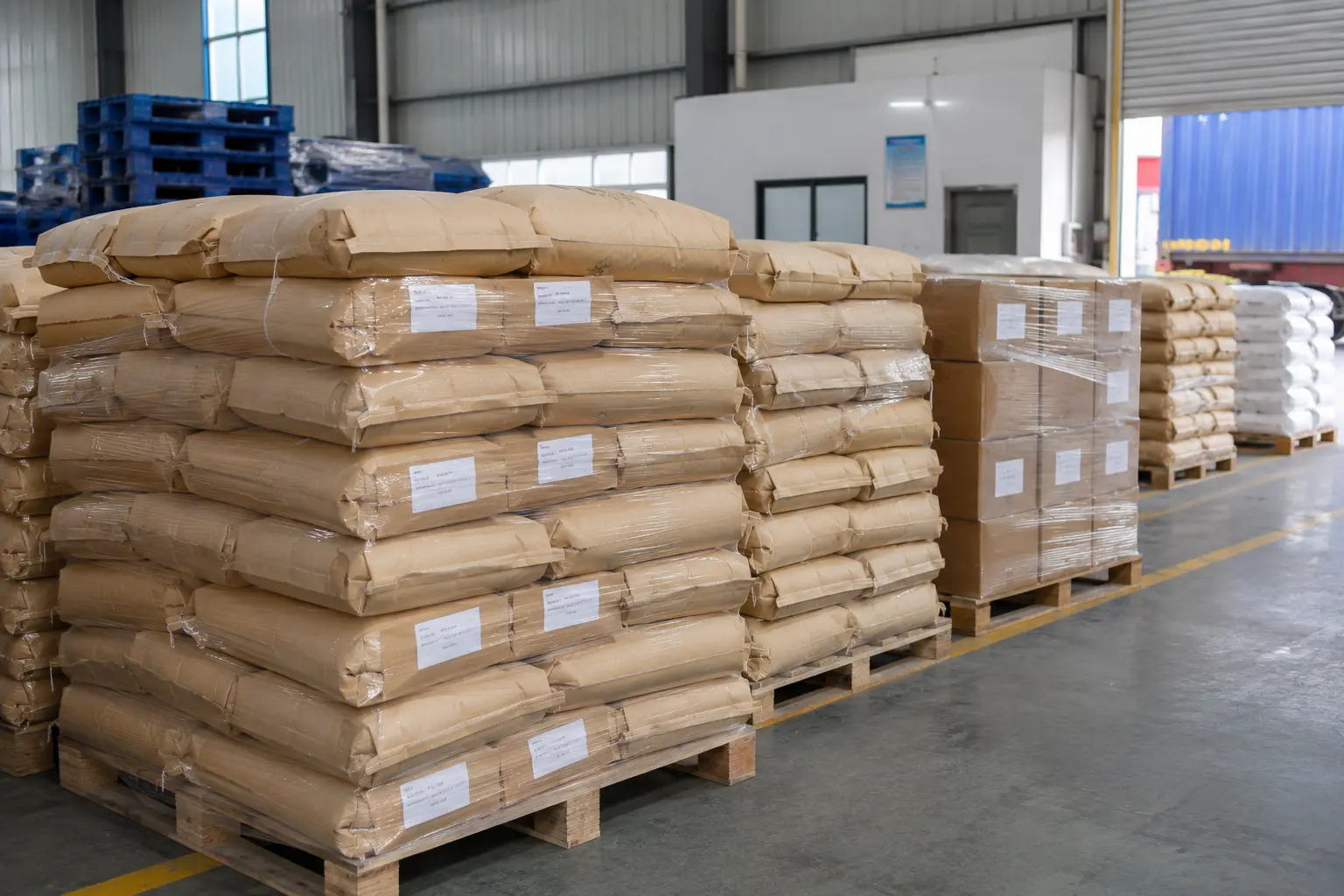 Fig. M05 — export bags, cartons or palletized masterbatch goodsBatch readiness, clean packaging and worldwide B2B supply.
Masterbatch is the easiest flame retardant format to mis-buy. Two quotes can sit 20% apart and cost the same in practice — or look identical and differ by a third. Four questions decide it.
| Ask This | Why It Moves the Real Price |
|---|---|
| Active content? | The question that matters most. 40% active against 60% is not a 20% saving — you dose half as much again for the same loading. Normalise to price per kilo of active before ranking quotes. |
| Which carrier resin, what MFI? | The carrier enters the final part along with the active ingredients. Its contribution depends on both the let-down ratio and concentrate composition. Check compatibility and final-part properties with the proposed grade. |
| Line-produced sample? | Ask whether the sample represents the proposed commercial grade and production process. Keep its lot identification and compare relevant properties during scale-up. |
| Batch tolerance on active content? | Confirm the agreed batch limits and available records before ordering. Active-content variation is one possible cause of changing performance; resin, dispersion, geometry and processing also need review. |
Where masterbatch stops being the right format. Compare masterbatch with powder and finished compound using your actual dosing equipment, mixing capability, reject rate and trial results. Pre-dispersion can simplify handling, but it does not remove the need to validate dispersion and final properties. Confirm concentrate composition and let-down ratio before calculating material cost; the least expensive format depends on the formulation and conversion process.
Direct answers help engineers and procurement teams decide carrier resin, let-down ratio, system type and sample requirements before requesting a masterbatch trial.
Flame retardant masterbatch is a pre-dispersed pellet concentrate containing flame retardant additives in a carrier resin. It is designed for easier dosing, cleaner handling and more consistent processing.
Carrier resin should be selected according to the base polymer, processing temperature, compatibility, let-down ratio, color, target flame rating and final application requirements.
No. PP, PE, PVC, PC, PC/ABS, PA, ABS and cable compounds have different carrier compatibility, processing temperature and performance requirements.
Share base resin, processing method, carrier preference, target flame rating, halogen-free or halogenated requirement, color, let-down ratio, trial quantity and expected annual demand.
Send your resin type, processing method, target flame rating, carrier preference and compliance requirements. We will recommend a suitable masterbatch direction or sample option for testing.