General Plastics and Polymers
Broad application support for commodity and engineering plastic projects where flame rating and processability must be balanced.
- Flame retardant additives for plastics
- Useful for early formulation screening
Use this overview to choose the right flame retardant application path for PP, PE, PVC, ABS, PC, PC/ABS, LSZH cable compounds and custom polymer projects. Rectivas can support additive, masterbatch, halogen-free and halogenated system directions.
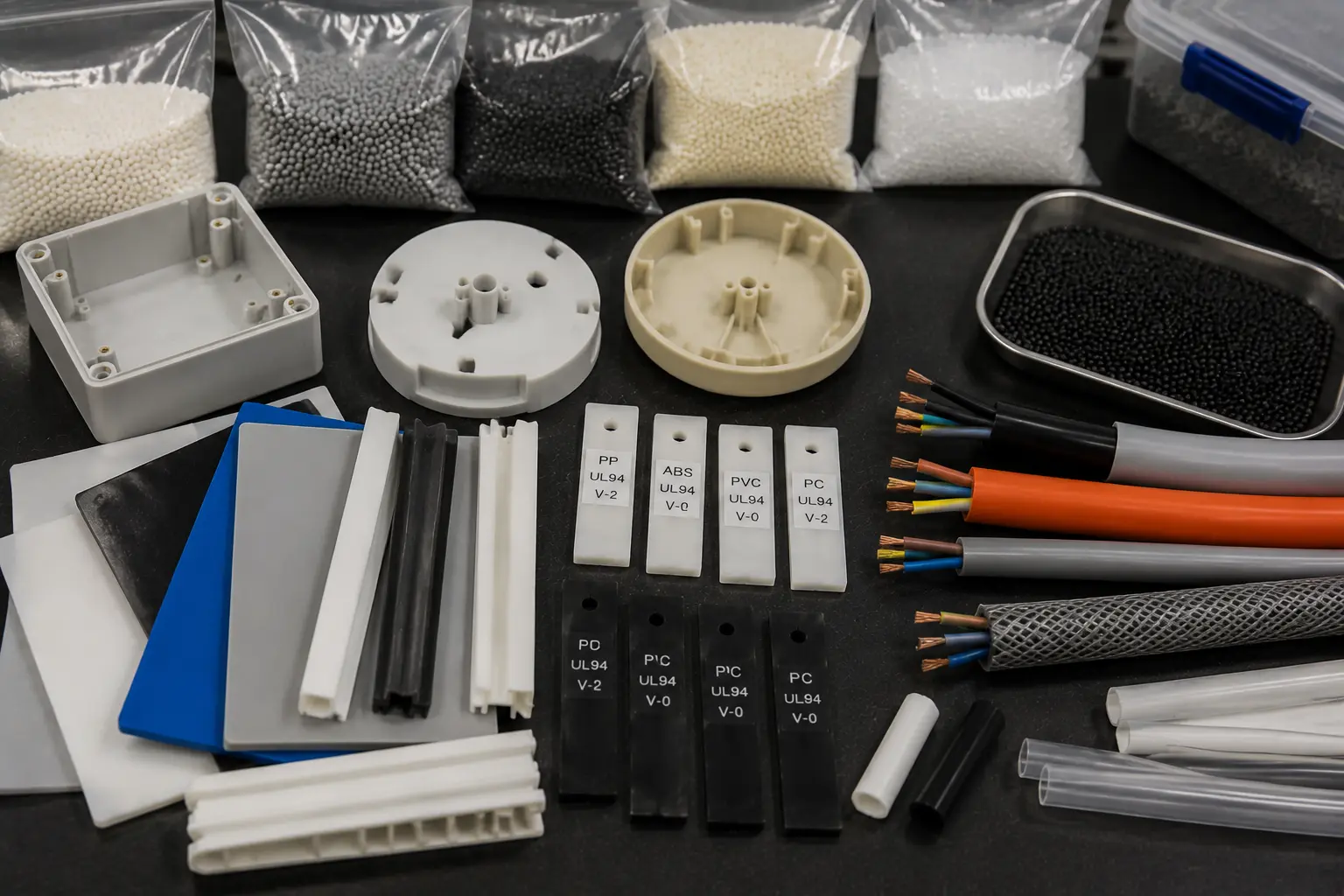 Fig. — application samples: cable, sheet & molded bars
Use a real photo showing flame-retardant pellets, molded plastic parts, cable compound samples or a resin/application comparison board. This image should help buyers identify application fit quickly.
Flame retardant selection depends on polymer compatibility, processing temperature, flame rating target, smoke requirement, compliance pressure and cost. This overview connects buyer applications to the detailed pages already built on the site.
Broad application support for commodity and engineering plastic projects where flame rating and processability must be balanced.
Pre-dispersed pellet concentrate for buyers that want cleaner handling, lower dust and more consistent let-down.
System choice depends on smoke requirement, compliance needs, cost, dosage and target flame rating.
The same flame retardant system will not fit every polymer. This table is designed as a routing layer to connect search intent, buyer application and internal product pages.
| Base Resin / Application | Common Project Direction | Next Page |
|---|---|---|
| PP / Polypropylene | Halogen-free or halogenated additive systems, PP carrier masterbatch, injection molding and sheet applications. | PP flame retardant additives |
| PE / Polyethylene | PE carrier masterbatch, film, extrusion, compounding and applications where dosing and dispersion matter. | PE flame retardant masterbatch |
| PVC | PVC compounds, cable materials, extrusion projects and systems where smoke, flexibility and cost must be balanced. | PVC flame retardant additives |
| ABS | Housings, electrical parts, injection molded components and projects balancing UL94 target and mechanical properties. | ABS flame retardant additives |
| PC / PC-ABS | Engineering plastic parts where transparency, impact, heat stability or appearance may affect system choice. | PC flame retardant additives |
| LSZH Cable Compounds | Low-smoke, halogen-free cable compound systems for wire, cable and compounder applications. | LSZH flame retardant additives |
Instead of listing industries loosely, this section explains what the buyer usually needs to solve: flame rating, low smoke, cleaner dosing, compatibility or scale-up consistency.
ABS, PC, PC/ABS, glass-filled PA and PBT components where a UL94 rating is only the entry ticket — tracking resistance, glow wire ignition and thermal ageing get specified alongside it. See flame retardant for electronics for the standards map and systems by component.
PVC and LSZH cable compounds where low smoke, halogen-free direction and extrusion processing are key — judged by four requirements at once, not one flame rating. See flame retardant for wire and cable for the standards map and systems by cable type.
Plastic profiles, sheets, panels and compounds where flame performance and material cost must be balanced — judged by fire class rather than UL94. See flame retardant building materials for standards, systems and product categories.
Compounders that need additive or masterbatch directions matched to resin, filler, color and end-use targets.
If the buyer is unsure whether to choose additives, masterbatch, halogen-free or halogenated systems, this path helps collect the right RFQ information first.
PP, PE, PVC, ABS, PC and cable compounds each require different compatibility and processing review.
Powder additives give formulation flexibility; masterbatch improves dosing, handling and dispersion convenience.
UL94, LOI, low smoke, glow wire or customer internal standards affect dosage and chemistry direction.
RoHS, REACH, halogen-free, low-smoke and export-market needs should be stated before sample selection.
Each card links to a more specific page, helping buyers and search engines follow a clean application cluster instead of landing on isolated pages.
For PP injection molding, extrusion, sheet and compounded materials needing additive or masterbatch directions.
For PVC compounds, profiles, cable insulation and applications where processing and smoke behavior matter.
For housings and engineering parts where flame rating, appearance and mechanical properties are important.
For LSZH compounds where halogen-free direction, smoke behavior and flame spread targets are central.
These answers help buyers decide which page to open and what information to send for recommendation.
Rectivas supports flame retardant additive and masterbatch projects for PP, PE, PVC, ABS, PC, PC/ABS, PA, LSZH cable compounds and custom polymer formulations.
Yes. Resin type, processing method, flame rating target, compliance needs and cost target affect whether a halogen-free, halogenated, additive or masterbatch route is recommended.
Flame retardant masterbatch is useful when buyers need cleaner handling, easier dosing, lower dust, carrier-matched dispersion and stable processing in extrusion or injection molding.
Buyers should send base resin, processing method, target flame rating, sample standard, color, system preference, compliance needs and estimated demand.
Send your polymer, processing method, target flame rating, product form preference and compliance needs. Rectivas can recommend whether to start with additive, masterbatch, halogen-free or halogenated directions.
Include these details when asking for application recommendation.