Rectivas Materials · Flame retardant manufacturer and formulation partner sales@rectivas.com  ·  WhatsApp +86 180 3191 1520

LSZH Flame Retardant for Cable Compounds

Application guide for selecting halogen-free flame retardant additives and masterbatch for LSZH cable compounds, wire insulation and cable jackets. Compare ATH, MDH, phosphorus-nitrogen systems, synergists, additive packages and LSZH masterbatch for low smoke, zero halogen and cable extrusion requirements.

ApplicationWire · cable · jacket · insulation
SystemsATH · MDH · P-N · synergist
TargetsLow smoke · zero halogen · flame rating
FormsAdditive · LSZH masterbatch
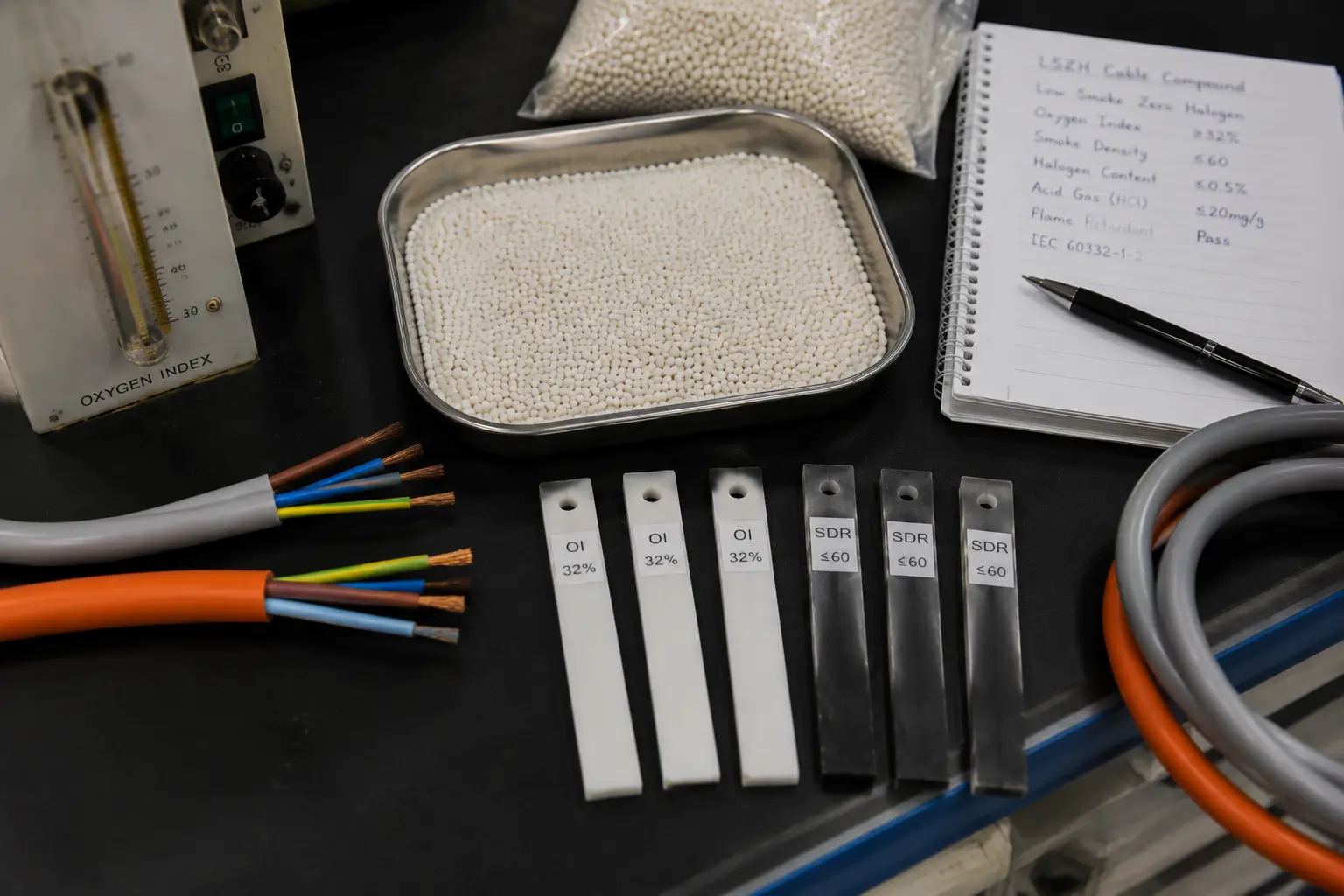
LSZH cable compound pellets and cable jacket smoke test Fig. LSZH01 — low smoke zero halogen cable compound proof

Use a real image of LSZH cable pellets, cable jacket samples, smoke-density test notes, oxygen index bars and extrusion records. The image should prove this page is specific to wire and cable compounds.

LSZH selection
Base — EVA / PE / POE / TPE
Goal — low smoke / zero halogen
Form — additive / masterbatch
01 / 09Overview

Start LSZH Flame Retardant Selection from Cable Standard, Smoke and Extrusion Stability

LSZH cable compounds need more than high flame retardant loading. Buyers must balance low smoke, zero halogen, flame rating, mechanical strength, elongation, filler loading, processing torque, surface finish and cable extrusion stability. If you are working across several cable families rather than LSZH alone, our flame retardant for wire and cable overview maps the standards and systems by cable type.

Buyer use: choose LSZH formulation direction before RFQ Search intent: LSZH flame retardant and cable compound Next step: additive package or LSZH masterbatch sample
LSZH-01

For Cable Compounders

Use powder or blended halogen-free flame retardant additives when you control LSZH compound recipes, filler loading, coupling system, extrusion and mechanical balance internally.

  • Best for formulation control
  • Useful for flame and smoke development
  • Requires dispersion and mechanical validation
LSZH-02

For Cable Producers

Use LSZH flame retardant masterbatch when cleaner dosing, pre-dispersion and simpler line trials are more important than direct powder feeding.

  • Cleaner handling than powder
  • Cleaner handling than powder
  • Polyolefin carrier supports cable compound trials
  • Suitable for extrusion and small-batch validation
LSZH-03

For Low-Smoke Zero-Halogen Projects

Use halogen-free LSZH systems when building wire, transit, telecom or export cable buyers require low smoke, zero halogen and restricted substance support.

  • Common for wire and cable compounds
  • Requires cable-standard validation
  • Often linked to smoke density and halogen acid gas tests
LSZH pellets, cable jacket and smoke-density samplesFig. LSZH02 — LSZH pellets, cable jacket and smoke-density samplesShows cable-specific flame and smoke validation.
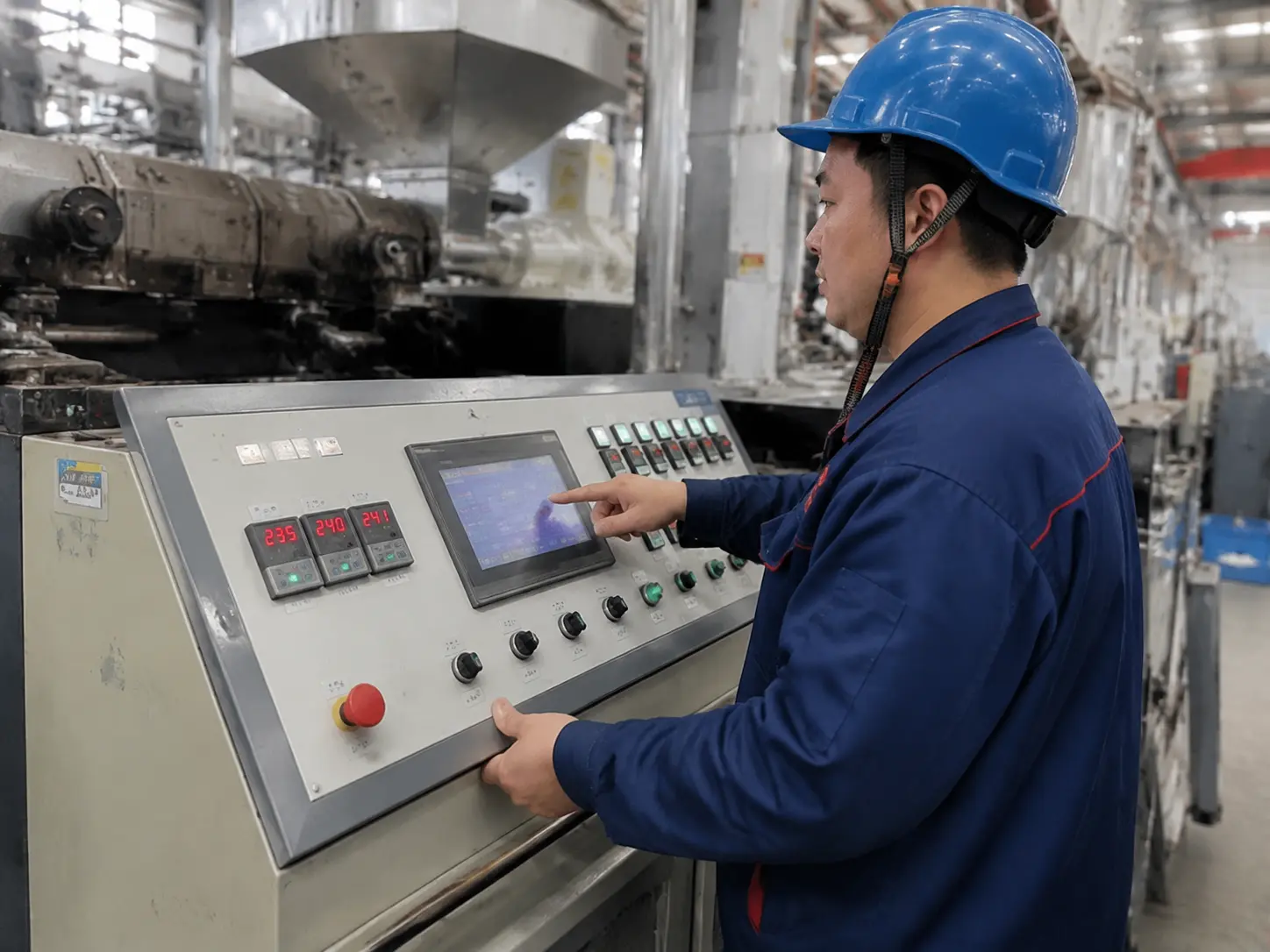
Cable extrusion line and strand samplesFig. LSZH03 — cable extrusion line, strand samples and trial recordsConnects LSZH flame retardant selection to real cable processing conditions.
02 / 09LSZH Matrix

LSZH Flame Retardant Selection Matrix

Use this matrix to shortlist halogen-free flame retardants for LSZH cable compounds before sample testing. Final selection depends on base polymer, filler loading, target flame and smoke standard, extrusion process, surface quality and mechanical property retention.

Coverage: LSZH · wire and cable · EVA · PE · POE · TPE · LSZH masterbatch Buyer value: fast cable-compound first-screen before samples Validation: final choice depends on testing
LSZH RequirementRecommended DirectionHalogen-FreeHalogenatedTypical TargetsProcessing NotesBest Next Page
EVA / PE LSZH compoundATH, MDH, phosphorus-nitrogen synergist or compounded halogen-free packageCore directionNot preferredLow smoke · zero halogen · flame ratingCheck filler loading, elongation, tensile strength and extrusion torqueHalogen-free
Wire insulationLow-smoke additive package adjusted to flexibility and surface qualityRequiredNot preferredFlame spread · smoke density · acid gasConfirm insulation thickness, line speed, flexibility and surface finishAdditives
Cable jacket compoundATH / MDH based LSZH package with coupling and processing supportRequiredNot preferredSmoke density · LOI · jacket durabilityBalance abrasion, elongation, weathering, filler dispersion and surfaceMasterbatch
POE / TPE cable compoundFlexible halogen-free system adjusted to elastomer compatibilityCore directionNot preferredFlexibility · low smoke · flame ratingCheck elongation, rebound, oil resistance and extrusion stabilityHalogen-free
LSZH masterbatch trialPolyolefin carrier masterbatch with pre-dispersed halogen-free flame retardantsCore directionNot preferredClean dosing · fast trial · dispersionConfirm carrier resin, let-down ratio, filler level and cable line conditionsMasterbatch
Low-smoke PVC comparisonClarify whether buyer needs low-smoke PVC or true LSZH compoundProject-specificAvailable in PVCSmoke · halogen acid gas · compliancePVC contains chlorine; true LSZH usually requires non-halogenated polymer basePVC guide
High filler LSZHSurface-treated mineral flame retardants and processing aidsCore directionNot preferredHigh LOI · low smoke · mechanical retentionConfirm filler dispersion, coupling, torque, die pressure and elongationAdditives
03 / 09Form Choice

LSZH Flame Retardant Additives or LSZH Masterbatch?

For LSZH cable compounds, the form decision depends on whether the buyer controls compounding or needs a production-friendly pellet concentrate. Cable compounders often prefer powder additives, while cable producers may prefer LSZH flame retardant masterbatch for cleaner trials and simpler dosing.

Choose LSZH Flame Retardant Additives When...

You need direct formulation control, high active loading adjustment, filler balance or integration into an existing LSZH cable compound recipe.

  • Cable compounders with mixing and extrusion capability
  • Projects that need flame, smoke, filler and mechanical adjustment
  • Cost, tensile strength, elongation and extrusion stability need close tuning
  • View flame retardant additives →

Choose LSZH Flame Retardant Masterbatch When...

You need cleaner dosing, easier handling, better pre-dispersion and direct let-down on LSZH cable extrusion or trial lines.

  • Cable producers without full powder premixing control
  • Projects that prioritize clean handling and dosing consistency
  • Applications where polyolefin carrier compatibility is important
  • View flame retardant masterbatch →
04 / 09System Choice

Low-Smoke Zero-Halogen Direction for Wire and Cable

LSZH cable compound projects require careful wording and testing. Low-smoke PVC, halogen-free additive chemistry and true LSZH cable compounds are not the same. The correct direction should be validated against cable standards, smoke density, halogen acid gas, extrusion stability and mechanical requirements.

HF

True LSZH Compounds

Use non-halogenated polymer systems and halogen-free flame retardants when the cable specification requires low smoke zero halogen performance.

LSZH

ATH / MDH Systems

Common mineral flame retardant directions for LSZH compounds, but filler loading, dispersion, coupling and mechanical retention must be validated.

HB

Low-Smoke PVC

Low-smoke PVC may reduce smoke, but PVC resin still contains chlorine. It should not be confused with true LSZH cable compound.

BAL

Balanced Cable Formulation

Most LSZH projects need a balance of flame rating, smoke, filler loading, elongation, tensile strength, surface finish, line speed and total cost.

05 / 09Selection

Information Needed for an LSZH Flame Retardant Recommendation

A useful LSZH recommendation requires more than the words low smoke. Base polymer, cable type, target standard, filler loading, extrusion process, smoke requirement, mechanical limits and additive form all affect the recommended system and trial loading.

01Base polymer and carrier resin
02Cable type and extrusion process
03ATH / MDH or filler loading
04Flame, smoke and halogen standard
05Tensile and elongation limits
06Low-smoke zero-halogen requirement
07Surface finish and line speed
08Torque, die pressure and dispersion
09Trial and annual demand
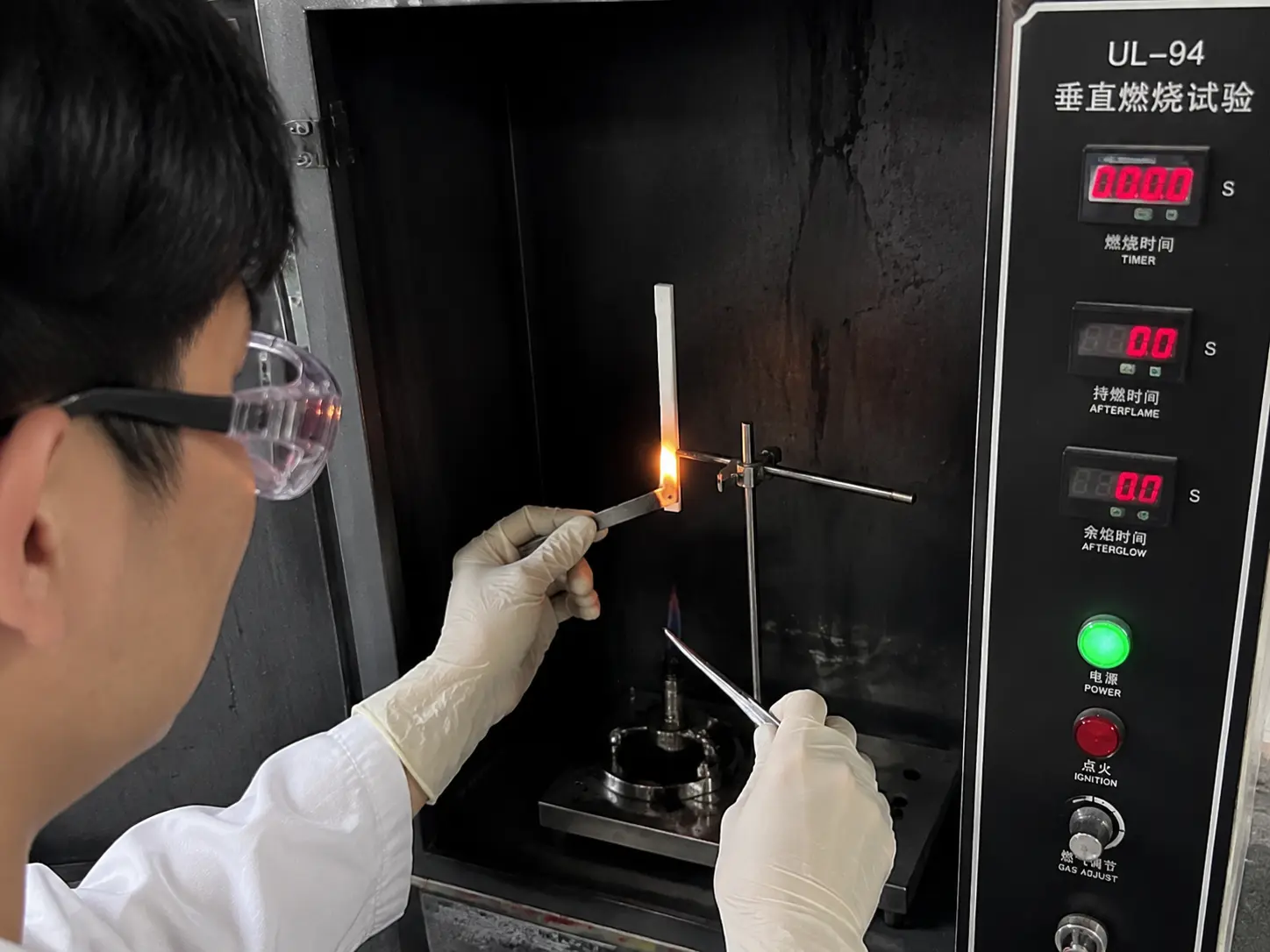
Smoke-density chamber and cable burn samplesFig. LSZH04 — smoke-density chamber, halogen acid gas test or cable burn samplesSupports technical credibility for LSZH flame and smoke validation.
LSZH pellets, cable jacket and sample bagsFig. LSZH05 — LSZH pellets, cable jacket and sample bagsShows real wire and cable compound sampling scenarios.
07 / 09Supply

LSZH Compound Supply by Cable Type and Property Target

Most LSZH enquiries arrive naming a cable type rather than a chemistry. Below is how the usual requests map onto systems — sheathing versus data cable, and the two properties buyers ask about most after flame and smoke: thermal stability and corrosion behaviour.

Cable Type / RequirementWhat Drives the FormulationUsual System
LSZH cable sheathing compoundAbrasion, elongation and surface finish at high filler loadingSurface-treated MDH or ATH at 55–65% with coupling agent
LSZH compound for data cablesThin wall, tight dimensional control, low smoke in enclosed runsFine-particle grades; particle size controls surface and wall consistency
Thermal stability in processingExtrusion temperature versus filler decomposition onsetMDH decomposes near 330 °C, ATH near 200 °C — this decides which one your line can run
Corrosion resistanceAcid gas attacking switchgear and electronics the fire never reachesHalogen-free by definition: no HCl to release. IEC 60754 is the clause
LSZH thermoplastic compound / granulesBuyers asking for thermoplastic LSZH usually want finished granules, not additivesReady-to-extrude compound supplied as granules; we also sell the additive layer separately
UV and weathering resistanceOutdoor and solar cable; mineral-filled compounds chalk without stabilisationUV stabiliser package on top of the mineral system — specify expected outdoor life, not just "UV resistant"
Chemical and oil resistanceIndustrial installations, machine tool and mining cableBase polymer decides this more than the flame retardant. Polyolefin LSZH resists acids and alkalis well, oils less so
Water resistance / wet ageingBuried, submerged or high-humidity routesATH and MDH are hydrophilic at high loading — surface treatment and a water-blocking design matter more than the FR choice
Density and weightWeight-sensitive installs; cost per metre calculationsMineral-filled LSZH runs heavier than PVC — at 55–65% filler expect a noticeably higher specific gravity. Quote cost per metre, not per kilo
FlexibilityDrag chains, robotics, portable and coiled cableHigh mineral loading stiffens the compound. Flexible grades trade some filler for elastomer content, which changes the flame package
Power and control cableFlame propagation on bunched cable in a vertical trayMineral base plus char-promoting synergist for IEC 60332-3 categories

What we supply into this, plainly: we are the flame retardant layer, not a cable maker. That means mineral systems with controlled particle size and surface treatment, synergists, masterbatch, and ready-to-extrude compound — produced on our partner factory's SHJ-75 twin-screw line with batch traceability from the ISO 9001 certified factories we source from, UL94 and LOI pre-screening at our partner factory's burn lab, and TDS, SDS, COA plus third-party reports through an accredited laboratory. Trial quantities and production tonnage are different conversations; ask for both.

08 / 09Production & Documents

How LSZH Compound Is Produced, and What Ships With It

Buyers increasingly ask about the production process and the paperwork before they ask about price — usually because a previous supplier was inconsistent between lots. Here is how the compound is made and what should arrive with it.

StageWhat Decides Quality
Mineral preparationParticle size distribution and surface treatment are fixed here. Once the filler is in the compound, dispersion problems cannot be corrected downstream.
Twin-screw compoundingScrew configuration and residence time at 55–65% loading. Too little shear leaves agglomerates; too much degrades the polymer and costs elongation.
Pelletising and dryingMineral hydroxides pick up moisture. Insufficient drying shows up as porosity in the extruded jacket, not as a compounding fault.
Batch verificationAsh content confirms loading; LOI and UL94 confirm the flame package. Both should be on the COA for the lot you receive, not a generic datasheet.

Technical data and certification, plainly. Every shipment should carry a TDS for the grade, an SDS, and a COA specific to your lot — that last one is the document that matters, because it ties the numbers to the material you actually received. Third-party test reports can be arranged through an accredited laboratory where your customer needs them for a file. What no additive or compound supplier can give you is a cable certification: IEC 60332, 61034 and 60754 are cable tests, run on finished cable, and the certificate belongs to the cable maker. We supply the compound layer and the data behind it — the cable-level approval stays with you.

On consistency between lots, which is the real question behind most process enquiries: ask any supplier for the batch-to-batch tolerance on filler loading, in numbers. If they cannot answer, nobody is measuring it — and drifting loading is why a jacket passes IEC 60332 in one production run and fails in the next.

09 / 09FAQ

Buyer Questions About LSZH Flame Retardants

Direct answers help engineers and procurement teams compare LSZH additives, LSZH masterbatch, low-smoke PVC, halogen-free systems and RFQ requirements before sample testing.

Which flame retardants are used for LSZH cable compounds?

LSZH cable compounds commonly use halogen-free flame retardants such as ATH, MDH, phosphorus-nitrogen systems, synergists or compounded additive packages depending on base polymer, flame rating, smoke target, mechanical properties and extrusion conditions.

Should LSZH cable compounds use additives or masterbatch?

Cable compounders often choose powder additives for formulation control, while cable producers and converters may choose LSZH flame retardant masterbatch for cleaner dosing, pre-dispersion and easier production trials.

What is the difference between low-smoke PVC and LSZH?

Low-smoke PVC is still based on PVC resin, while LSZH means low smoke zero halogen and normally uses non-halogenated polymer systems. Buyers should clarify whether they need low-smoke PVC, halogen-free additive chemistry or true LSZH cable compound.

Do you supply LSZH compound, or only the flame retardant?

Both. Powder additives and synergists for cable compounders running their own twin-screw lines, masterbatch where dosing on the extrusion line suits you better, and ready-to-extrude LSZH compound where you would rather run a single material stream. Which is cheaper per finished metre depends on your equipment and annual tonnage.

Which is better for LSZH, ATH or MDH?

It is decided by your extrusion temperature, not by which is better. ATH begins releasing water near 200 °C and MDH near 330 °C, so polyolefin systems running hot need MDH to avoid premature decomposition and porosity. Where the line runs cooler, ATH is the lower-cost route.

Can LSZH compound match PVC on mechanical properties?

Not entirely, and anyone promising otherwise is overselling. At 55–65% mineral loading some elongation and tensile loss is physics. Surface-treated fine-particle grades, coupling agents and correct dispersion recover a large share of it, and compound-form supply removes dispersion variability from your line.

What information is needed for an LSZH flame retardant recommendation?

Share base polymer, cable type, extrusion process, target flame and smoke standard, halogen-free requirement, filler loading, mechanical property needs, color, additive or masterbatch preference and expected trial volume.

Final Thoughts

If your specification names smoke density or halogen acid gas, the choice is already made and the real question is how much mechanical property you can trade at 55–65% filler. That is decided by particle size, surface treatment and dispersion rather than by which mineral you buy. Send your cable type, target standard and elongation minimum, and we will propose a system, pre-screen it at our partner factory’s burn lab, and tell you honestly what it will cost you in processing.

Request an LSZH Flame Retardant Recommendation

Send your base polymer, cable type, extrusion process, target flame and smoke standard, filler loading and compliance requirements. We will recommend whether to start with LSZH additives, LSZH flame retardant masterbatch or a blended halogen-free system.

Include in your inquiryFR-LSZH-RFQ
  • Base polymerEVA, PE, POE, TPE, filler level and carrier resin
  • ProcessingCompounding, cable extrusion, jacket, insulation or sheath trial
  • Target standardLow smoke, zero halogen, LOI, flame spread or cable standard
  • RequirementHalogen-free, low smoke, tensile, elongation, color and surface limits
  • Trial volumeSample quantity and expected annual demand