Quick answer: Flame retardant ABS filament exists and works — it is extruded from UL94 V-0 rated FR-ABS compound, usually a brominated + antimony system or a halogen-free package in an ABS base. The catch buyers miss: a printed part does not automatically inherit the resin’s V-0 rating. FDM layer lines, voids and print orientation change burn behavior, which is why UL created a separate “Blue Card” certification for additively manufactured material — a Yellow Card on the pellet is not proof for the printed part.
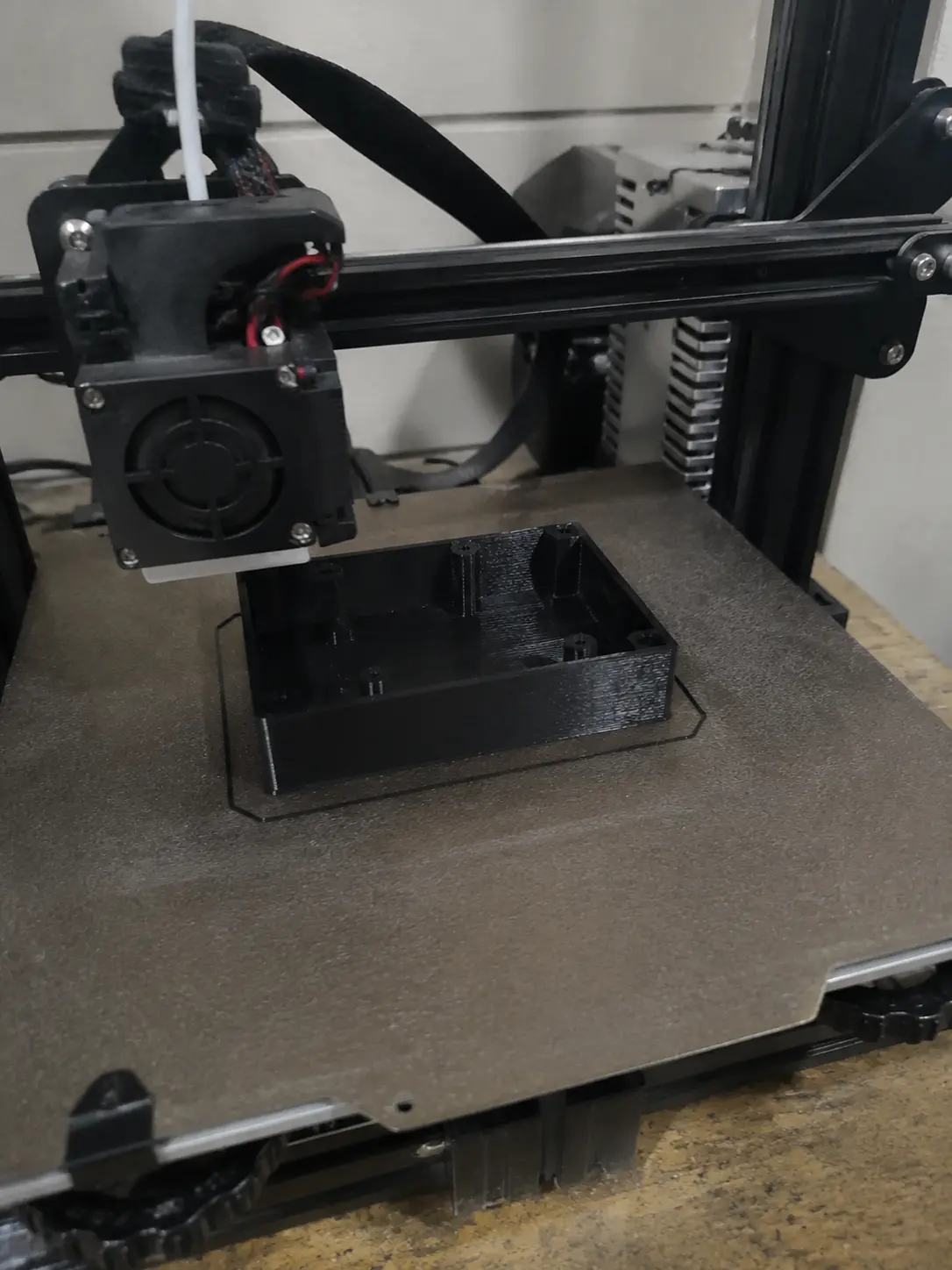
ABS is the workhorse of functional 3D printing — enclosures, brackets, jigs, prototype housings that quietly become production housings. And a growing share of those parts end up wrapped around electronics, which is exactly where fire requirements appear. So the question lands in our inbox in three forms: “do you sell FR ABS filament,” “will my printed enclosure pass UL94,” and “what’s inside FR ABS anyway.” Let’s take all three.
What’s inside flame retardant ABS?
Standard ABS burns enthusiastically — it is a styrenic with an LOI around 18–19, it drips, and it produces heavy sooty smoke. To rate it, a flame retardant package is compounded into the resin before any filament is drawn:
- Brominated + antimony trioxide — the classic ABS route: efficient, any color, lowest cost per rating point. The synergist mechanism is the same one we unpacked in our antimony trioxide flame retardant guide.
- Halogen-free phosphorus systems — the growing route where specs exclude halogens; often built on PC/ABS blends because polycarbonate’s charring helps the phosphorus work.
Both routes reach UL94 V-0 at 1.6 mm in molded form. Which one belongs in your part depends on the end market’s halogen policy and color needs — the same trade-off logic as any ABS application, covered on our flame retardant ABS page.
Resin, sheet, filament: same compound, three forms
Buyers searching “FR ABS” are usually looking for one of three physical forms — and they are all downstream of the same compounding step:
| Form | Process | Typical parts | Watch-out |
|---|---|---|---|
| FR ABS resin / pellets | Injection molding | Housings, E&E parts, appliance components | Verify rating at your wall thickness, not the datasheet bar |
| FR ABS sheet | Extrusion + thermoforming | Machine covers, panels, luggage shells, trays | Thermoforming thins the wall — the formed corner is the test point |
| FR ABS filament | Filament extrusion + FDM printing | Printed enclosures, brackets, fixtures, low-volume housings | Printed part ≠ molded rating — see below |
The practical takeaway: the fire performance is decided at the compounding stage, in the additive package and its dispersion. Filament is just a 1.75 mm extrusion of that compound with tight diameter tolerance — demanding on dispersion (an undispersed particle jams a 0.4 mm nozzle), but chemically nothing new.
The printed-part problem: why V-0 pellets don’t guarantee a V-0 print
Here is the trap that catches engineers moving from molding to printing. An injection molded UL94 bar is solid, isotropic, fully fused. An FDM print is a stack of welded roads with micro-voids between them — typically a few percent porosity even at “100% infill.” In a flame, those differences matter:
- Voids act like wicks and air supply. Internal channels feed the flame and can carry it along layer lines.
- Layer boundaries change dripping. Molten material separates differently along weak weld lines — sometimes shedding more flaming drips than the molded equivalent.
- Orientation matters. A bar printed flat and a bar printed upright burn measurably differently. Your part contains both directions.
UL recognized this and split the certification. Know which card you are being shown:
| Certification | What was tested | What it proves for a printed part |
|---|---|---|
| UL Yellow Card | The material, molded conventionally | The compound is capable of the rating — not that your print achieves it |
| UL Blue Card | The material printed on a defined printer + parameters | The printed material meets the rating — when you print inside those parameters |
| Neither (datasheet claim only) | Often just the base resin’s molded data | Nothing — burn-test your own printed specimens |
If your printed part goes into a certified product, the safe path is: choose a filament with a Blue Card (or at least a V-0 Yellow Card base), print vertical-burn specimens with your printer, orientation and settings, and test those — either in-house or at a lab. It is a cheap test compared to a failed product audit.
Printing notes for FR ABS
Formulation changes the printing experience a little, not a lot. Three things to expect versus standard ABS: the melt is usually a touch stiffer (mineral and synergist content), so raise nozzle temperature slightly before blaming the filament; moisture matters more — some FR packages are hygroscopic, so dry the spool; and an enclosed, ventilated printer is non-negotiable, both for warp control (it is still ABS) and because you do not want to breathe any styrenic’s fumes, FR or not.
Where Rectivas fits: the compound behind the spool
Straight answer: we do not wind spools. Rectivas supplies what goes into them — FR-ABS is one of our standing halogen-free grades, and we build both halogen-free and brominated + antimony packages for ABS as powder blends and pre-dispersed masterbatch. Filament extruders come to us for exactly two things: a package that reaches V-0 at the target wall, and dispersion clean enough for a 1.75 mm strand feeding a 0.4 mm nozzle — which is a filtration and mixing problem we solve on the twin-screw line, verified batch by batch in our partner factory’s UL94 chamber with an accredited third-party laboratory reports for the paperwork. The same compounds serve molders and sheet extruders; the decision path between chemistries is in our guide on how to choose flame retardants, and the halogen question specifically in halogen-free vs halogenated flame retardants.
If you compound, extrude filament or mold ABS parts and need the FR side solved: send the target rating and wall, the color requirement, and your halogen policy. We will propose the package — brominated flame retardant additives where economics lead, halogen-free where the spec demands — and ship a burn-tested sample. Request a quote to start.
FAQ
Is there a flame retardant ABS filament that passes UL94 V-0?
Yes — several commercial filaments are extruded from UL94 V-0 rated FR-ABS compound. But read the certification carefully: a V-0 claim based on molded specimens (Yellow Card) does not automatically transfer to your printed part. Look for Blue Card certification or test printed specimens yourself.
Why did my printed part fail UL94 when the filament is rated V-0?
Because FDM parts contain voids and layer boundaries that change burn behavior — they wick flame, alter dripping and burn differently by orientation. The rating on the box was earned by a solid molded bar. Re-test with specimens printed in your actual orientation and settings, and increase wall thickness or switch to a Blue Card material if it still fails.
What flame retardant is used in ABS filament?
Most commonly a brominated flame retardant with antimony trioxide synergist — efficient and colorable. Halogen-free phosphorus systems (often in PC/ABS bases) serve specs that exclude halogens. Both are compounded into the resin before filament extrusion.
Is flame retardant ABS sheet the same material as the filament?
Chemically, usually yes — both start from FR-ABS compound. Sheet adds a thermoforming consideration: forming stretches and thins the wall, so the rating must hold at the thinnest formed section, not the original sheet gauge.
Does flame retardant ABS print differently from normal ABS?
Slightly: expect a marginally higher nozzle temperature, dry the spool (some FR packages absorb moisture), and use an enclosed printer. Warp behavior and bed adhesion remain typical ABS.
Final Thoughts
ABS is one of the easier resins to bring to V-0, which is why cost usually decides the route rather than performance. Brominated packages with antimony synergist remain the cheapest path; phosphorus routes cost more and buy you halogen-free status and better tracking. Both are on our ABS additives page – tell us which constraint you are actually under.
—— Rectivas Materials 团队 技术工程师老陈