Quick answer: LSZH cable shrinkage is the permanent shortening of a jacket or cable element after extrusion, storage or heating. Retained processing stress, cooling history, compound design and cable construction can all contribute. Before changing material, confirm that the reported values use the same specimen preparation and thermal cycle, then investigate the extrusion conditions. The acceptable result comes from the applicable cable specification and termination requirements.
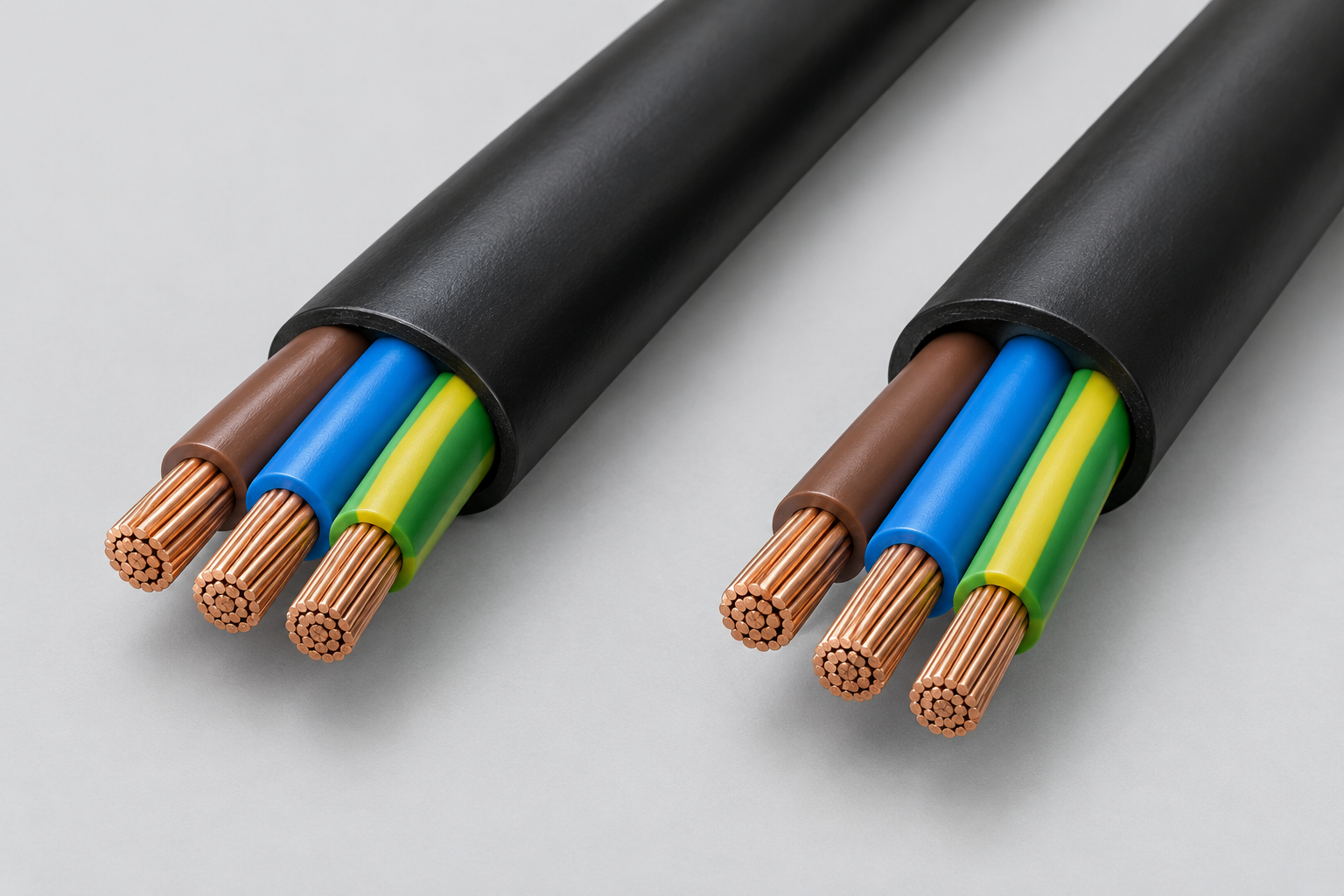
What Jacket Shrinkback Means
A cable can leave the line with the correct outside diameter and still develop a jacket that pulls away from a cut end. The length change may appear during storage, thermal conditioning or assembly. Inspectors sometimes describe the same observation as LSZH sheath shrinkage, jacket retraction or shrinkback. Record exactly which layer moved and where it was measured.
This article concerns lasting axial shortening. A diameter change during cooling, temporary thermal movement and a split jacket are different observations. They may occur together, but a photograph of exposed inner components cannot identify the mechanism by itself. It also does not establish the percentage contraction of the entire cable.
The practical question is what that movement does at the termination. A jacket clamped inside a connector, a free sheath end and a cable installed through a gland have different constraints. IEC TR 62959:2021 addresses shrinkage effects on optical fibre cable terminations and treats the termination arrangement as relevant to the concern. Its guidance should not be presented as a universal acceptance rule for every copper cable.
Why LSZH Jackets Can Pull Back
Extrusion gives the polymer a processing history. Flow through the tooling and stretching before solidification can leave molecular orientation and residual stress. Cooling fixes a temporary structure; subsequent exposure can allow part of that structure to relax. Uneven cooling through the jacket thickness is another possible contributor. These mechanisms explain why a finished cable needs evaluation in addition to a compound datasheet.
A 2024 study of FRNC optical cable jackets discusses retained orientation and differences in cooling through the material. Within its tested processing conditions, shrinkage increased with melt pressure, while mechanical performance and pressure constrained production speed before shrinkage did. That result supports investigating interacting process variables. It does not establish one speed, temperature or pressure setting for other compounds and cable designs.
The polymer blend, filler system and interfacial behaviour also belong in the investigation. Treat a proposed formulation change as a controlled trial. A material chosen for flame performance, flexibility or cost has not automatically been demonstrated to meet the dimensional stability required by a particular connector assembly.
For compounders developing their own formulation, halogen-free flame retardant additives are one part of that system. Adding or removing mineral filler without reviewing the polymer blend and processing behaviour is an incomplete way to address shrinkback. Evaluate the final formulation on the intended cable construction.
Check the Test Before Comparing Results
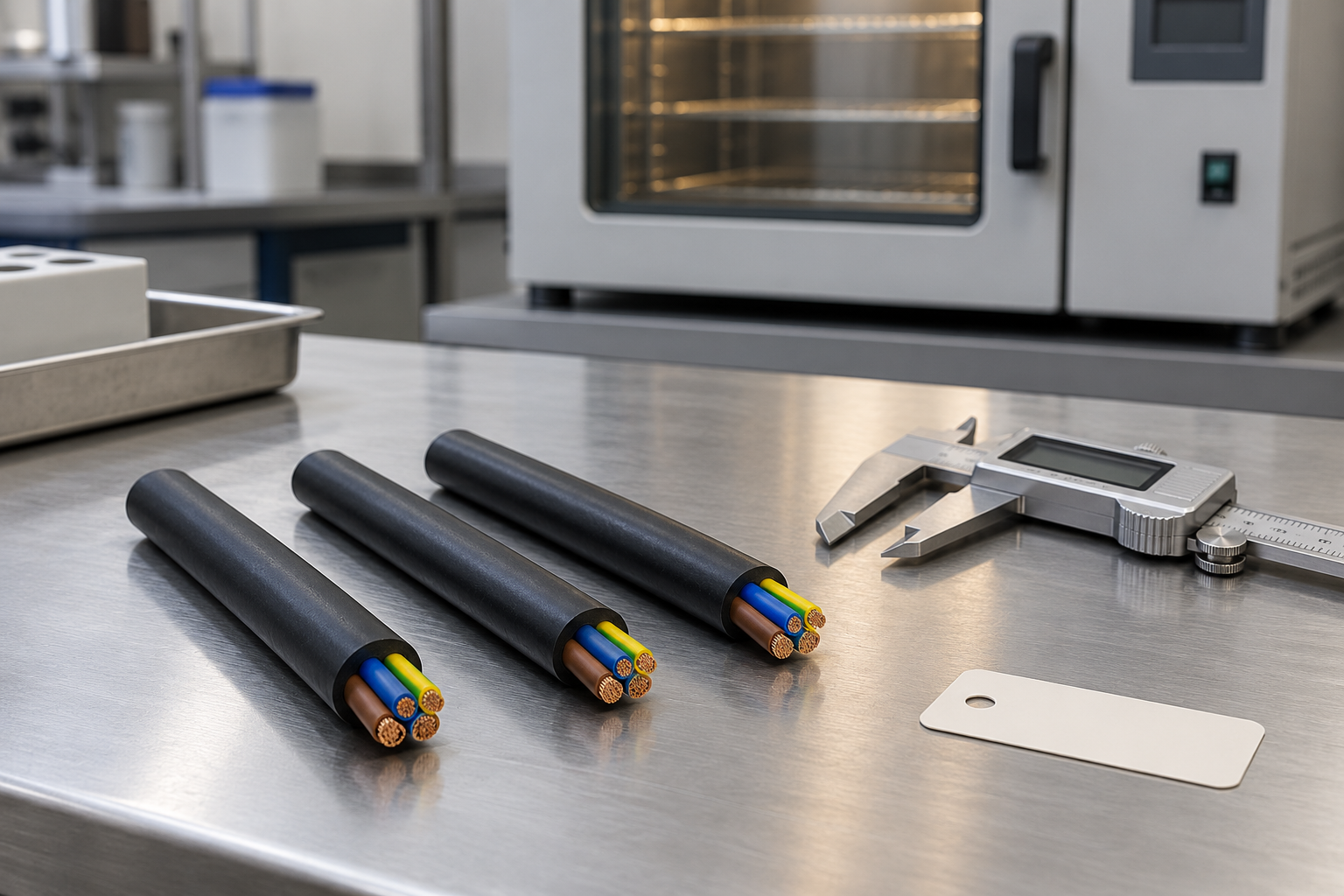
When two reports disagree, start with the method pages. A percentage from an isolated sheath strip is not interchangeable with a result from a complete cable specimen. The cable core, adhesion and end conditions can affect how movement is expressed. Conditioning before testing and the point at which the initial length is measured also need to match.
IEC 60811-503:2012+AMD1:2023 provides a shrinkage test method for sheaths and is used with IEC 60811-100. Select the edition and requirements specified for the cable. A reference to this method alone does not tell a buyer which acceptance limit applies to the order; obtain the governing cable standard and agreed specification as well.
| Comparison item | Record in the report | Why it matters |
|---|---|---|
| Specimen | Complete cable, removed sheath or other sample | Different construction and restraint |
| Initial condition | Sampling location, storage, conditioning and gauge length | Establishes a comparable starting point |
| Thermal exposure | Temperature, duration, cycles and cooling conditions | Defines what the result represents |
| Measurement | Reference marks, end movement and calculation basis | Separates layer movement from gauge contraction |
| Acceptance | Cable specification, edition and termination requirements | Prevents an unrelated limit being substituted |
For a defined initial gauge length L1 and final length L2, percentage shortening is calculated as (L1 − L2) / L1 × 100. As an arithmetic illustration only, a gauge changing from 500 mm to 495 mm shortens by 1%. This is not a test procedure, acceptance value or Rectivas measurement. Follow the specified method for specimen preparation and reporting.
Is There a Universal Shrinkage Limit?
No single percentage establishes suitability across all LSZH compounds and cable applications. A supplier’s typical value can help shortlist candidates, provided its method is available. Qualification still needs the finished construction, relevant specification and intended termination conditions. Ask whether the quoted number is typical data, a guaranteed delivery property or a result for one test specimen.
For example, a 2016 Teknor Apex announcement listed 2% post-extrusion linear shrinkage at 110°C for Halguard 58625 using a Teknor Apex method. That historical, grade-specific value demonstrates why the method belongs beside the percentage. It is neither a current purchasing specification nor an IEC limit, and it is not evidence for a Rectivas-sourced grade.
Also distinguish material screening from assembly performance. A connector can require tighter control of local movement than a general material comparison suggests. Discuss the allowable end displacement and strain relief arrangement with the cable or assembly designer. A low shrinkage result alone cannot establish optical transmission, sealing or electrical performance.
Troubleshoot Before Replacing the Compound
Use the following sequence as an investigation plan, rather than a universal process recipe. Keep the manufacturer’s recommended processing window and the cable specification as constraints. Where possible, retain samples from a previously stable run and repeat the same measurement alongside the suspect run. Record changes before interpreting their effect.
| Investigation step | Compare or record | Decision supported |
|---|---|---|
| Confirm repeatability | Identical preparation and measurement on retained specimens | Investigate a reproducible difference |
| Review drawing conditions | Tooling, output, line speed and actual jacket dimensions | Identify a changed extrusion history |
| Review cooling and handling | Bath arrangement, water conditions, haul-off and take-up | Plan a controlled process trial |
| Review material identity | Grade, lot, colour package, blends and handling instructions | Separate a material change from a process change |
| Requalify the candidate | Shrinkage plus required mechanical, fire and assembly tests | Approve the complete performance balance |
Do not treat a higher barrel setting as an automatic cure. A set temperature is not the same as measured melt temperature, and output changes can alter both residence time and shear heating. Record melt pressure and observable instability alongside temperature. Change one planned variable at a time where practical, then repeat the agreed tests before increasing production.
Likewise, slowing the line changes more than stretching: output balance and cooling exposure may also change. Review those variables together so the trial remains interpretable. The broader LSZH cable compound production process provides useful production context; the present investigation should remain focused on dimensional stability after extrusion.
Keep a separate record of jacket-end displacement where the assembly requires it. A percentage calculated between gauge marks and a gap measured beside a connector answer different questions. Do not convert a short specimen result directly into metres of movement along an installed cable. Restraint and construction would need to be considered. Photograph both ends before and after conditioning, use a consistent reference, and retain individual measurements rather than reporting only the most favourable specimen. These are proposed investigation practices; the specified test method takes precedence for acceptance testing.
A Controlled Trial and Supplier Brief
Consider a hypothetical optical cable producer whose jacket end movement increases after a throughput change. This is an investigation example, not a customer case. First reproduce the observation with agreed conditioning. Compare retained cable from the stable run, and verify that compound lot, colour addition and cable construction are documented.
Next trial a return to the recorded stable processing conditions using the same material where available. If the result improves, investigate which process changes explain it before rejecting the grade. If a difference remains under comparable conditions, arrange a candidate material trial. In either case, include the cable’s mechanical and fire requirements and any relevant optical checks in the approval plan.
When requesting a flame retardant compound, send the construction, jacket dimensions, current grade, processing records, test method and acceptance requirement. Include photographs with reference marks and the time between extrusion, cutting and testing. These details make a supplier comparison more useful than asking for a material advertised simply as “low shrink.”
Rectivas Materials works as a sourcing and technical partner, helping coordinate candidate grades, supplier documentation and sample discussions. For formulation development, the flame retardant additives for LSZH cable compounds page provides a starting point for specifying the additive requirement. Share the complete performance target so the proposed evaluation addresses dimensional stability alongside flame, smoke and mechanical behaviour.
Frequently Asked Questions
What causes LSZH cable shrinkage after extrusion?
Retained orientation and stress from extrusion, the cooling history and the compound formulation can contribute to permanent jacket shortening. Cable construction determines how that movement appears. Confirm the affected layer and repeat the measurement under controlled conditions before assigning a cause. Compare material identity, tooling, output, temperature, cooling and handling with a previously stable run.
Is jacket shrinkback the same as thermal expansion?
No. Shrinkback describes lasting shortening after processing or subsequent exposure. Thermal expansion describes dimensional movement associated with temperature and can include a reversible component. Measure specimens at the prescribed reference condition to avoid mixing these effects. A single hot measurement or a change in outside diameter does not establish permanent axial contraction of the jacket.
Which standard covers LSZH sheath shrinkage?
IEC 60811-503 provides a shrinkage test method for cable sheaths and is used with IEC 60811-100. The applicable cable specification determines the required test conditions and acceptance criteria. IEC TR 62959 addresses shrinkage effects on optical fibre cable terminations. Confirm the required edition and scope rather than applying one document to every cable and assembly.
What is an acceptable LSZH jacket shrinkage percentage?
Use the value required by the governing cable standard, customer specification and termination design. There is no universal percentage for all LSZH jackets. Compare supplier data only when specimen preparation, temperature, duration, cycles and measurement basis are comparable. A typical datasheet figure is useful screening information but does not by itself establish finished cable acceptance.
Will reducing extrusion speed solve jacket shrinkback?
It may change the result, but speed alone does not identify the cause. Output, drawing conditions, pressure and cooling exposure can change with it. Record the complete setup and repeat the same shrinkage test during a controlled trial. Check mechanical performance as well, and remain within the compound supplier’s processing recommendations before accepting the revised settings.
Can more flame retardant filler reduce shrinkage?
A filler change can alter dimensional behaviour, but its effect depends on the complete polymer and additive system. It can also change viscosity, flexibility, mechanical properties and processing stability. Do not approve a formulation from filler percentage alone. Evaluate the final compound on the intended cable, using the required shrinkage, fire, smoke and mechanical tests.
Does a low shrinkage compound guarantee connector performance?
No. Connector performance also depends on the cable construction, strain relief, clamping arrangement and exposure conditions. A compound screening result does not directly describe local movement at every interface. Agree the assembly requirements with the designer, then test representative finished cable and terminations. For optical cables, include the relevant transmission evaluation instead of relying only on dimensional measurements.
What should I send a supplier when reporting shrinkback?
Send the grade and lot, cable construction, jacket dimensions, processing records and test report with its method and acceptance limit. Include conditioning times, reference lengths, end constraints and photographs showing the affected layer. Identify recent changes and provide a retained stable sample where possible. This gives the supplier a basis for proposing a meaningful trial.
Final Thoughts
LSZH cable shrinkage needs a measured diagnosis. Define the affected layer, make test conditions comparable and review the extrusion history before changing a formulation. Then qualify any proposed process or material adjustment against the complete cable and termination requirements. For sourcing discussions, share the construction, processing record and acceptance method so candidate compounds can be compared on a useful technical basis.
— Rectivas Materials Team, Chen