Quick answer: LSZH cable water absorption measures moisture uptake under defined test conditions; it does not establish that a cable is waterproof. Low smoke and halogen requirements address fire behaviour, while wet service requires separate evidence for the compound, cable construction and terminations. Compare reports using matching specimens and exposure conditions, then qualify the finished cable for its actual environment before approving a material or installation.
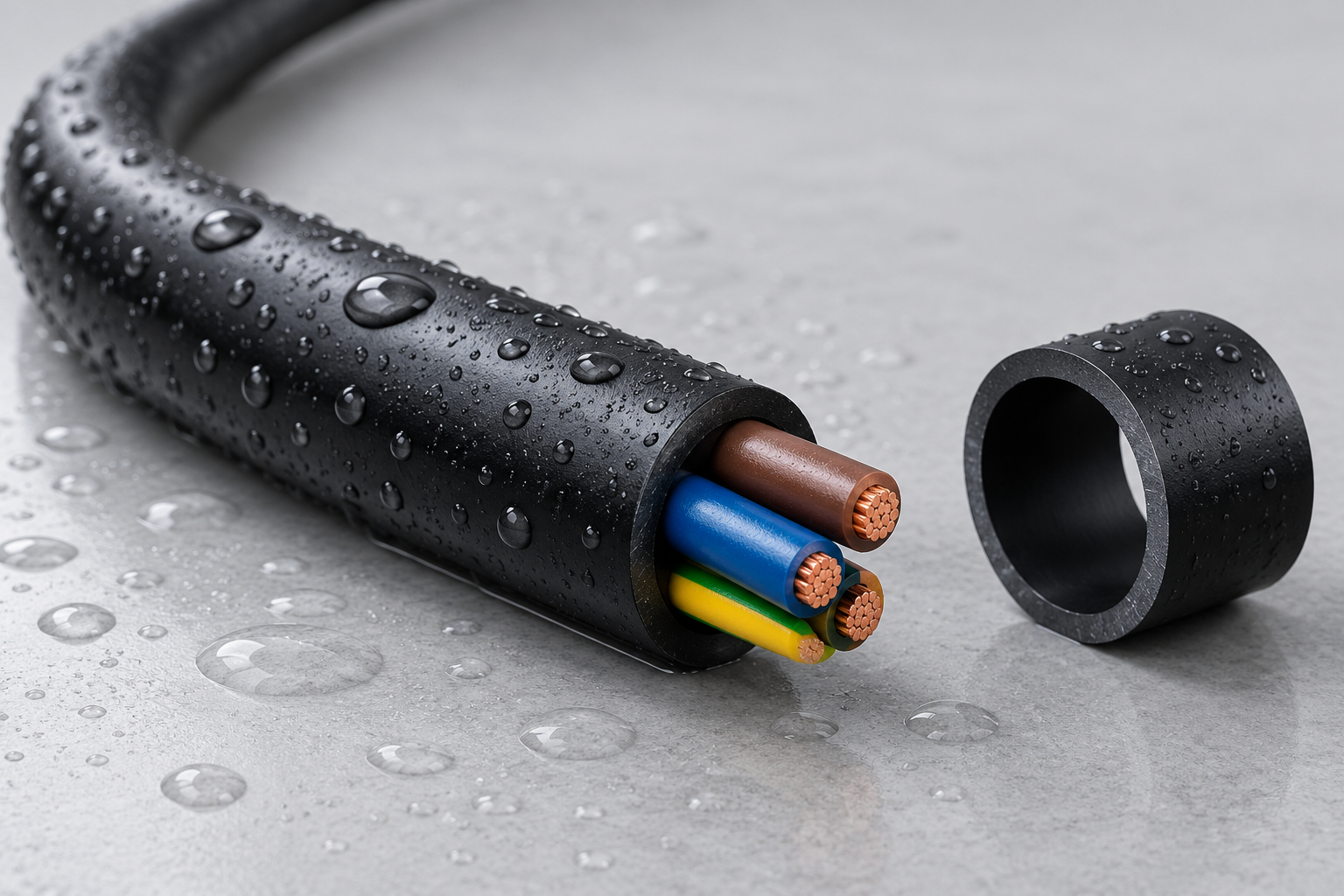
Does Low Smoke Mean Waterproof?
No. A cable described as low smoke zero halogen still needs an application specification. The label does not tell a buyer how long the cable may remain wet, whether its ends need sealing, or what performance must remain after exposure. Those questions belong in the technical approval before the purchase order is signed.
Eland Cables distinguishes water resistance, waterproofing and watertight construction, including the roles of barriers and water-swellable components. The useful purchasing lesson is to ask what each supplier means by its claim. Obtain the documented exposure and construction rather than treating these words as interchangeable ratings.
A photograph of water beading on a jacket cannot answer that question. Neither can a flame rating or a certificate that addresses smoke alone. Ask for the evidence that corresponds to the intended wet environment, and identify which part of the supplied product was actually tested.
Separate Three Water-Related Questions
First, how much moisture does the polymer specimen take up? Second, can water enter the cable through the sheath, a damaged area or an open end? Third, how far can it travel once inside? These require different evidence. A compound report is useful for the first question but cannot independently answer all three.
| Question | Evidence to request | What remains to check |
|---|---|---|
| Material absorption | Defined compound, specimen and absorption method | Finished cable and termination behaviour |
| Entry through the assembly | Specified barrier, sheath and termination evaluation | Exposure duration, pressure and damage assumptions |
| Longitudinal water travel | Applicable finished cable water-penetration test | Other entry paths and installation requirements |
Molex’s guidance on water ingress in data cables identifies exposed cable ends as an important route for capillary entry and explains that wetting can affect transmission characteristics. This is a construction and exposure issue, not simply a number on the jacket compound datasheet. Avoid extending that guidance into an identical failure claim for every cable design.
For a concrete construction example, a Corning indoor/outdoor LSZH optical cable specification describes water-swellable yarn as part of its design. The distinction matters: an LSZH sheath and internal water-blocking components can serve separate functions within one product. This example does not qualify another cable or imply that Rectivas supplies that design.
What a Water Absorption Test Shows
IEC 60811-402:2012 covers water absorption tests typically applied to cross-linked and thermoplastic insulating and sheathing compounds. It is read with IEC 60811-100. Use the method and requirements referenced by the governing cable specification, with the required edition. A method reference alone is not a universal LSZH acceptance limit.
Some plastics reports instead cite ISO 62:2008, which describes moisture absorption of solid plastics under controlled conditions. Its published scope excludes granulates and powders. Therefore, an ISO 62 specimen result should not be relabelled as the moisture content of incoming pellets. Pellet handling and final compound absorption are different specifications.
Check the actual reporting basis before comparing values. A percentage mass change and a result expressed per unit area use different denominators. Converting between them requires specimen information and compatible procedures; it is not a matter of changing the unit label. Also distinguish the initial state, the state after exposure and any subsequent drying required by the chosen method.
Ask the laboratory which measurement represents the requirement in your specification. Do not replace its procedure with a convenient overnight soak. An internal screening exercise can support development, but the purchase record should identify it as screening and retain the formal acceptance method separately.
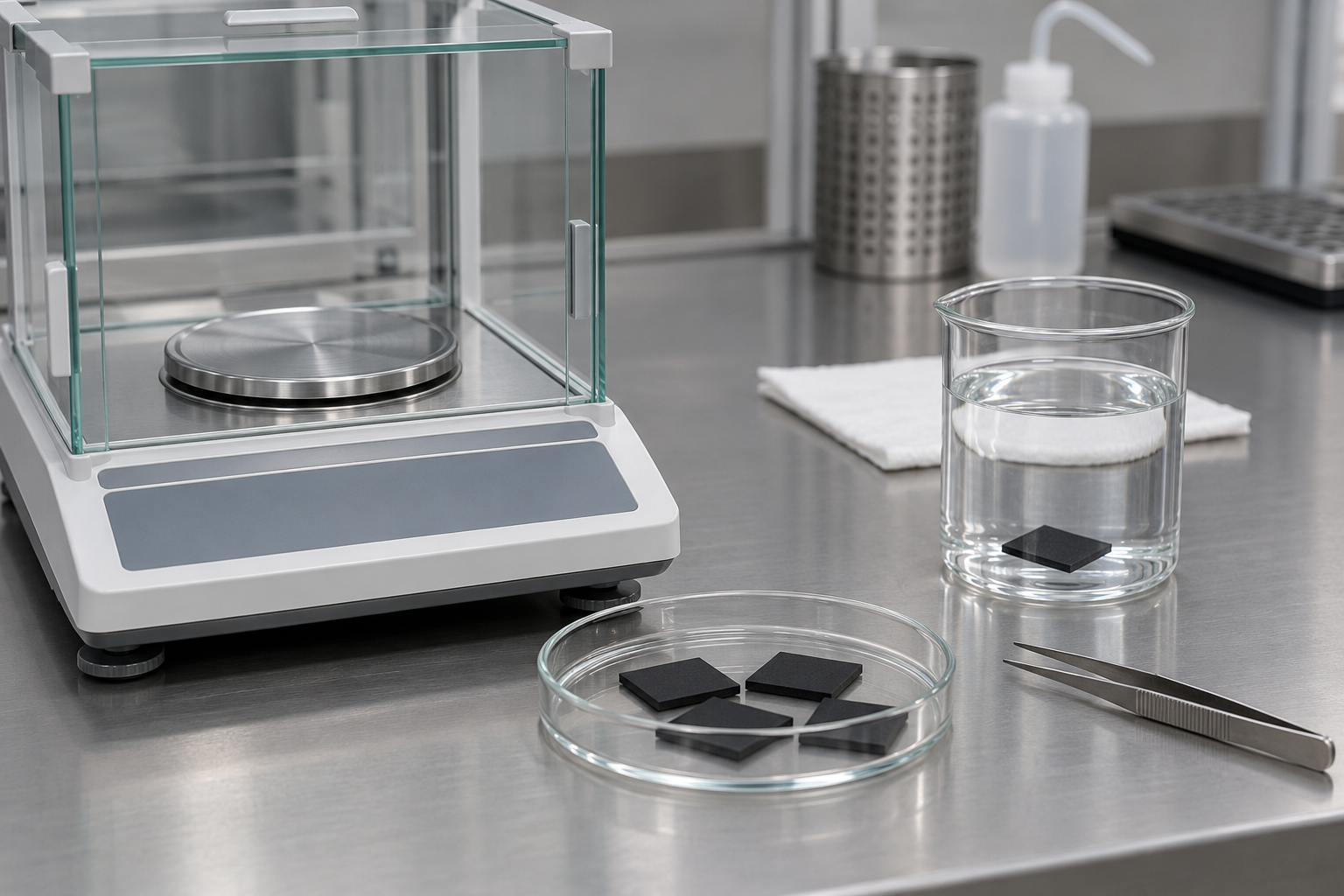
For LSZH compound water absorption, keep development samples and incoming-material checks clearly identified. Record whether a sample was moulded, cut from a sheath or otherwise prepared, and note any production additions. If a report uses a different specimen from the proposed trial, ask the laboratory what comparison is justified. Do not quietly combine the two records into one approval. A useful report lets another reviewer reconstruct which material was exposed, how it was prepared and which measured property was used to judge the result.
Compare Reports Before Comparing Grades
The smallest reported value is only meaningful when the test conditions are comparable. Ask for the full report or the relevant method page rather than a cropped property table. Verify that the grade, colour package and specimen description match the candidate material. A report for an uncoloured formulation may not represent a modified production compound.
| Report item | Compare directly | Question for the supplier |
|---|---|---|
| Material identity | Grade, lot and final formulation | Does this represent the quoted material? |
| Specimen | Shape, dimensions and preparation | Moulded specimen or cable-derived sample? |
| Exposure | Medium, temperature, time and conditioning | Are both reports testing the same condition? |
| Result basis | Units, calculation and individual results | Is the value typical or guaranteed? |
| Acceptance | Applicable specification and pass criteria | What finished cable evidence is also required? |
Here is a hypothetical comparison, not a customer case. Supplier A reports a lower percentage after a shorter exposure; Supplier B reports a higher number after a longer exposure at a different temperature. Neither report establishes which grade is better under the buyer’s required conditions. The next step is a matched comparison, not rejection of Supplier B.
Request samples identified to the quoted formulation, agree the preparation and acceptance method, and test them under the same conditions. Retain individual results and report any deviations. If a finished cable trial follows, connect its record to the compound lot and extrusion run so later questions can be traced to the evaluated combination.
Specify Wet Service Before Changing the Formulation
“Water-resistant LSZH compound” is a starting description, not a complete brief. State whether the application faces humid air, occasional splashes, a wet duct or sustained immersion. Include the relevant temperature, exposure duration, fluid and pressure or depth requirement where applicable. The cable designer needs those details to decide what evidence and construction are necessary.
For the material discussion, ask about the complete polymer and filler system, compatibility with the colour package, and the available test evidence. Do not approve a candidate solely because its filler is described as coated, hydrophobic or surface treated. Treat these as formulation descriptions that need a demonstrated result in the final compound.
For compounders, halogen-free flame retardant additives must be evaluated within that complete formulation. Ask the supplier to explain the grade’s intended use and supporting data. A raw additive claim does not establish the cable jacket’s absorption or the finished cable’s suitability for immersion.
For processors buying a ready-to-run flame retardant compound, request the candidate’s processing recommendations and qualification evidence together. Record any additions made during production. Agree which mechanical, electrical, smoke and fire requirements must be checked after a formulation change; do not assume an improved water result preserves every other property.
Keep Outdoor and Wet Requirements Separate
An outdoor application can combine sunlight, temperature changes and moisture, but one qualification does not automatically cover the others. Our UV resistant LSZH compound article covers the broader outdoor material discussion. For water-related approval, use the exposure definition and report comparison described here rather than relying on the word “outdoor.”
A useful approval record has three linked parts: the selected material and its evidence, the finished cable construction and required tests, and the installation or termination requirements. Give each open question an owner. For example, a compound supplier may answer the specimen question while the cable designer answers the water-blocking construction question and the assembly supplier addresses the termination.
If water has already entered an installed cable, preserve the product identity and exposure record and consult its manufacturer about inspection and disposition. Drying a visible surface does not demonstrate that the internal cable performance has recovered. Avoid using an absorption datasheet as the basis for returning a flooded installation to service.
What to Include in a Sample Request
Send the current grade, cable cross-section, jacket dimensions, intended environment, applicable specification and available reports. Mark whether you are developing a formulation or purchasing finished compound. State the acceptance requirement for the compound and the separate requirements for the cable, so the supplier can identify which evidence is available and which trials remain necessary.
Rectivas Materials works as a sourcing and technical partner to coordinate supplier documentation, candidate grades and sample discussions. Start with flame retardant additives for LSZH cable compounds when defining the additive requirement. Share the water-exposure brief alongside the fire and mechanical targets. Qualification remains tied to the agreed material, construction and test conditions.
Frequently Asked Questions
Does LSZH cable absorb water?
LSZH is a category description rather than one formulation, so water uptake must be checked for the particular grade and exposure. Request a report identifying the specimen, method, conditions and units. Keep that material result separate from evidence about the complete cable, including its barriers, internal water-blocking components and the treatment of open ends or terminations.
Does low water absorption mean the cable is waterproof?
No. A material absorption result describes the tested specimen under stated conditions. It does not establish every route by which water can enter a finished cable or assembly. Check the construction, termination arrangement and intended exposure with the cable manufacturer. Ask what specific test or specification supports the waterproof claim before accepting it for the application.
Which standard covers cable compound water absorption?
IEC 60811-402 describes water absorption tests typically used for cross-linked and thermoplastic cable insulation and sheathing compounds. The governing specification determines the applicable requirements. ISO 62 may appear in solid plastics data. Confirm the required method and edition with the laboratory instead of assuming that any absorption report can satisfy the cable’s acceptance requirement.
Can I compare water absorption percentages from two datasheets?
Only after checking the specimen preparation, exposure, conditioning and calculation basis. Matching percentages can come from different test conditions, and different units may represent different quantities. Ask for supporting reports where the comparison affects grade approval. If the conditions do not match, arrange a controlled comparison against the actual requirement rather than ranking the printed numbers.
Is there one maximum water absorption value for all LSZH materials?
No single value should be applied across every LSZH grade and cable application. Use the limit in the relevant material or cable specification and identify the associated test conditions. A supplier’s typical figure can support screening, but a delivery guarantee and finished cable qualification require their own agreed scope. Record those distinctions in the purchasing documentation.
Does surface-treated mineral filler guarantee a water-resistant compound?
No. The treatment description alone does not establish the final compound’s performance. Request evidence for the specific filler grade and the intended formulation, then evaluate representative samples. Changing the additive system also requires review of the other applicable properties. Approve the complete formulation against its specification rather than treating a coating name as a pass result.
Is a UV-resistant LSZH cable suitable for immersion?
UV resistance and immersion suitability are separate requirements. An outdoor or sunlight claim does not define permissible water exposure. Obtain the cable manufacturer’s stated application limits and the relevant test evidence, including termination requirements. Describe duration, temperature and pressure or depth where applicable so the proposed construction can be evaluated for the actual installation conditions.
What information helps a supplier propose an LSZH sample?
Provide the current compound, cable construction, jacket dimensions and required fire, mechanical and water-related performance. Include the intended exposure and the acceptance test method, not just the phrase low absorption. Identify any production additions and share comparable reports. This helps the supplier propose a candidate and a trial plan that addresses the requirement you actually need.
Final Thoughts
LSZH cable water absorption is one part of wet-service qualification. Define the exposure, compare reports on a common basis and request separate evidence for the finished cable and terminations. Keep low smoke, material absorption and water blocking as distinct requirements in the approval record. A clear sample brief gives the compound supplier and cable designer a practical basis for evaluating the proposed solution.
— Rectivas Materials Team, Chen