Rectivas Materials · Flame retardant manufacturer and formulation partner sales@rectivas.com  ·  WhatsApp +86 180 3191 1520

KSS Flame Retardant (Potassium Diphenylsulfone Sulfonate)

0.1% of the compound, and clear polycarbonate goes from V-2 drip risk to UL94 V-0. KSS is a catalyst, not a filler — the only additive that gets a machine guard or a light cover to V-0 without turning it cloudy. Halogen-free, supplied as fine powder for compounding into transparent PC.

Loading0.05–0.1%
ClarityWater-clear retained
ChemistrySulfonate salt · halogen-free
TargetUL94 V-0 @ 1.6–3.2mm
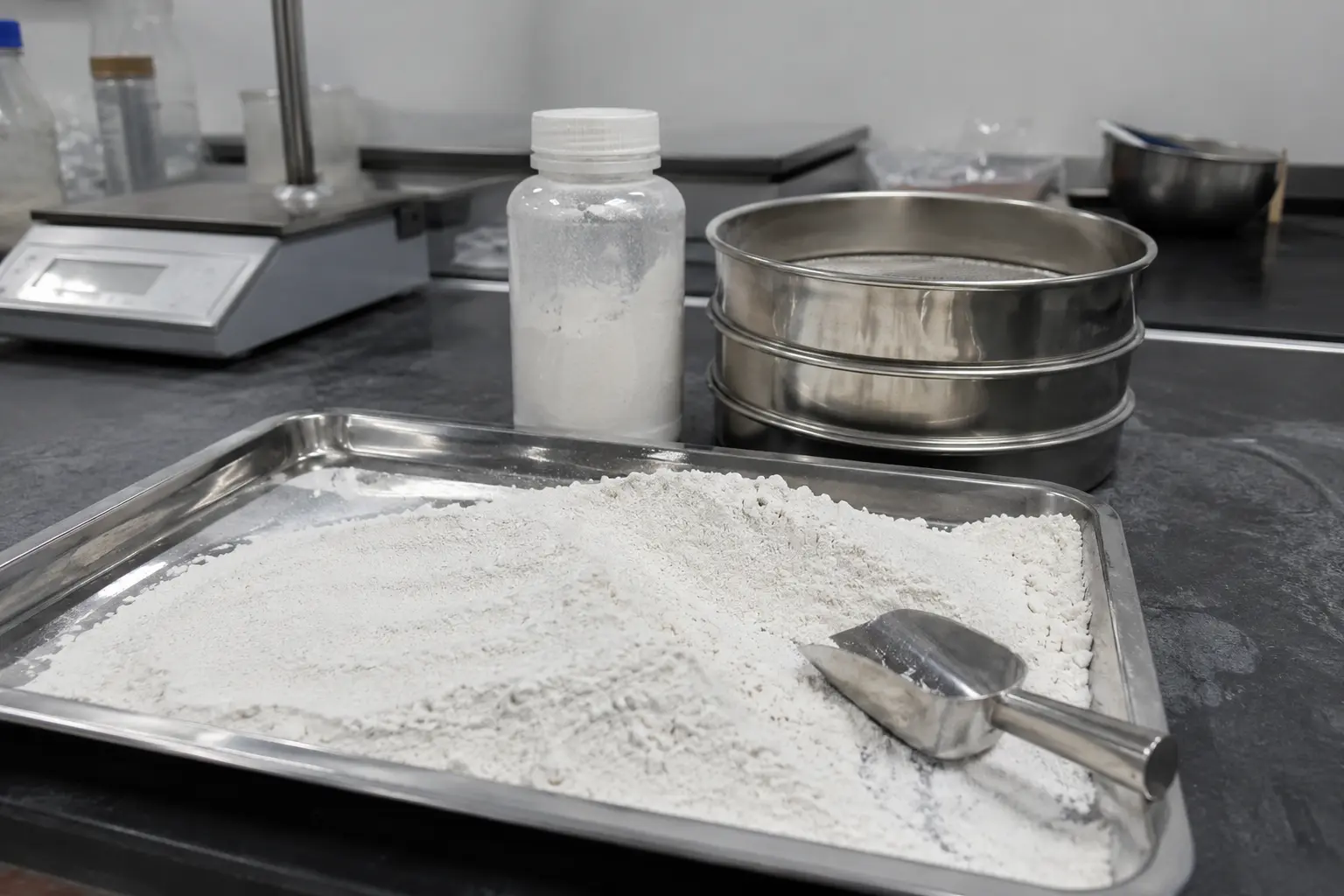
KSS potassium sulfonate flame retardant fine powder at the Rectivas QC lab Fig. K01 — KSS powder at incoming QC

Fine KSS powder measured in fractions of a percent, not phr.

KSS series
Form — fine powder
Goal — clear V-0, no haze
Use — PC glazing, guards, lighting
01 / 07Definition

What Is KSS?

KSS is short for potassium diphenylsulfone sulfonate — an aromatic sulfonate salt. It does not fill the resin or block light; it rides inside the PC matrix and steers how the polymer breaks down when it burns. That is the whole trick, and it only works because PC already wants to char on its own.

Role: catalytic char promoter, not a filler Profile: halogen-free · clear · trace-level dose Forms: fine powder for direct compounding
K-01

Two Orders of Magnitude Less

Mineral and phosphate systems need 8–25% to rate a resin. KSS does the same job in clear PC at 0.05–0.1% — a rounding error by comparison, and the reason it leaves no visible trace.

  • Measured in hundreds of ppm, not phr
  • No mineral haze, no filler settling
  • Impact strength essentially untouched
K-02

PC-Specific Chemistry

KSS is not a general-purpose flame retardant — it works by nudging a decomposition path unique to polycarbonate’s own molecular structure. It does not transfer to other resins the way phosphinates or minerals do.

  • Built for PC and PC blends specifically
  • Not a fit for PP, PA, ABS and similar
  • Pairs with the resin’s natural char tendency
K-03

Halogen-Free by Default

Unlike its fluorinated cousin KPFBS (potassium perfluorobutane sulfonate), KSS carries no halogen atoms at all — the cleaner claim where a spec says zero halogen, not just RoHS.

  • No fluorine, no bromine, no chlorine
  • Fits strict halogen-free declarations
  • RoHS / REACH documentation per batch
02 / 07Mechanism

Why 0.1% Is Enough

KSS does not fight the flame directly. It changes what PC does when it starts to break down — three effects from one small dose.

M-01

Redirects Decomposition

The sulfonate shifts PC’s thermal breakdown toward crosslinking and char formation instead of chain scission into flammable fragments.

M-02

Builds a Protective Char

The resulting char layer insulates the material below and starves the flame of fresh fuel — PC’s own carbon becomes the barrier, no added mass required.

M-03

Leaves the Optical Path Alone

Because KSS dissolves at the molecular level rather than dispersing as particles, there is nothing present at a scale that scatters visible light — hence no haze.

03 / 07Applications

Where KSS Is Used

Anywhere a part must be seen through and rated V-0 — the two requirements conventional flame retardants cannot satisfy together.

ApplicationWall ThicknessKSS DoseCo-AdditiveRelated Page
Clear machine guards / safety glazing1.6–3.2 mm0.05–0.1%Trace PTFE for drip controlFR polycarbonate sheet
LED lighting covers & diffusers1.5–2.5 mm0.05–0.1%Minimal — optical clarity is the priorityFR polycarbonate
Electrical enclosure viewing windows2–3 mm0.1%PTFE where V-0 drip rules applyFR polycarbonate
Thermoformed clear sheet / canopiesVariable after forming0.05–0.1% pre-formingVerify rating at the thinnest formed cornerFR polycarbonate sheet
04 / 07Comparison

KSS or Phosphate Ester — Which PC Route?

Both reach V-0 in PC. One question decides which: does the part need to be seen through?

KSS When Clarity Is the Spec

Glazing, guards, light covers — anything where haze fails the part regardless of flame rating.

  • Water-clear at 0.05–0.1% loading
  • Impact strength close to unmodified PC
  • PC-specific — will not transfer to other resins

Phosphate Ester (BDP/RDP) for Opaque Parts

Housings, PC/ABS blends, anything colored or opaque — where the higher loading is not a visual problem.

05 / 07Selection

What Decides a KSS Formulation

The KSS dose barely moves. Everything else in the recipe is where a project actually gets tuned.

01Wall thickness (rating basis)
02Anti-drip (PTFE) dose vs haze
03PC grade & molecular weight
04Optical clarity spec (haze %)
05Thermoforming plan (thinning)
06Halogen-free vs RoHS-only claim
07UV stabilization needs
08Impact requirement
09Cost per rated part
06 / 07Manufacturing

KSS Supply from Rectivas

We supply KSS as fine powder for direct compounding into clear PC, with the PTFE anti-drip balance worked out for your wall thickness and haze spec — every ladder cast and burn-tested before we quote a number.

Form: fine powder, precision dosing Testing: in-house UL94 · haze check Documents: TDS · SDS · COA · CTI (Hebei) reports
  • C-01KSS dose calibration by wall thickness
  • C-02PTFE anti-drip balancing against haze target
  • C-03Twin-screw trials and burn verification
  • C-04Purity screening — trace contamination shows in clear parts
  • C-05Standing halogen-free FR-PC grade available
  • C-06Batch QC with TDS / SDS / COA per shipment
  • C-07Export packaging and worldwide delivery
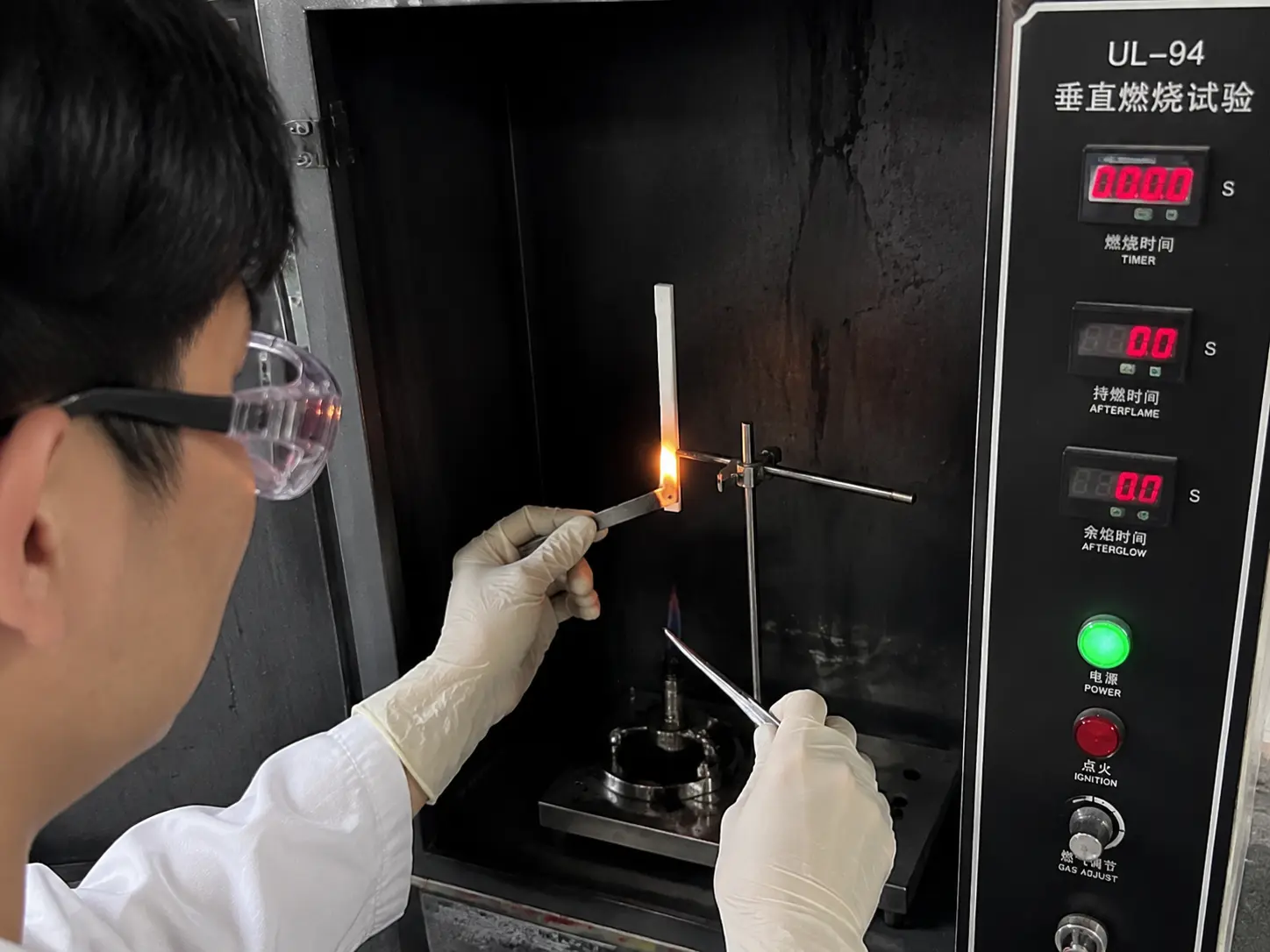
UL94 burn verification of a clear KSS polycarbonate compoundFig. K02 — burn verification in our labClarity and V-0 checked together, not separately.
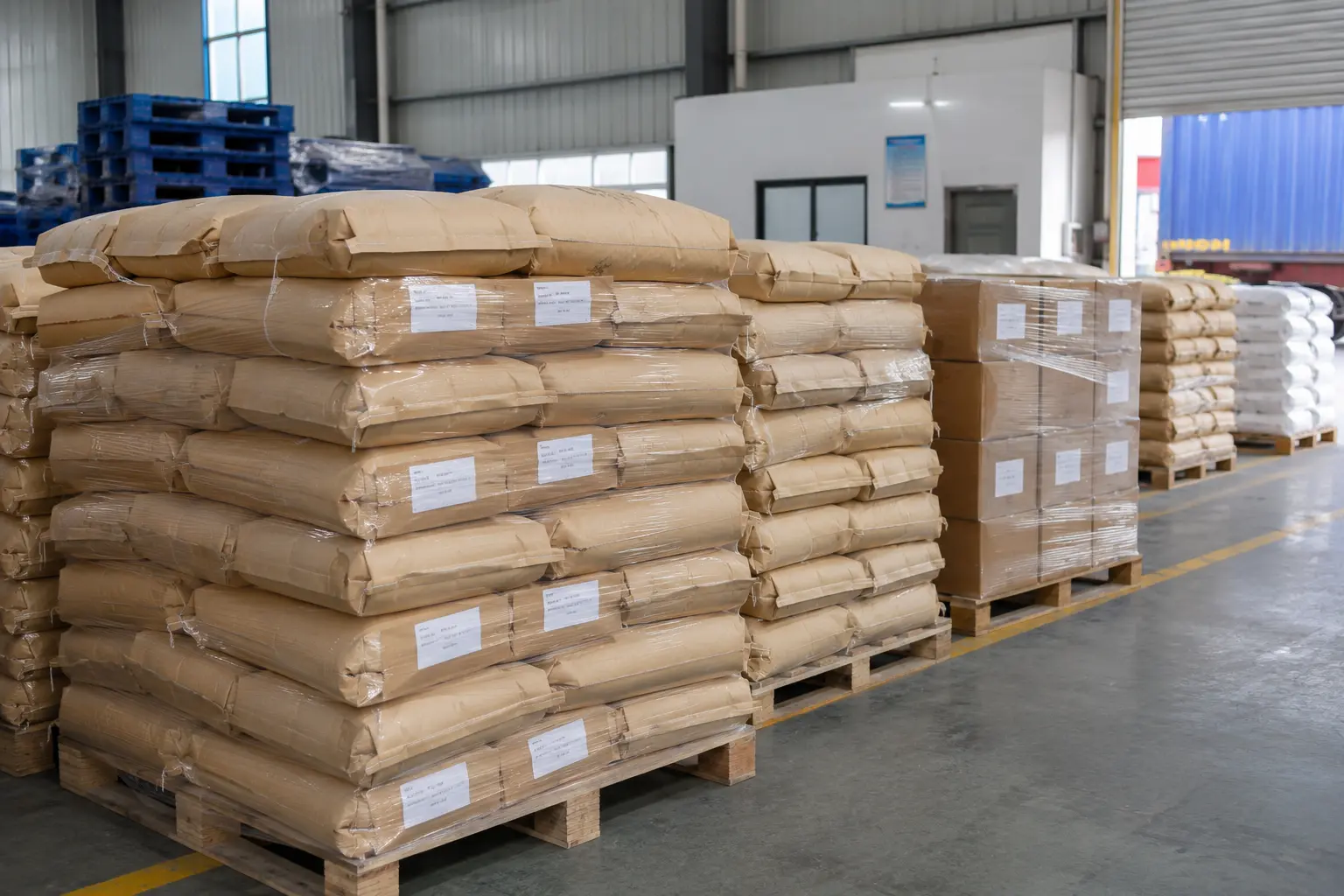
Export packaging of KSS flame retardant powderFig. K03 — export packagingSmall-dose powder, precisely packed for accurate dosing.
07 / 07FAQ

Buyer Questions About KSS

The four that come up on almost every clear-PC inquiry.

What is KSS flame retardant?

Potassium diphenylsulfone sulfonate — a sulfonate salt that takes clear polycarbonate to UL94 V-0 at just 0.05–0.1% loading. It works by redirecting PC’s own decomposition toward char formation, not by adding bulk filler.

Why does KSS not affect PC clarity?

The dose is a few hundred parts per million, and it dissolves into the PC matrix rather than sitting as filler particles. Conventional flame retardants need 8–25%; KSS needs about a hundredth of that, so there is nothing present at a scale that scatters light.

Does KSS need an anti-drip additive?

Usually a small amount of PTFE, yes. PTFE is the one ingredient in a KSS formulation that can add haze, so the anti-drip dose — not the KSS content — is what a formulator actually tunes to hit both V-0 and the optical spec.

Is KSS halogen-free?

Yes, fully. Its relative KPFBS (potassium perfluorobutane sulfonate) contains fluorine; KSS does not. Where a spec demands zero halogen rather than just RoHS compliance, KSS is the cleaner answer.

Request a KSS Recommendation

Tell us the wall thickness, whether the part is thermoformed, and your haze/clarity spec. We calibrate the KSS and PTFE dose together and prove V-0 at your actual thickness before you commit a trial.

Include in your inquiryK-RFQ
  • PartWall thickness, solid or multiwall, thermoformed or not
  • Clarity specHaze % target or “water-clear” requirement
  • Target ratingUL94 V-0 at your actual wall
  • ComplianceHalogen-free declaration, RoHS, REACH
  • Trial volumeSample quantity and expected annual demand