Quick answer: OFNP and LSZH answer two different questions and are not interchangeable. OFNP is a US listing (NEC Article 770) proving an optical fiber cable passed the NFPA 262 plenum burn test — it regulates where the cable may be installed. LSZH is a material class — jacket compounds that emit minimal smoke and no halogen acids when burned, verified under IEC 60332/60754/61034 — it regulates what the cable gives off in a fire. A cable can be OFNP without being LSZH (most US plenum cable is fluoropolymer or low-smoke PVC based), and LSZH without being OFNP. Global projects frequently need to satisfy both.
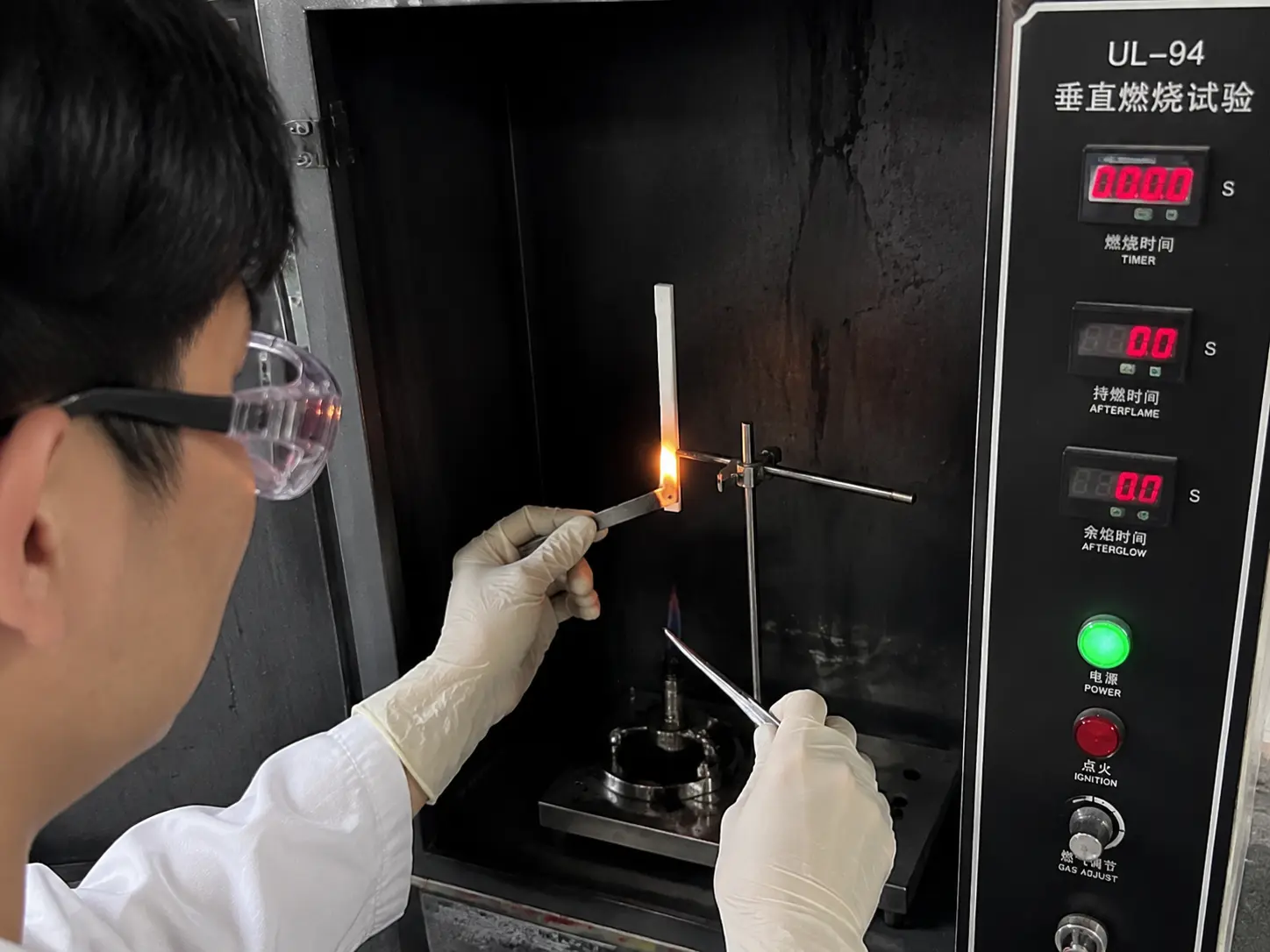
This confusion lands in our inbox from two directions. Cable plant engineers quoting a US data-center job ask whether their LSZH jacket “counts as OFNP.” US integrators bidding Middle East or European projects ask whether their OFNP-listed cable “is LSZH.” Both questions assume the two labels sit on one scale, one stricter than the other. They don’t — they belong to two different regulatory philosophies, and knowing which philosophy governs your install site is the whole game.
OFNP: A Location Permission, Written by the NEC
Q: What does OFNP stand for? Optical Fiber, Nonconductive, Plenum — the top flame rating for all-dielectric fiber cable under NEC Article 770.
The US National Electrical Code sorts communications cable by where it may legally run, and the plenum — the air-handling space above dropped ceilings — is the most demanding location, because HVAC airflow would pump smoke from a burning cable through an entire building. To earn OFNP, a cable passes NFPA 262 (the Steiner-tunnel-derived plenum test): flame spread and, critically, optical smoke density limits under forced airflow. The hierarchy stacks downward:
| NEC marking | Test | Permitted location | Substitution |
|---|---|---|---|
| OFNP (plenum) | NFPA 262 | Plenums, ducts, anywhere below | Replaces all lower grades |
| OFNR (riser) | UL 1666 (vertical shaft) | Floor-to-floor risers and below | Not allowed in plenums |
| OFN / OFNG (general) | UL 1685 / vertical tray | Same-floor, general purpose | Lowest tier |
Note what OFNP does not test: halogen content and acid gas. US plenum cable historically earns its low smoke with FEP (a fluoropolymer — halogenated by definition) or specialised low-smoke PVC. Perfectly legal, OFNP-listed — and disqualified from any halogen-free specification on the planet.
LSZH: A Material Promise, Written by IEC
Q: What does an LSZH rating actually verify? Three material behaviours, each with its own IEC standard: the cable resists flame propagation (IEC 60332), emits near-zero halogen acid gas when burned (IEC 60754, <0.5% HCl equivalent), and produces little smoke (IEC 61034, light transmittance ≥60% in the 3-metre cube).
LSZH grew from the opposite worry: not where fire spreads, but what the fire does to people and equipment in enclosed spaces — tunnels, ships, trains, data halls. Burning PVC releases dense smoke and hydrochloric acid that blinds escape routes and corrodes electronics; LSZH compounds replace the halogen chemistry entirely, using polyolefin jackets loaded 50–65% with mineral hydroxides. The full material argument — including where PVC remains the rational choice — is in our LSZH vs PVC comparison, and the compound side lives on our flame retardant cable compounds page.
The crucial asymmetry: LSZH is defined by emissions chemistry, so a standard LSZH jacket does not automatically survive the NFPA 262 plenum burn — forced-airflow flame spread is a harder aerodynamic problem than the IEC vertical tests. Compounders have closed the gap with high-performance LSZH plenum grades, but it took formulation work, not relabelling.
So Which One Does Your Project Need?
- US commercial building, cable in air-handling spaces → OFNP is legally mandatory; LSZH is optional. The AHJ checks the listing printed on the jacket, full stop.
- European/IEC-jurisdiction building → no OFNP concept; CPR Euroclasses (B2ca/Cca/Dca) plus LSZH requirements govern. An OFNP listing impresses nobody.
- Global data-center operators → increasingly demand both: NEC listing for the US sites, LSZH emissions behaviour as corporate policy everywhere (smoke corrosivity is an equipment-protection issue, not just life safety). This dual-spec cable — halogen-free plenum — is the hardest compound in the fiber world and the fastest-growing ask we see.
- Ships, rail, tunnels, defense → LSZH by sector standards; NEC categories don’t apply.
One real-world note from a cable customer of ours exporting to both markets: they run one LSZH jacket compound engineered to pass NFPA 262, rather than two inventories (FEP-based for US, LSZH for export). Their per-metre compound cost is higher than commodity LSZH, but they eliminated dual tooling, dual stock and mislabelling risk. Whether that trade wins depends on your volume split — but it is only possible when the compound’s mineral system is engineered for forced-airflow flame spread from day one, which in practice means high-purity, surface-treated magnesium hydroxide flame retardant systems pushed to loadings where dispersion quality decides pass or fail.
For the fiber-specific picture — how OFNP, OFNR and LSZH interact with tube materials, strength members and riser/plenum architecture — our article on flame retardant fiber optic cable completes this one. And if you are on the compound side of the problem — building an LSZH jacket that has to clear IEC 61034 smoke or chasing a halogen-free plenum grade — that is exactly the work our partner factory’s lab is set up for: send the target spec and we’ll propose a mineral system and loading with screening data. The full standards map across IEC, CPR and NEC routes is on our flame retardant for wire and cable page.
FAQ
Is OFNP better than LSZH?
Neither is “better” — they measure different things. OFNP certifies plenum-grade flame and smoke behaviour for US code compliance; LSZH certifies low smoke and zero halogen acid emissions. The strictest modern specification is the combination: an LSZH-material cable that also holds an OFNP listing.
Can an LSZH cable be used in a US plenum?
Only if that specific cable carries an OFNP (or CMP, for copper) listing. The LSZH label alone has no standing under the NEC — the AHJ needs the listed marking, which means the cable passed NFPA 262 regardless of its jacket chemistry.
Is OFNP cable halogen-free?
Usually not. Most OFNP cable achieves its plenum rating with FEP or low-smoke PVC, both halogenated. If your specification says halogen-free, you must ask for it explicitly — “plenum-rated” does not imply it.
What is the difference between OFNP and CMP?
Same plenum test, different cable family: OFNP covers nonconductive optical fiber cable (NEC 770), CMP covers communications/copper cable (NEC 800). A hybrid cable containing both fiber and conductors falls under the conductive/communications listings, not OFNP.
Final Thoughts
Plenum ratings and halogen-free requirements pull in opposite directions more often than buyers expect – most OFNP cable achieves its rating with fluoropolymer. If your specification demands both, say so explicitly and early, because the material set narrows sharply. Our LSZH cable compounds cover the halogen-free side; we will tell you plainly when a plenum requirement puts a project outside what we supply.
Smoke performance is the other half of the plenum-versus-halogen-free question, and it is measured differently in each region. The standards and their limits are in smoke density and toxicity testing. Riser and outdoor runs add a third question again: a UV resistant LSZH compound for outdoor runs is a different grade from the indoor one, not a claim on the datasheet. On the European side, remember that Euroclasses attach to the cable and never to the pellets — see what LSZH compound certification actually covers. Plenum is one jurisdiction’s answer; rail and marine ask for different things again — see which LSZH compound each application needs.
—— Rectivas Materials 团队 老陈