Quick answer: PVC cable jackets are cheaper and easier to run. LSZH jackets cost more but burn without releasing halogen acid gas or heavy smoke — the difference that matters the moment a fire happens in an occupied or enclosed space. Building codes increasingly decide this for you: risers, plenums, data halls and public buildings push toward LSZH; general office and light commercial runs still ship PVC.
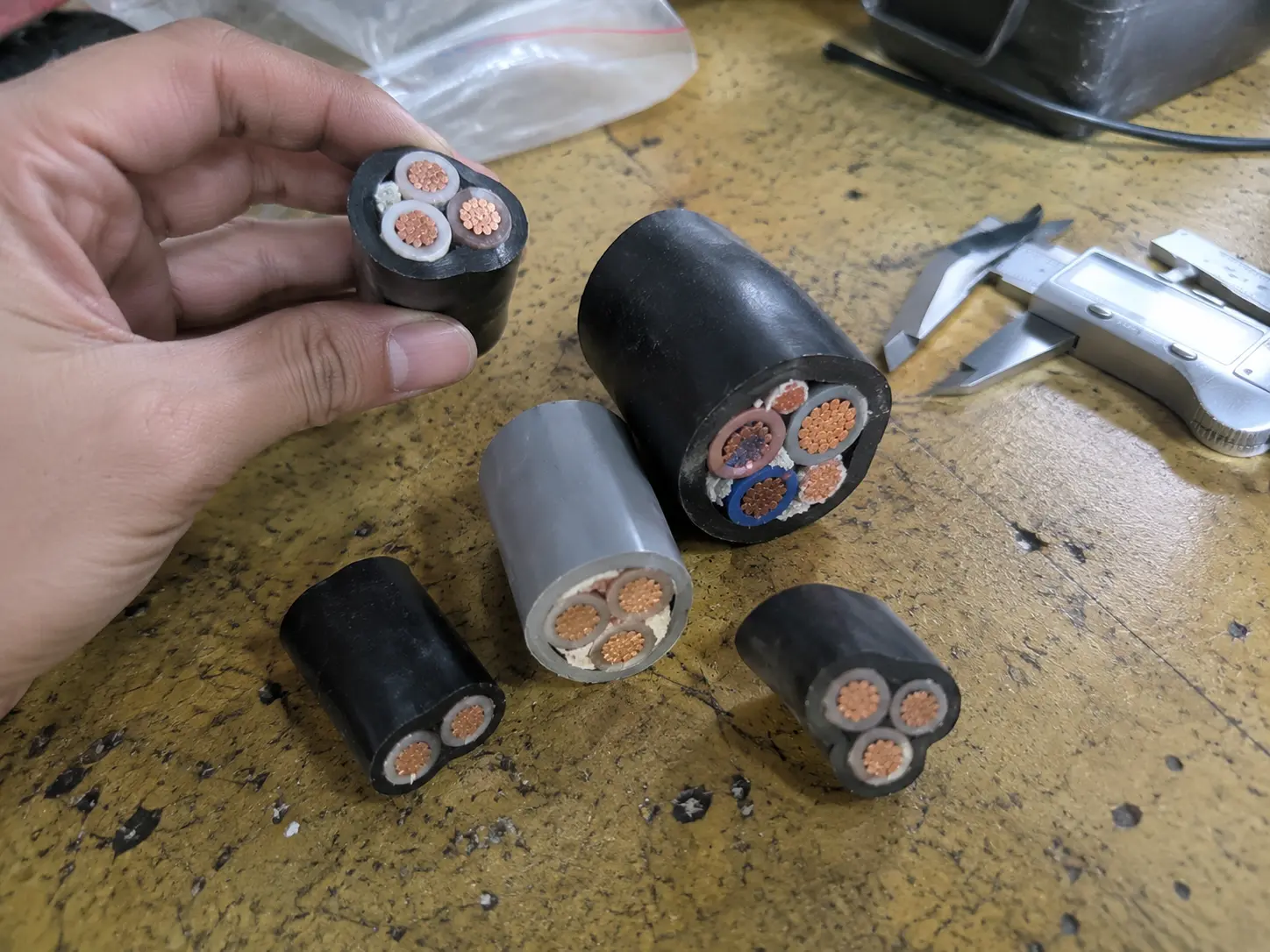
Ask a cable buyer why they picked PVC or LSZH and half the time the honest answer is “that’s what we always use.” Fair enough for a repeat order. Not fair enough for a new data hall or a building that just changed its fire code. Here is the comparison stripped down to what actually changes.
LSZH vs PVC: the core trade-off
| Property | PVC | LSZH |
|---|---|---|
| Chemistry | Chlorine-based polymer | Halogen-free polyolefin + mineral filler |
| Smoke when burned | Dense, dark | Light — the whole point of “low smoke” |
| Gas released | Corrosive HCl acid gas | Water vapor, non-corrosive |
| Feel / flexibility | Soft, easy to pull | Stiffer — mineral loading firms it up |
| Cost | Lower | 15–30% higher, typically |
| Typical install | Open office, light commercial | Risers, plenums, data halls, transit, public buildings |
Both jackets can be built to pass a basic flame test. The line that actually separates them is what happens to the people and equipment in the room once the fire starts — smoke and acid gas, not whether the cable itself catches.
Why the smoke matters more than the flame
PVC’s chlorine is doing two jobs at once. In a fire it releases HCl — the same mechanism that gives PVC its baseline flame resistance also produces a corrosive acid gas cloud that keeps attacking equipment long after the flame is out. Server contacts, switch boards, motherboards — acid gas corrodes them on contact, which is why a PVC cable fire in a data hall can total hardware rooms away from the actual blaze.
LSZH jackets are built from a different base entirely — typically EVA or PE loaded 55–65% with aluminium or magnesium hydroxide. Those minerals release water vapor when they decompose, not acid gas, and the smoke stays thin enough to see an exit sign through. That is the whole engineering goal behind the name: low smoke, zero halogen. We cover the mineral chemistry itself on our MDH & ATH page, and the full cable-compound picture on flame retardant cable compounds.
Where codes make the choice for you
Increasingly, this isn’t a preference question. In the EU, CPR Euroclasses run Aca (best) down to Fca (banned in fixed installs); B2ca or Cca is the common floor for public buildings, and hitting those classes in practice means LSZH. In the US, plenum and riser ratings (OFNP, OFNR) govern installation space rather than jacket material directly, but LSZH is standard in hyperscale data halls regardless of the minimum code, because operators specify above code for their own liability reasons. Outside regulated spaces — a small office fit-out, light commercial wiring — PVC is still legal, cheaper, and the more common shipped product.
One clarification worth making explicit: LSZH is not automatically flame retardant, and PVC is not automatically banned from anything. Both are separate specs from the actual flame rating (UL94, IEC 60332) — see fire resistant vs flame retardant cable for that distinction, and flame retardant fiber optic cable for how the same LSZH/PVC/plenum split plays out on the fiber side.
LSZH vs PVC by Cable Type
The answer changes with what the cable does and where it runs. These are the four cases we get asked about most, including the fibre optic one that has its own complication.
| Cable Type | Which Wins, and Why |
|---|---|
| Power & control cable in buildings | LSZH where the route passes through escape paths or enclosed spaces. If smoke density or acid gas appears in the clause, PVC is already out. |
| LSZH vs PVC for fibre optic cable | Depends on the region. In North America a plenum rating usually means fluoropolymer or low-smoke PVC — both halogenated. Asking for plenum-rated and halogen-free at once narrows the material set sharply — see OFNP vs LSZH. |
| Industrial & outdoor | PVC often still wins on abrasion, oil resistance and cost. LSZH at 55–65% mineral loading gives up mechanical properties that matter outdoors. |
| Data centre & rail | LSZH, and usually not negotiable. Acid gas corrodes switchgear the fire never reached; rail adds EN 45545-2 on top. |
The question that settles it fastest: read your specification for the words smoke density, acid gas, halogen-free or an IEC 61034 / IEC 60754 reference. If any of them appear, the choice is made and the remaining work is how much mechanical property you can afford to trade. If none appear, PVC is usually the cheaper answer and switching costs you money for nothing — the flame retardant side of PVC is covered in flame retardant PVC cable, sheet and tape.
Which one should you actually buy
- Choose LSZH for anything enclosed, occupied or code-regulated: data centers, transit, ships, tunnels, public buildings, plenum and riser runs.
- PVC is fine for open, ventilated, lightly regulated spaces where cost per meter matters more than smoke toxicity — general office cabling, light residential.
- Check the destination country’s code before ordering, not after. A cable that clears US code can still fail an EU CPR class, and vice versa.
For the underlying PVC flame retardant chemistry — antimony, zinc borate, smoke suppression — see our PVC cable guide.
How Rectivas supports both jacket lines
We supply the flame retardant chemistry behind both: mineral MDH/ATH packages for LSZH compounds, and antimony/zinc-borate smoke-suppression systems for PVC cable. Every package is burn and smoke-tested in-house before it ships, with an accredited third-party laboratory reports on the regulated substances. Tell us the jacket base, the destination market’s code (CPR class, OFNP/OFNR, or general), and your smoke target — we will match the compound. Request a quote to start, or read our flame retardant for wire and cable overview for how the four cable requirements stack up.
FAQ
Is LSZH cable always better than PVC?
Better for smoke and toxicity, not universally “better” — PVC is cheaper, more flexible, and legal everywhere LSZH isn’t specifically required. LSZH earns its premium in enclosed, occupied or code-regulated spaces where smoke and acid gas are the real hazard, not open, ventilated installs.
Does LSZH cost significantly more than PVC?
Typically 15–30% more per meter, driven by the mineral filler content (55–65% loading) and the surface treatment needed to keep the compound flexible at that load. The gap narrows on large orders and widens on premium low-smoke grades.
Can PVC cable pass fire codes at all?
Yes — PVC compounds with the right flame retardant package pass standard flame tests (UL94, IEC 60332) routinely. What PVC cannot do is meet a “zero halogen” or strict low-smoke requirement, since the chlorine in the base polymer is inherent to the material, not an additive choice.
Is LSZH required by law in data centers?
Not universally, but it is the de facto standard. EU public buildings generally need a CPR class (B2ca/Cca) that pushes toward LSZH, and most hyperscale and colocation operators specify LSZH above whatever the local minimum code requires, mainly to limit smoke damage and downtime risk.
Final Thoughts
If the specification names smoke density or acid gas, PVC is out of the running and the conversation moves to how much mechanical property you can afford to trade. That is a mineral hydroxide question at 55-65% loading, and surface treatment decides whether the compound still extrudes. Our LSZH cable compound systems cover both the additive and finished-compound routes – tell us your elongation minimum and line speed.
The smoke clause is usually what settles this comparison, so it is worth knowing how it is actually measured — IEC 61034 asks for 60% light transmittance across a 3 m cube, and that is a different question from the smoke index inside ASTM E84. Methods and pass criteria are compared in smoke density and toxicity testing.
If PVC turns out to be the right answer for your application, what a PVC compound actually needs is a separate question — usually smoke suppression rather than flame retardancy. Set out in fire retardant PVC compounds. And if the LSZH side wins but the cable goes outdoors, read UV and weathering in LSZH compounds before you fix the grade — that is where the mineral loading bites back. If the paperwork question arrives before the material question, start with LSZH compound certification — most requests for a compound Euroclass are aimed at the wrong level of the supply chain. If LSZH wins, the next question is which LSZH: the grade for a metro car is not the grade for a riser, as compared in LSZH cable compound uses by application.
—— Rectivas Materials 团队 技术工程师老陈