Rectivas Materials · Flame retardant manufacturer and formulation partner sales@rectivas.com  ·  WhatsApp +86 180 3191 1520

Zinc Stannate Flame Retardant

The antimony-free synergist: zinc stannate (ZS) and zinc hydroxystannate (ZHS) deliver halogen-system flame synergy and hard smoke suppression at 1–5 phr — the tin route for formulations that want antimony out entirely. Supplied as fine powder for PVC cable, brominated systems, LSZH compounds and engineering plastics.

ChemistryZnSnO₃ (ZS) · ZnSn(OH)₆ (ZHS)
RolesSb-free synergy · smoke · char
Typical dose1–5 phr
TargetsUL94 · LOI · IEC 61034 smoke
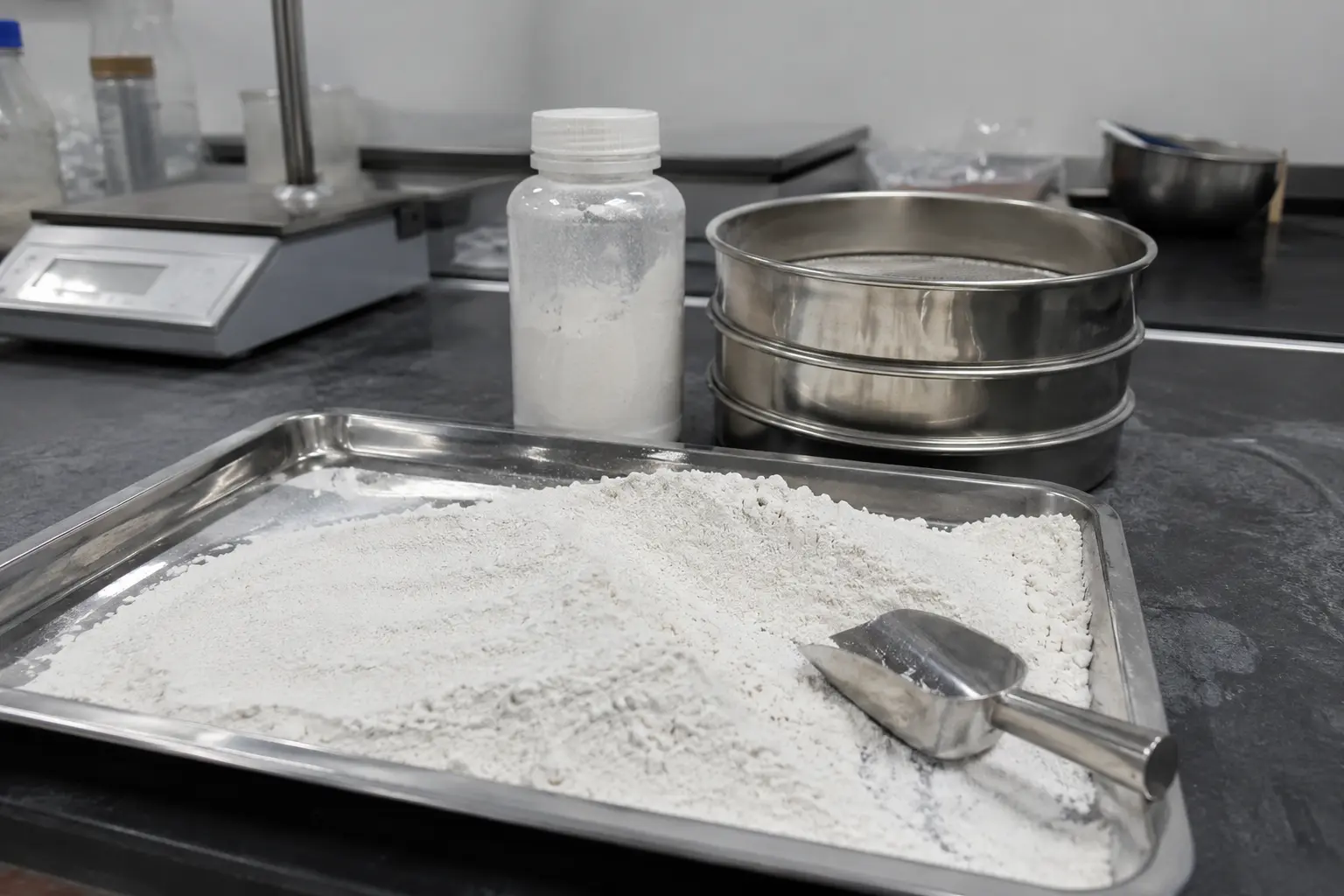
Zinc stannate flame retardant white powder at the Rectivas QC lab Fig. ZS01 — fine white powder at incoming QC

Tin-based synergist powder checked for particle size before formulation.

ZS / ZHS series
Form — fine powder
Goal — antimony-free, smoke down
Use — PVC, brominated, LSZH
01 / 07Definition

What Is Zinc Stannate?

Two closely related tin compounds share the name in practice: zinc hydroxystannate ZnSn(OH)₆ (ZHS), which carries bound water it releases from ~180 °C, and its dehydrated form zinc stannate ZnSnO₃ (ZS), stable well past 400 °C. Both do the same two jobs — halogen-system flame synergy and smoke suppression — without a milligram of antimony.

Role: antimony-free synergist · smoke suppressant Profile: halogen-free inorganic · favorable toxicology Forms: fine powder · ATH/MDH-coated grades
ZS-01

The Antimony Exit Route

Where zinc borate typically caps out as a partial antimony substitute, tin synergy is strong enough that many flexible PVC and selected brominated systems can remove Sb₂O₃ completely and hold the rating.

  • Full Sb-free formulations proven in flexible PVC
  • Answers SVHC scrutiny and antimony price shocks
  • Ladder substitution confirmed by burn testing
ZS-02

The Heavy-Duty Smoke Suppressant

Tin species catalyze char instead of soot. In smoke-limited cable and interior specs, ZS/ZHS routinely cut smoke density where antimony makes it worse.

  • Strong IEC 61034 smoke improvements in PVC
  • Works alongside ATH/MDH in LSZH systems
  • Effective at low 1–5 phr doses
ZS-03

Two Grades, One Decision Rule

ZHS adds an endothermic water-release bonus but must stay below ~180 °C processing — PVC territory. ZS gives up that bonus for thermal stability deep into engineering-plastic range.

  • ZHS → PVC, low-temperature elastomers
  • ZS → polyolefins, PA, PBT, higher-temp extrusion
  • Coated-on-filler grades stretch tin efficiency further
02 / 07Mechanism

How Zinc Stannate Works

Dual-phase action: tin and zinc species assist the halogen gas-phase chemistry the way antimony does, while simultaneously steering carbon into solid char instead of smoke.

M-01

Gas-Phase Halogen Synergy

In PVC and brominated systems, volatile tin and zinc halides shuttle halogen radicals into the flame — the same amplifying role antimony plays, from a tin platform with cleaner smoke behavior.

M-02

Condensed-Phase Char Steering

Tin oxides catalyze crosslinking and charring at the surface, locking fuel carbon into a protective layer — the root of the smoke suppression that distinguishes ZS/ZHS from antimony.

M-03

ZHS Water Release

Below its ~180 °C ceiling, ZHS also releases bound water endothermically — a modest ATH-like cooling and dilution bonus stacked on top of the synergy.

03 / 07Applications

Where Zinc Stannate Is Used

Anywhere antimony trioxide sits in a formulation is a candidate — plus smoke-limited systems where antimony was never welcome.

ApplicationGrade & Partner SystemTypical DoseWhat It FixesRelated Page
Flexible PVC cable & sheetZHS in plasticized PVC1–5 phrFull antimony removal; smoke density; LOIPVC flame retardant
Brominated systems (PE, PP, ABS)ZS with brominated FRPartial-to-full Sb₂O₃ substitutionAntimony exposure; smoke; char strengthBrominated additives
LSZH / halogen-free compoundsZS/ZHS with ATH or MDH2–5 phr, incl. coated-filler gradesChar sealing; smoke; peak heat releaseMineral FR (MDH & ATH)
Engineering plastics (PA, PBT)ZS with brominated or phosphorus systems1–5 phrSmoke; synergy without antimony declarationFR PBT guide
Coatings, rubber & textiles backingSystem-dependent2–10 phrSmoke and afterglow in halogenated binders
04 / 07Comparison

Zinc Stannate vs Antimony Trioxide — and vs Zinc Borate

Three synergists, one seat at the formulation table. The honest ranking: antimony is still the strongest pure flame synergist per kilogram, zinc stannate is the strongest antimony-free one, and zinc borate is the cheapest partial fix.

Choose Zinc Stannate When…

Antimony has to go — entirely — or smoke is the binding clause.

  • Customer or eco-label demands zero antimony content
  • Smoke density limits (IEC 61034, enclosed spaces) are hard to pass
  • Low dose matters: 1–5 phr barely moves mechanicals
  • Toxicology profile of the additive package is under review

Consider the Alternatives When…

Cost per rated part, not antimony removal, is the driver.

  • Pure flame efficiency at lowest cost → a reduced antimony core still wins; see how antimony synergy works
  • Budget-driven partial substitution with smoke bonus → zinc borate at 2–8 phr is the economical first step
  • Many real packages combine them: reduced Sb + zinc borate + a tin top-up
05 / 07Selection

What Decides a Zinc Stannate Package

ZS or ZHS, dose, and whether to combine with borate or a reduced antimony core — each answer comes from the spec sheet, not the catalog.

01Host system (PVC / Br / HFFR)
02Processing temperature (ZHS ≤180°C rule)
03Antimony target: reduce or remove
04Hardest clause (flame vs smoke)
05Particle size & dispersion
06Coated-filler vs straight powder
07Electrical & water-uptake spec
08Cost per rated part vs Sb price
09Existing formulation constraints
06 / 07Capability

How Rectivas Supplies Zinc Stannate

As with every synergist we carry, the product is the ratio, not just the powder — substitution ladders are burn-tested in our lab before we put a number in a quote.

  • C-01ZS and ZHS fine powder grades, particle size controlled for cable and molding use
  • C-02Antimony-substitution ladder design: Sb-lean and fully Sb-free variants burn-tested side by side
  • C-03Combination packages with zinc borate, ATH/MDH or a reduced antimony core
  • C-04UL94 and LOI verification on customer resin before quotation
  • C-05TDS / SDS / COA documentation, third-party reports via CTI (Hebei) Testing & Certification
  • C-06Batch traceability from raw material to shipped lot under ISO 9001
  • C-07Export packaging and worldwide delivery
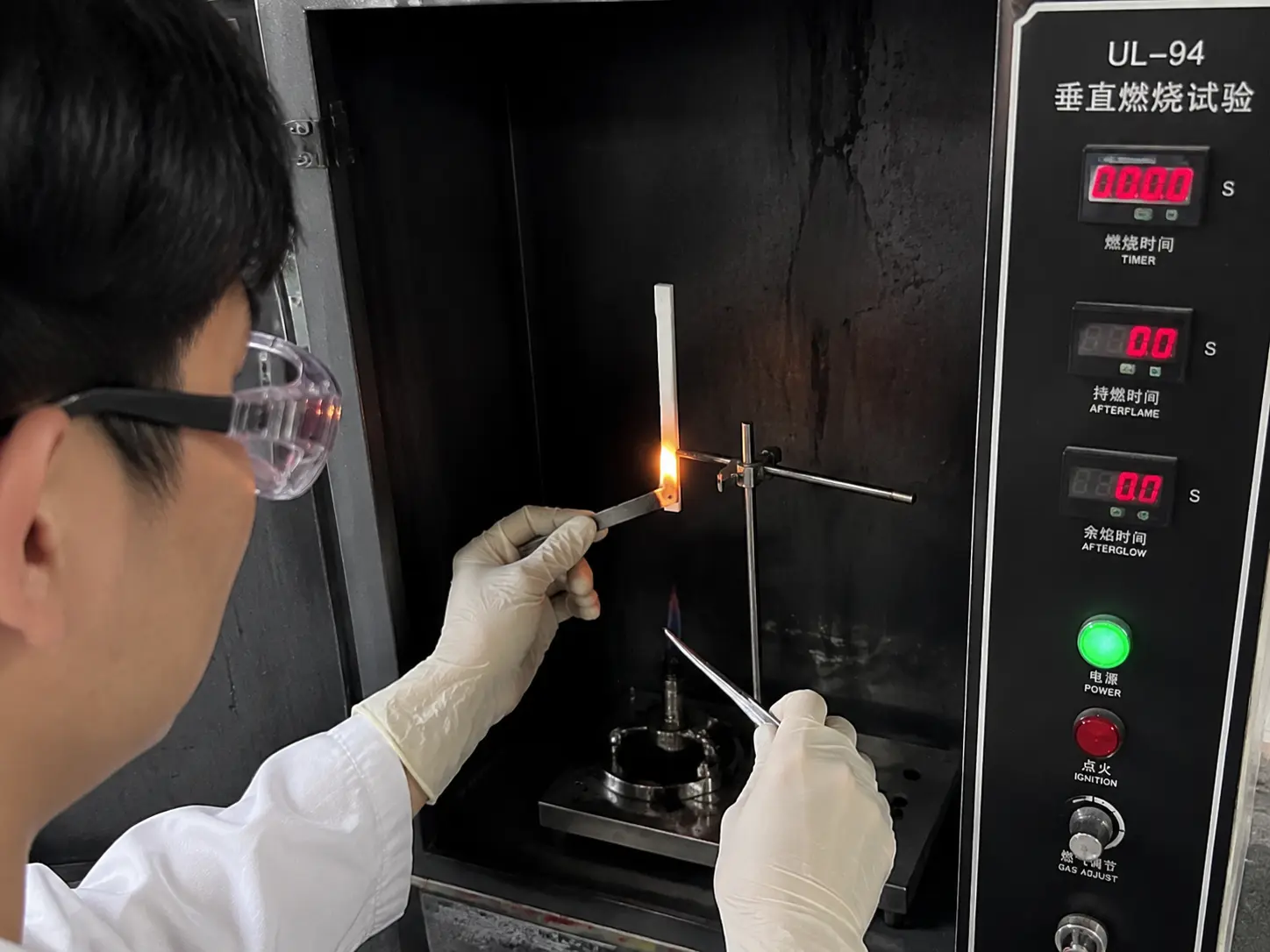
UL94 burn verification of an antimony-free zinc stannate formulationFig. ZS02 — burn verification in our labEvery substitution ratio is burn-tested before we quote it.
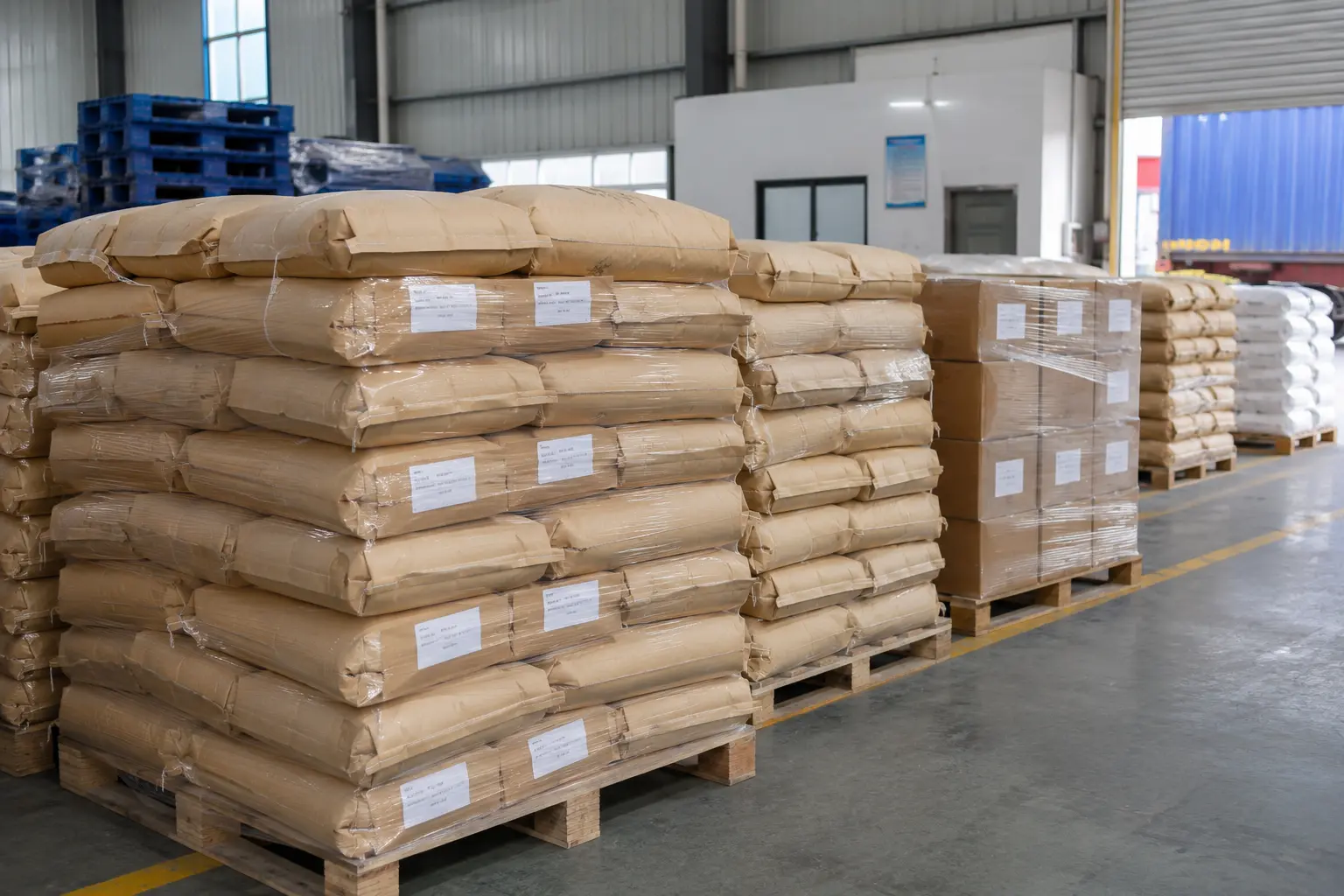
Export packaging of zinc stannate flame retardant powderFig. ZS03 — export packagingBags, big bags and palletized supply for overseas buyers.
07 / 07FAQ

Buyer Questions About Zinc Stannate

Direct answers for formulators and procurement evaluating the tin route before sampling.

What is zinc stannate flame retardant used for?

As an antimony-free synergist at 1–5 phr in PVC, brominated systems and LSZH compounds: it amplifies halogen flame chemistry the way antimony does, suppresses smoke strongly, and lets formulators reduce — or fully remove — antimony trioxide.

Zinc stannate vs zinc hydroxystannate — which grade do I need?

The processing temperature decides. ZHS keeps its bound water (and its extra cooling effect) only below ~180 °C — PVC and low-temperature elastomer territory. Above that, use ZS, which is thermally stable deep into engineering-plastic processing.

Can zinc stannate fully replace antimony trioxide?

In many flexible PVC and selected brominated formulations, yes — full removal holds the rating with visibly better smoke. In demanding brominated polyolefins we recommend starting from partial substitution and laddering up with burn tests rather than assuming a 1:1 swap.

Is zinc stannate expensive compared to antimony trioxide?

Per kilogram it is typically pricier than zinc borate and competes with antimony depending on the tin and antimony markets of the moment. The honest comparison is cost per rated part: at 1–5 phr effective doses, and with antimony’s price volatility, Sb-free tin packages frequently come out level or ahead — which is why we quote the whole package, not the powder.

Request a Zinc Stannate Recommendation

Tell us the host system, your current antimony loading and the hardest clause in your spec — flame rating or smoke. We will design the ZS/ZHS package, ladder the substitution and prove it in our burn lab before you commit a trial.

Include in your inquiryZS-RFQ
  • Host systemPVC, brominated polyolefin, LSZH, PA/PBT, rubber
  • Processing tempDecides ZHS vs ZS grade
  • Current Sb₂O₃phr, and whether the goal is reduction or removal
  • Target standardUL94, LOI, IEC 61034, customer spec
  • Trial volumeSample quantity and expected annual demand