Quick answer: A flame retardant cable resists the spread of fire — it self-extinguishes once the flame source is gone, tested to IEC 60332. A fire resistant cable keeps the circuit alive while it burns, so power and signal survive a fire for 30–90 minutes, tested to IEC 60331 / BS 6387. They are not grades of the same thing; they solve two different problems, and a life-safety spec often needs both. Flame retardancy is the part that flame retardant additives deliver; fire resistance comes from a separate barrier layer.
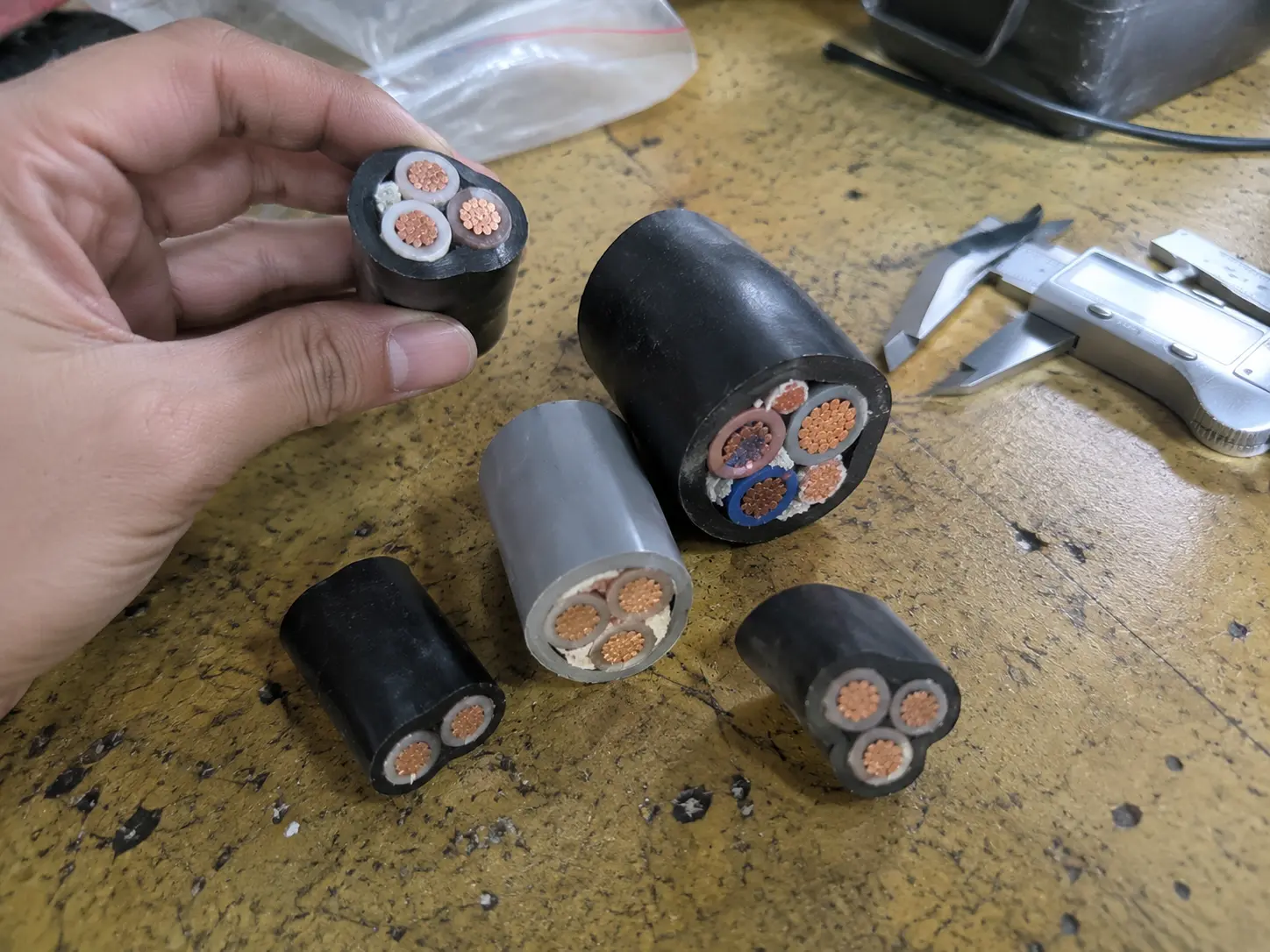
This is the single most common mix-up we see on cable RFQs. A buyer writes “I need fire resistant cable compound” when the spec sheet actually calls for flame retardant, or vice versa. The two words sound interchangeable in English. In cable engineering they are not — and ordering the wrong one either fails the test or wastes money on performance you did not need.
Fire resistant vs flame retardant cable: the core difference
What actually changes between them? One controls whether fire travels along the cable. The other controls whether the cable keeps doing its job while on fire. Here is the side-by-side.
| Property | Flame retardant cable | Fire resistant cable |
|---|---|---|
| What it does | Limits flame spread; self-extinguishes | Keeps circuit working during a fire |
| Key metric | Char/flame-spread length | Circuit integrity time (30–90 min) |
| Core standard | IEC 60332 | IEC 60331 / BS 6387 |
| Test flame | ~750–850 °C | ~830–1000 °C (+ shock/water) |
| Delivered by | Flame retardant additives in the compound | Mica/ceramic barrier tape around the conductor |
| Typical use | General building & power wiring | Fire alarms, emergency lighting, smoke fans |
Read the “Delivered by” row twice — it is the part buyers miss. Flame retardancy is a material property of the sheath and insulation compound. Fire resistance is a construction property, built from a mica or ceramic barrier wrapped directly on the copper. A flame retardant additive cannot, by itself, make a cable fire resistant. So when someone asks us for “a flame retardant that passes IEC 60331,” the honest answer is: that standard is not an additive job.
What “flame retardant” really means (IEC 60332)
Flame retardant means the cable will not carry a fire up its own length. Light it, pull the flame away, and it goes out instead of acting like a fuse of plastic. That behaviour is measured by the IEC 60332 series:
- IEC 60332-1-2 — vertical flame test on a single insulated cable. The charred portion must not spread beyond a set distance from the burner.
- IEC 60332-3 (e.g. -3-22 Cat. A) — the tougher bundled-cable test, for trays and risers where many cables run together and feed each other.
This is exactly the property our additives and compounds target. For jacket and insulation compounds we build the flame retardancy in two routes: a halogen-free system (mineral ATH/MDH or phosphorus) for low-smoke jobs, or a brominated system where cost and efficiency lead. If low smoke and zero halogen matter — and in enclosed spaces they almost always do — that is a job for halogen-free flame retardant additives, which push LOI up without the acid smoke that halogen chemistry gives off. For the full cable-compound picture see our flame retardant cable compounds page.
What “fire resistant” really means (IEC 60331)
Fire resistant is a higher bar, and a different mechanism. The cable is set on fire and must keep carrying current the whole time — typically 30, 60 or 90 minutes depending on the circuit class. IEC 60331 (and the classic UK method BS 6387, with its flame + water spray + mechanical shock stages) is the benchmark.
How does copper survive an 830 °C flame and still conduct? Not through the polymer — that is long gone. It survives because a mica glass tape is wound directly onto the conductor. Mica does not melt at those temperatures, so even after the insulation burns away the tape holds an insulating ash layer in place and the circuit stays live. That is why fire resistance is a cable-construction decision, not a compound additive you can dose in.
Where do you actually need it? Life-safety circuits that must run during evacuation: fire alarm loops, emergency lighting, smoke-extraction fans, sprinkler pump feeds. General power and data wiring does not — flame retardant is enough there.
EU CPR 2026: why the label on the drum matters now
If you export cable or cable compound into the EU, the rules just moved. The old Construction Products Regulation (EU) No 305/2011 has been repealed and replaced by (EU) 2024/3110; parts applied from January 2025 and further parts from 8 January 2026. Under CPR, any cable permanently installed in an EU building carries a Euroclass fire rating — and that rating is driven mostly by the flame retardant performance of the compound.
| Euroclass | Fire performance | Typical requirement |
|---|---|---|
| Aca | Non-combustible (highest) | Specialist, mineral cables |
| B1ca / B2ca | Very low flame spread + heat | High-occupancy, escape routes |
| Cca / Dca | Limited flame spread | General commercial builds |
| Eca | Basic flame retardant (IEC/EN 60332-1-2) | Minimum for permanent EU install |
| Fca | No performance declared | Banned for fixed EU installs (since 2017) |
Two things to note for 2026. First, the class letters (Eca up to B1ca) are set almost entirely by flame retardancy plus the s/d/a add-ons for smoke, flaming droplets and acidity — which is exactly where a low-smoke halogen-free system earns its keep. Second, the new CPR adds mandatory environmental declarations, phased in between 2026 and 2032, so the paperwork burden is rising too. If your compound is not already documented for RoHS/REACH and low acid-gas, now is the time to fix it.
Where flame retardant additives fit — and where they don’t
Let us be straight about our lane. Rectivas supplies the flame retardant half: additives and masterbatch that take a PVC, PE or PO cable compound up to IEC 60332 and the CPR class your customer needs, with low smoke and RoHS/REACH-clean chemistry. We do not sell the mica barrier that makes a cable IEC 60331 fire resistant — that is a construction the cable maker builds. Knowing that boundary saves everyone a wasted sample round.
For a flexible PVC power or control cable, that usually means our PVC flame retardant systems with smoke suppression. For LSZH jacketing it means a mineral or phosphorus halogen-free package. Not sure which chemistry fits your resin and target class? Start with our guide on how to choose flame retardants for plastics, and if you are weighing smoke and cost trade-offs, read halogen-free vs halogenated flame retardants.
Send us the resin, the target standard (IEC 60332-1 or -3, and the CPR class), and the smoke/halogen limit. Our engineers will match a compound, run it through the UL94 and LOI screening we arrange, and ship a sample with an accredited third-party laboratory test report. Request a quote with your cable spec and we will turn it around fast. For the wider picture — every cable standard and which system serves it — see our flame retardant for wire and cable overview.
FAQ
Is a flame retardant cable the same as a fire resistant cable?
No. A flame retardant cable stops fire from spreading and self-extinguishes (IEC 60332). A fire resistant cable keeps the circuit powered while it burns (IEC 60331). Different standards, different mechanisms — a critical circuit often specifies both.
Which IEC standard is flame retardant and which is fire resistant?
IEC 60332 covers flame retardant (flame spread) — 60332-1-2 for single cables, 60332-3 for bundles. IEC 60331 (and BS 6387) covers fire resistant (circuit integrity under fire). If a spec cites 60332 it wants flame retardancy; if it cites 60331 it wants fire survival.
Is an LSZH cable automatically flame retardant?
LSZH (low smoke zero halogen) describes the smoke and halogen behaviour, not the flame rating on its own. Most LSZH compounds are formulated to also pass IEC 60332, but you should confirm the flame class (and CPR Euroclass) separately — low smoke and flame retardant are two different boxes to tick.
What CPR class does my cable need for the EU in 2026?
Eca is the minimum for any permanent EU installation (Fca is banned). Commercial and high-occupancy buildings typically demand Cca or higher, and escape routes push toward B2ca/B1ca with low smoke and acidity add-ons. Check the project’s national implementation, since member states set the floor per application.
Final Thoughts
These are different products for different jobs: flame retardant cable slows fire spread, fire resistant cable keeps a circuit alive during one. Chemistry solves the first, mica tape barriers solve the second, and no additive package turns one into the other. We supply the flame retardant layer – see LSZH cable compounds – and we will tell you plainly when a project needs barrier technology we do not make.
Smoke density is a separate clause from both flame propagation and circuit integrity, with its own test and its own pass criterion — see smoke density and toxicity testing. Both ratings are earned by the cable construction, which is why a compound supplier can only support them with material data — explained in certification of LSZH cable compound. Which of the two you need also depends on the application the cable serves — rail, marine and data each specify differently, as set out in LSZH cable compound uses.
—— Rectivas Materials 团队 技术工程师老陈