Quick answer: TPU burns readily on its own (LOI around 20) and drips badly, so flame retardant TPU always needs an additive package. The route that dominates in 2026 is halogen-free phosphorus-nitrogen chemistry — typically melamine cyanurate paired with a phosphinate such as aluminium diethylphosphinate — reaching UL94 V-0 at roughly 18–22% total loading while keeping the elasticity that made you choose TPU in the first place. The growth application pulling the whole segment: EV charging cable jackets, where halogen-free is effectively mandatory.
TPU is the material engineers reach for when a part has to flex, drag, and survive abuse — cable jackets, hoses, films, seals. It is also, chemically, a fire hazard with excellent mechanical properties. Marrying the two is a real formulation problem, and it is one where copying a rigid-plastic recipe fails. Here is how the selection actually works.
Why TPU is hard to flame-retard
Three reasons, all baked into the polymer:
- It wants to burn. Neat TPU has a limiting oxygen index around 20 — it burns comfortably in ordinary air and keeps burning once lit.
- It drips. As a thermoplastic elastomer it softens and flows in a flame, shedding flaming drips that fail UL94 vertical tests and spread fire below.
- It cannot carry much filler. This is the trap. The cheap mineral route that works in polyolefins — loading 60% ATH/MDH — turns a 30 Shore A elastomer into a stiff, weak compound. Kill the elasticity and you have killed the reason TPU was specified.
So the whole game in flame retardant TPU is efficiency per kilogram: getting to the rating at a loading the elastomer can tolerate. That constraint decides the chemistry.
The three flame retardant routes for TPU
| System | Typical loading | Strengths | Watch-outs |
|---|---|---|---|
| Phosphorus-nitrogen (MC + phosphinate) | ~18–22% | Halogen-free V-0, keeps flexibility, low smoke — the cable-jacket default | Highest additive cost; hydrolysis care in ester TPU |
| Mineral ATH / MDH | 50%+ | Cheapest per kg, smoke-suppressing | Loading destroys elongation and softness — only viable in harder grades |
| Brominated + Sb₂O₃ | ~12–18% | Efficient, lowest loading for the rating | Halogen — excluded from most cable and consumer specs now |
The market has voted. Where TPU goes into wire and cable, e-mobility or anything consumer-facing, the phosphorus-nitrogen route wins on compliance alone: it clears RoHS/REACH cleanly, produces far less smoke, and skips both the halogen debate and the antimony supply-price exposure. That is the chemistry family behind our halogen-free flame retardant additives. The brominated route still appears in industrial parts where the spec is UL94-only and cost rules — but as with rigid plastics, the trend line points one way. Our full comparison of halogen-free vs halogenated flame retardants covers the trade-off logic in depth.
One mechanism note worth knowing: the phosphorus-nitrogen pair works as a condensed-phase team — the phosphinate builds a char barrier while melamine cyanurate decomposes endothermically and releases inert nitrogen gases that dilute the flame. Char plus dilution is also what suppresses TPU’s flaming drips, which is usually the difference between V-2 and V-0.
The application pulling the segment: EV charging cables
Why is flame retardant TPU suddenly a hot RFQ line? Electric vehicles. Charging cables live outdoors, get driven over, dragged across concrete and coiled daily — abrasion and flexibility demands that PVC struggles to meet, which is why TPU has become the jacket material of choice for charging pile cables. And a charging cable spec stacks fire requirements on top:
| Requirement | Test / standard | What the compound must do |
|---|---|---|
| Vertical flame | UL94 V-0 / UL1581 VW-1 | Self-extinguish fast, no flaming drips |
| Flame spread on cable | IEC 60332-1-2 | Limit char length on the finished cable |
| Halogen / smoke | Halogen-free declaration, low smoke | P-N chemistry; no Br/Cl in the package |
| Compliance file | RoHS, REACH, PAHs | Third-party test report per substance list |
Note the pattern: it is the same standards stack as LSZH cable work, just on an elastomer base. If your project is building-wire or data cable rather than EV, the mineral-filled polyolefin route on our flame retardant cable compounds page is usually the better fit — TPU earns its premium where flexing and abrasion are extreme. And if you are still sorting out what “flame retardant” versus “fire resistant” means in a cable spec, we broke that down in fire resistant vs flame retardant cable.
TPU vs flame retardant polyurethane foam — don’t mix the two
A recurring RFQ confusion: “flame retardant polyurethane” covers two very different materials. Thermoplastic polyurethane (TPU) is the melt-processable elastomer this article covers — extruded and injection molded, additive packages compounded in. Polyurethane foam (flexible PU in furniture, rigid PUR/PIR in insulation) is a thermoset made in-situ from isocyanate and polyol, and its flame retardants are usually liquid phosphates added to the reacting mix — different chemistry, different suppliers, different regulations. If your part is extruded or molded, you are in TPU territory and the systems above apply.
Formulating without losing the elastomer
The loading numbers only tell half the story. Three practical rules from our trial work:
- Mind the hardness budget. Every 10% of solid additive nudges hardness up and elongation down. Starting from a softer base grade than the datasheet target leaves room for the package.
- Watch process temperature. TPU runs at roughly 190–220 °C — gentler than nylon, which widens the additive choice — but melamine-based components still set a ceiling; overheating shows up as gassing and plate-out.
- Ester vs ether matters. Polyester TPU offers better mechanicals but is hydrolysis-sensitive; the additive package must not accelerate that. Polyether grades are the safer base for outdoor cable jackets.
These interactions are why we ask for the base TPU grade and hardness target before quoting a package, not after. The step-by-step logic — resin, standard, smoke limit, budget — is the same framework as our guide on how to choose flame retardants.
How Rectivas supports flame retardant TPU projects
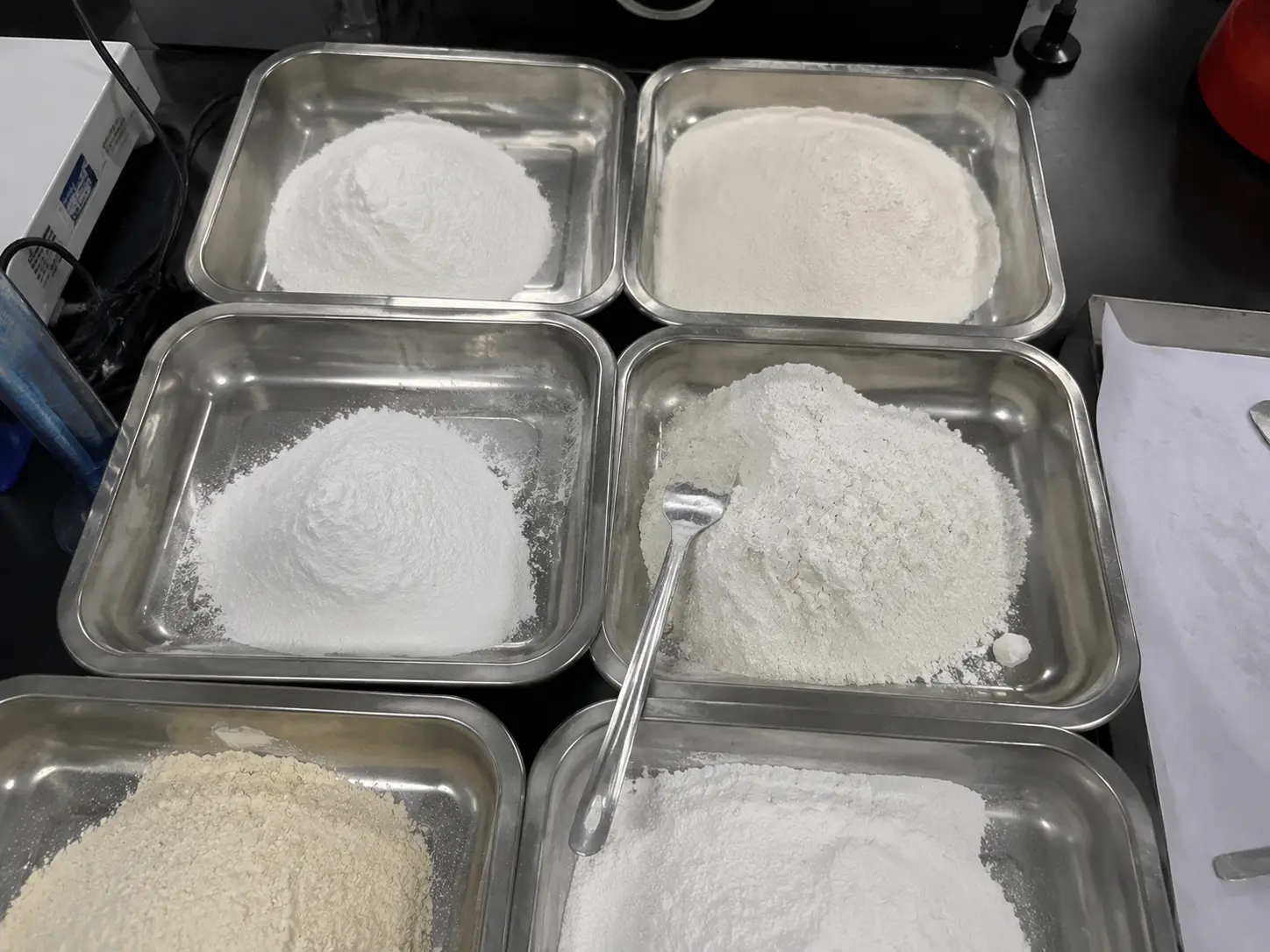
We supply halogen-free phosphorus-nitrogen packages and mineral systems as powder blends, plus pre-dispersed masterbatch in customer-specified carriers for plants that dose at the extruder. TPU work runs through the same loop as every other resin here: bracket the loadings on our partner factory’s twin-screw line, burn the ladder in the UL94 vertical chamber at our partner factory, check LOI, and ship the winning sample with an accredited third-party laboratory report plus the TDS/SDS/COA set. A recent jacket project is typical: a customer’s 85 Shore A ester-TPU jacket held V-0 but cracked in mandrel bend after aging — switching the base to a polyether grade and re-balancing the same P-N package solved both without adding a point of loading.
Send us the TPU grade (ester or ether), Shore hardness, wall thickness and the full spec line — UL94/VW-1, IEC 60332, halogen-free declaration, RoHS/REACH. We will come back with a package proposal and a burn-tested sample. Request a quote to get started.
FAQ
Is TPU flame retardant by itself?
No. Neat TPU has an oxygen index around 20, burns readily in air and sheds flaming drips. Any UL94 rating beyond marginal requires a flame retardant package compounded in.
What flame retardant is used in TPU?
The dominant route is halogen-free phosphorus-nitrogen chemistry — melamine cyanurate paired with a phosphinate such as aluminium diethylphosphinate — hitting UL94 V-0 at about 18–22% total loading. Mineral ATH/MDH works only in harder grades, and brominated systems are fading from cable and consumer specs.
Can flame retardant TPU stay flexible?
Yes, if the package is efficient enough. The phosphorus-nitrogen route reaches V-0 at loadings a soft elastomer can tolerate; the mineral route generally cannot below ~85 Shore A. Specify your hardness and elongation floor up front so the package is designed inside that budget.
Why is TPU used for EV charging cable jackets?
Charging cables need extreme abrasion resistance, flexibility at low temperature and weathering — TPU’s home turf. The fire side is handled by a halogen-free flame retardant package meeting UL94/VW-1 and IEC 60332 with a halogen-free declaration, which the phosphorus-nitrogen system delivers.
Is flame retardant TPU RoHS and REACH compliant?
The halogen-free phosphorus-nitrogen route is the clean path — no restricted halogens, no antimony. Ask your supplier for a third-party test report against the RoHS substances and the current REACH candidate list; a serious compound ships with one.
Final Thoughts
TPU burns readily and drips, so a package is never optional – but flexibility is usually the binding constraint rather than the rating. That rules out heavy mineral loading in most cases. EV charging cable is where we see this most often, and the halogen-free requirement usually comes with it. Tell us the Shore hardness and elongation you must hold, and see our cable compound systems.
—— Rectivas Materials 团队 技术工程师老陈