Rectivas Materials · Flame retardant manufacturer and formulation partner sales@rectivas.com  ·  WhatsApp +86 180 3191 1520

Magnesium Hydroxide Flame Retardant (MDH & ATH)

Halogen-free mineral flame retardants that cool the flame instead of fighting it: magnesium hydroxide (MDH) and aluminium hydroxide (ATH) absorb heat and release water vapor as they decompose — suppressing smoke at the same time. Supplied as surface-treated powders and pre-dispersed masterbatch for LSZH cable compounds, PE, EVA, PP and TPU.

DecompositionMDH ~330°C · ATH ~200°C
Typical loading55–65% (LSZH)
ChemistryHalogen-free · smoke suppressing
TargetsIEC 60332 · 61034 · UL94 · LOI
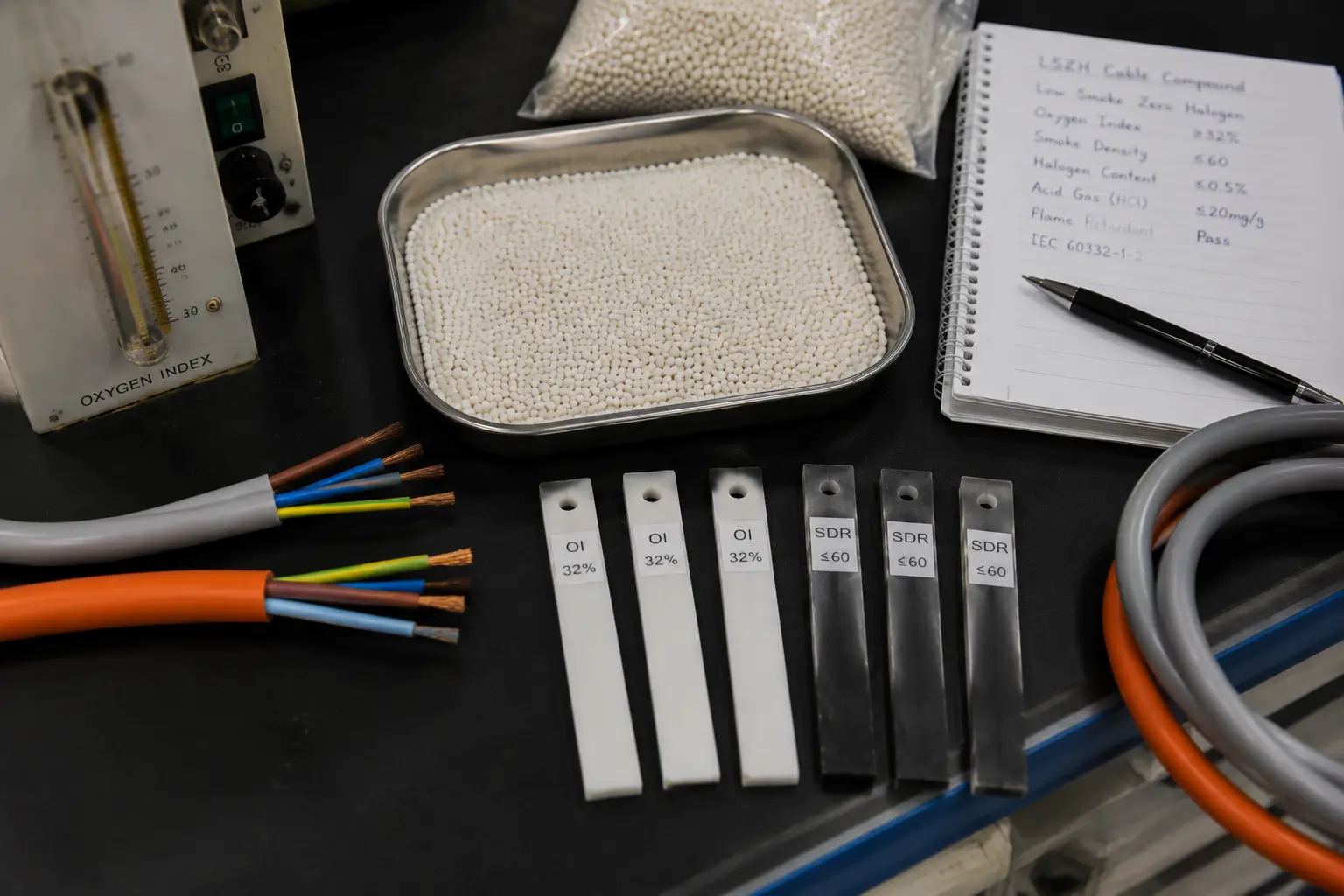
Magnesium hydroxide flame retardant white powder and LSZH compound pellets Fig. MIN01 — mineral flame retardant powder & LSZH pellets

White mineral flame retardant powder and LSZH compound pellets.

MDH / ATH series
Form — treated powder / masterbatch
Goal — low smoke, halogen-free
Use — cable, PE, PP, TPU
01 / 07Definition

What Is Magnesium Hydroxide Flame Retardant?

Magnesium hydroxide flame retardant — Mg(OH)₂, "MDH" — is a halogen-free mineral that works by physics, not halogen chemistry: heated past ~330 °C it decomposes endothermically, soaking up heat and releasing water vapor that cools the flame zone, dilutes flammable gases and scrubs smoke. What remains is a magnesium oxide layer that insulates the polymer beneath. Aluminium hydroxide (ATH) works the same way at a lower temperature.

Mechanism: endothermic · water release · oxide barrier Profile: halogen-free, low smoke, low corrosivity Forms: treated powder · compound · masterbatch
MIN-01

Magnesium Hydroxide (MDH)

The high-temperature mineral: stable to ~330 °C, so it survives PP, PA and engineering-plastic processing where ATH cannot go. Stronger smoke suppression per kilogram.

  • Processing window up to ~300 °C compounds
  • First choice for PP and higher-temp resins
  • Natural and synthetic grades available
MIN-02

Aluminium Hydroxide (ATH)

The volume workhorse: decomposes from ~200 °C, lowest cost per kilogram of any flame retardant, ideal where processing stays below ~190 °C — PE, EVA, flexible PVC and rubber.

  • Most economical halogen-free option
  • Standard mineral for LSZH cable compounds
  • Temperature ceiling rules out PP and PA
MIN-03

Surface-Treated & Coupled Grades

At 55–65% loading, untreated mineral turns a compound stiff and brittle. Stearic acid, silane and vinylsilane treatments plus coupling agents keep elongation, flexibility and line speed alive.

  • Treatment matched to host polymer
  • Decides cable bend-test pass or fail
  • Also supplied pre-dispersed as masterbatch
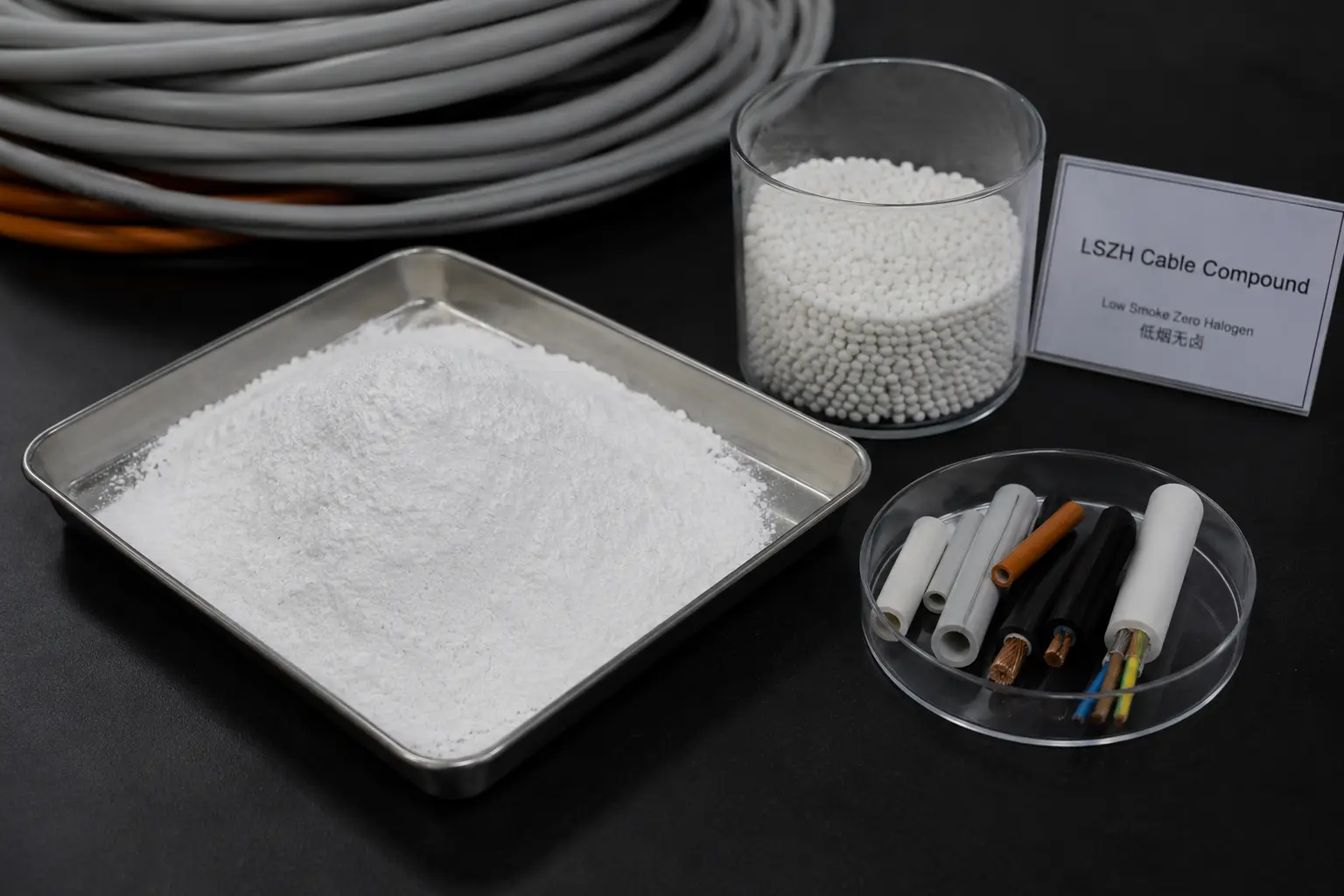
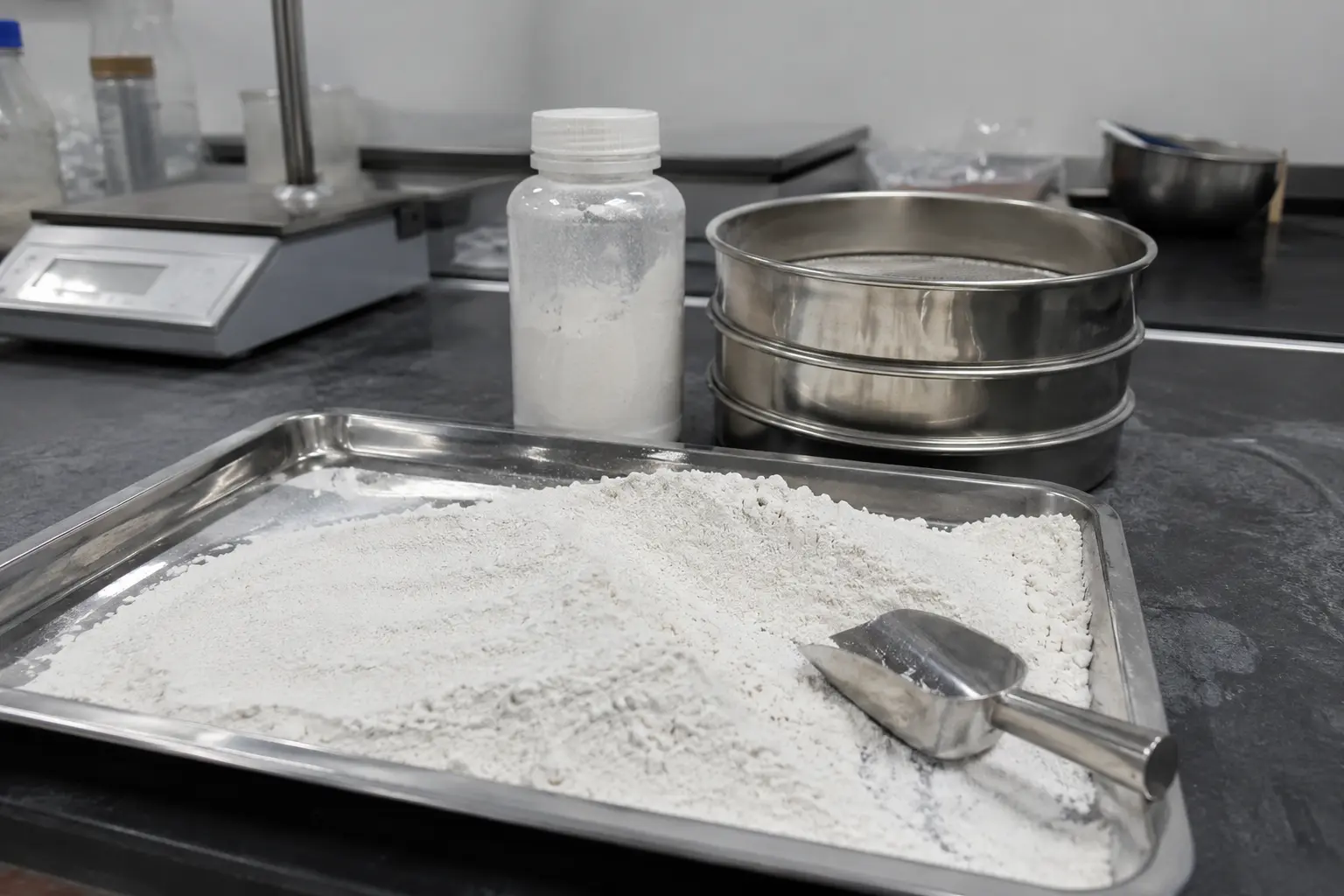
White magnesium hydroxide flame retardant powder in the QC labFig. MIN02 — mineral flame retardant powder at incoming QCParticle size and surface treatment checked before compounding.
LSZH cable compound pellets based on mineral flame retardants with smoke testFig. MIN03 — LSZH compound built on MDH/ATHLow-smoke validation on the finished cable compound.
02 / 07Mechanism

How Mineral Flame Retardants Work

Three physical actions happen at once when the mineral decomposes — and all three matter to why LSZH specifications are built around this chemistry.

M-01

Heat Sink

Decomposition is strongly endothermic — the mineral absorbs large amounts of heat from the flame zone, slowing the polymer below its ignition temperature.

M-02

Water Vapor Release

Roughly a third of the mineral's mass leaves as water vapor, diluting flammable pyrolysis gases and oxygen at the surface — and washing smoke particles out of the plume.

M-03

Oxide Barrier

The MgO / Al₂O₃ residue forms an insulating ceramic-like layer over the polymer, cutting heat flux and fuel release — a mineral char where the polymer itself makes none.

03 / 07Applications

Where MDH and ATH Are Used

Mineral flame retardants dominate wherever low smoke and zero halogen are specification lines, and wherever high loadings are mechanically tolerable. Use this table as the first filter.

ApplicationPreferred MineralTypical LoadingKey TargetsNotesRelated Page
LSZH cable jacket / insulationATH or MDH in EVA/PE host55–65%IEC 60332 · 61034 smoke · 60754 aciditySurface treatment decides flexibility and line speedLSZH compounds
PE film, pipe & molded partsATH (economy) or MDH50–60%UL94 · LOI 24–30Thick sections tolerate mineral loads film cannotFR polyethylene guide
PP compoundsMDH only (ATH decomposes in process)50–60%UL94 · GWFIThe classic case where the 330 °C stability earns its premiumFR polypropylene
TPU & elastomer jacketsMDH (fine, treated grades)Limited by hardness budgetUL94 · VW-1Only harder grades tolerate meaningful mineral loadsFR TPU guide
Flexible PVC (smoke suppression)ATH / MDH as co-additive20–60 phrLOI 30+ · reduced smokePartners antimony and zinc borate in cable PVCPVC flame retardant
04 / 07Comparison

MDH vs ATH: Which Mineral Flame Retardant?

Same mechanism, one deciding variable: temperature. The choice is usually made by your processing window before any other property is discussed.

Choose MDH When…

Your process or resin runs hotter than ATH survives — or smoke numbers are the hardest line in the spec.

  • PP, PA and any compounding above ~190 °C melt
  • Smoke density target is aggressive (MDH suppresses more per kg)
  • Higher continuous-use temperature in the end part
  • Premium LSZH jackets where bend and smoke both must pass

Choose ATH When…

Processing stays below ~190 °C and cost per rated meter is the priority — the majority of LSZH cable volume runs this way.

05 / 07Selection

What Decides a Mineral Flame Retardant Grade

"MDH" on a label says almost nothing — particle size, morphology and surface treatment separate a compound that extrudes fast and bends clean from one that cracks on the spool.

01Host polymer & process temp
02Loading vs mechanical budget
03Particle size & distribution
04Surface treatment type
05Smoke density target
06Flame standard (IEC / UL94 / LOI)
07Extrusion line speed
08Water uptake / aging spec
09Cost per rated meter
06 / 07Manufacturing

Mineral Flame Retardant Supply from Rectivas

We supply MDH and ATH as surface-treated powders, formulated packages and pre-dispersed masterbatch — matched to your host resin and verified in our own burn lab before shipment.

Forms: treated powder · package · masterbatch Testing: in-house UL94 · LOI ladders Documents: TDS · SDS · COA · CTI (Hebei) reports
  • C-01Grade selection by resin and process temperature
  • C-02Surface treatment and coupling agent matching
  • C-03Twin-screw loading ladders and burn verification
  • C-04LSZH compound development support
  • C-05Pre-dispersed masterbatch on EVA/PE carriers
  • C-06Batch QC with TDS / SDS / COA per shipment
  • C-07Export packaging and worldwide delivery
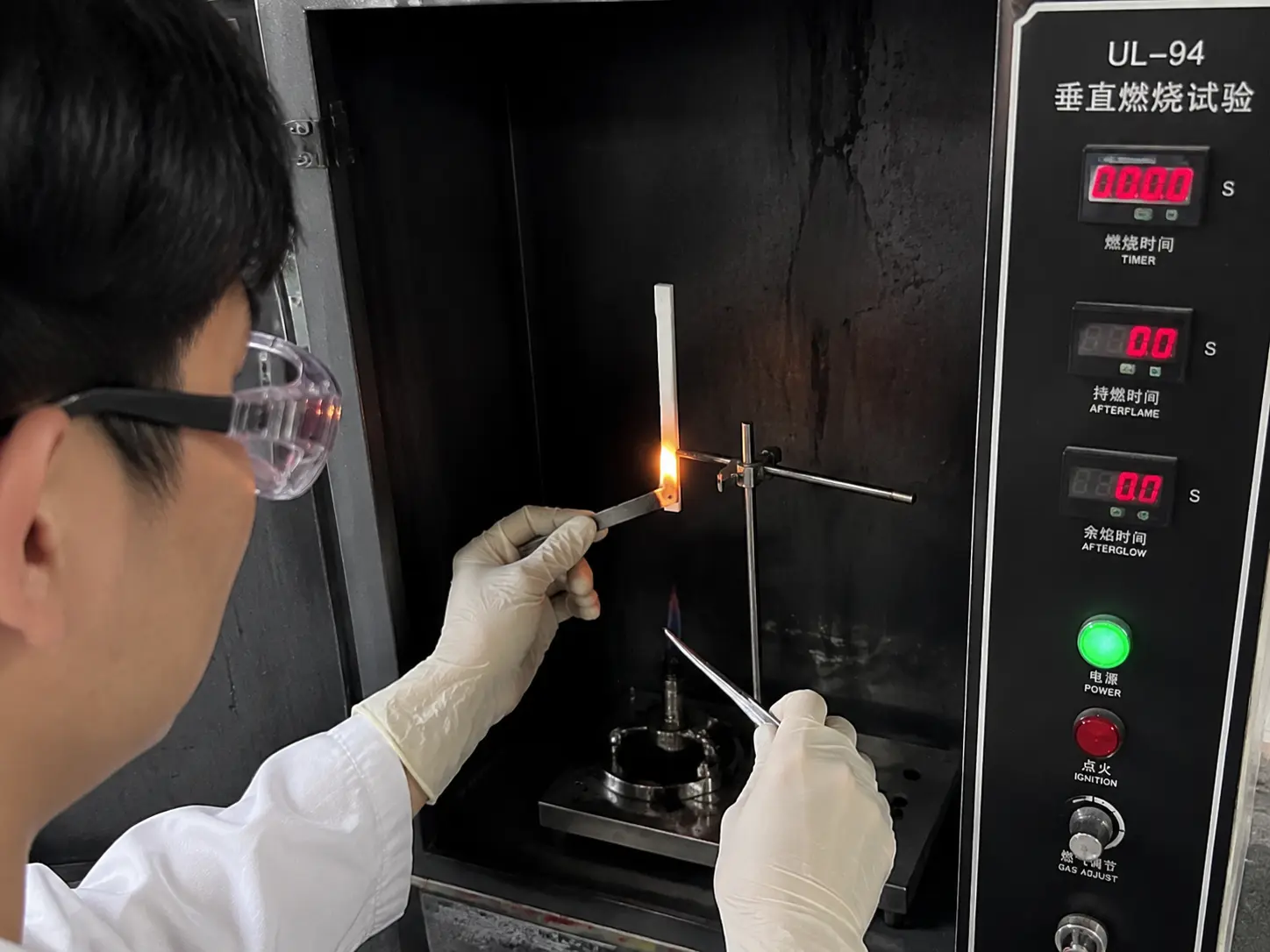
UL94 vertical burn verification of a mineral flame retardant compoundFig. MIN04 — burn verification in our labEvery loading ladder is burn-tested before recommendation.
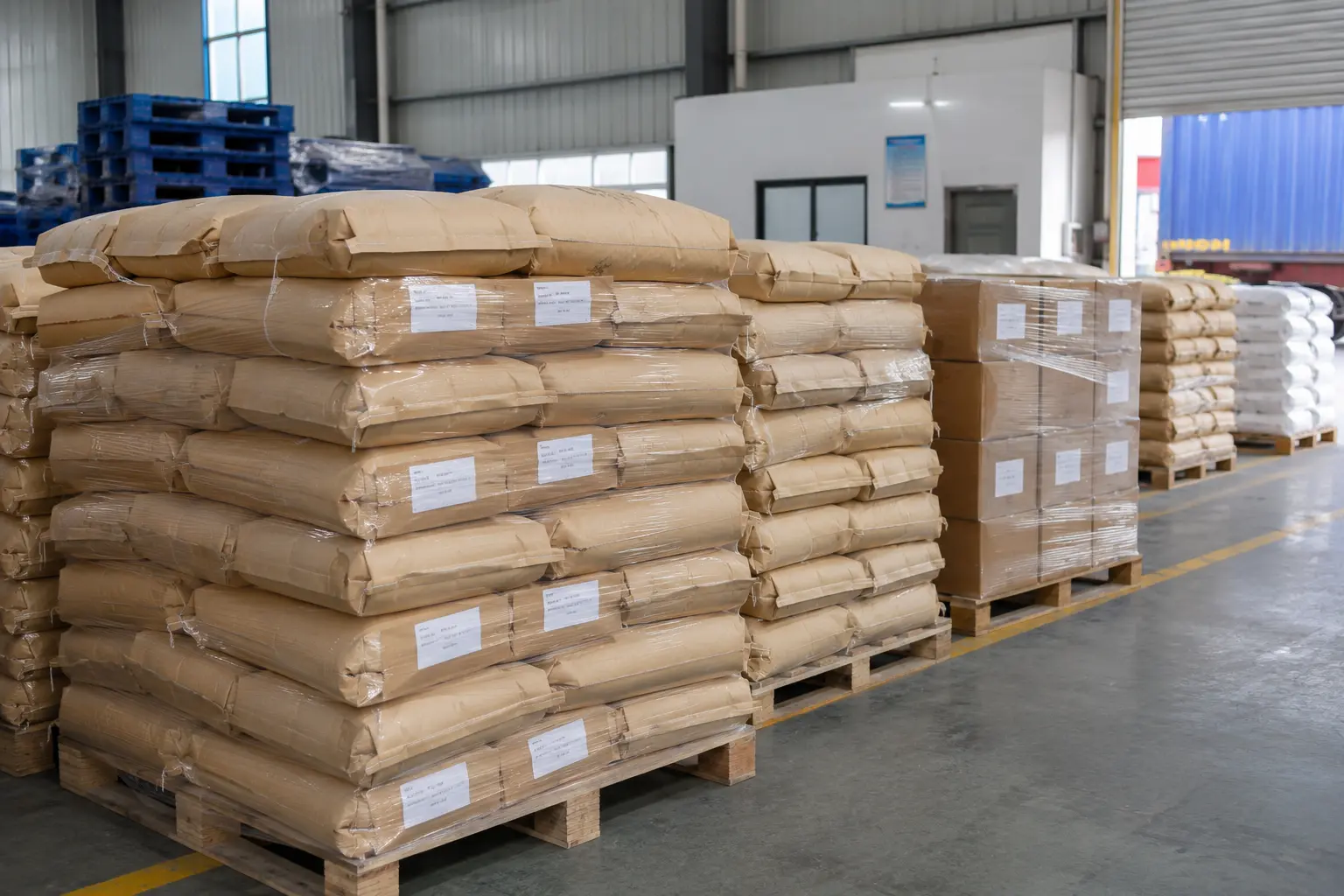
Export packaging of mineral flame retardant powder and masterbatchFig. MIN05 — export packagingBags, big bags and palletized supply for overseas buyers.
07 / 07FAQ

Buyer Questions About MDH and ATH

Direct answers for engineers and procurement comparing mineral flame retardants before sampling.

What is magnesium hydroxide flame retardant?

A halogen-free mineral flame retardant — Mg(OH)₂ — that decomposes endothermically at ~330 °C, absorbing heat and releasing water vapor that cools the flame and suppresses smoke, leaving an insulating magnesium oxide layer on the polymer.

What is the difference between MDH and ATH?

Temperature. ATH starts decomposing around 200 °C and costs less; MDH holds to ~330 °C, so it can be compounded into PP, PA and other resins that process too hot for ATH. MDH also suppresses smoke somewhat more effectively per kilogram.

How much MDH or ATH does a compound need?

Mineral flame retardants work by mass: LSZH cable compounds typically run 55–65% loading. At that level, particle size, morphology and surface treatment decide whether mechanicals and extrusion speed survive — which is why grade selection matters more than the chemical name.

Are mineral flame retardants RoHS and REACH compliant?

Yes — MDH and ATH are halogen-free inorganic minerals with no restricted substances, the default chemistry behind LSZH (low smoke zero halogen) compounds. RoHS/REACH documentation and third-party test reports ship with each batch.

Request an MDH / ATH Recommendation

Send your host resin, processing temperature, target standard (IEC 60332 / UL94 / LOI / smoke) and mechanical requirements. We will recommend the mineral, grade and surface treatment — and prove the loading in our burn lab before you commit a line trial.

Include in your inquiryMIN-RFQ
  • Host resinPE, EVA, PP, TPU, PVC or cable compound
  • Process tempMelt temperature decides MDH vs ATH
  • Target standardIEC 60332 / 61034 / 60754, UL94, LOI, smoke
  • Mechanical floorElongation, flexibility, bend requirements
  • Trial volumeSample quantity and expected annual demand