Rectivas Materials · Flame retardant manufacturer and formulation partner sales@rectivas.com  ·  WhatsApp +86 180 3191 1520

Ammonium Polyphosphate Flame Retardant (APP)

The acid source at the heart of halogen-free intumescent systems: ammonium polyphosphate catalyzes a swelling char that insulates the polymer from the flame. Supplied as Phase II powder and coated (microencapsulated) grades for polypropylene, polyethylene compounds and intumescent coatings — alone or as a complete formulated system.

GradesPhase II · coated / encapsulated
Typical loading18–30% (V-0 from ~20%)
ChemistryHalogen-free P-N · intumescent
TargetsUL94 V-0 · LOI · GWFI
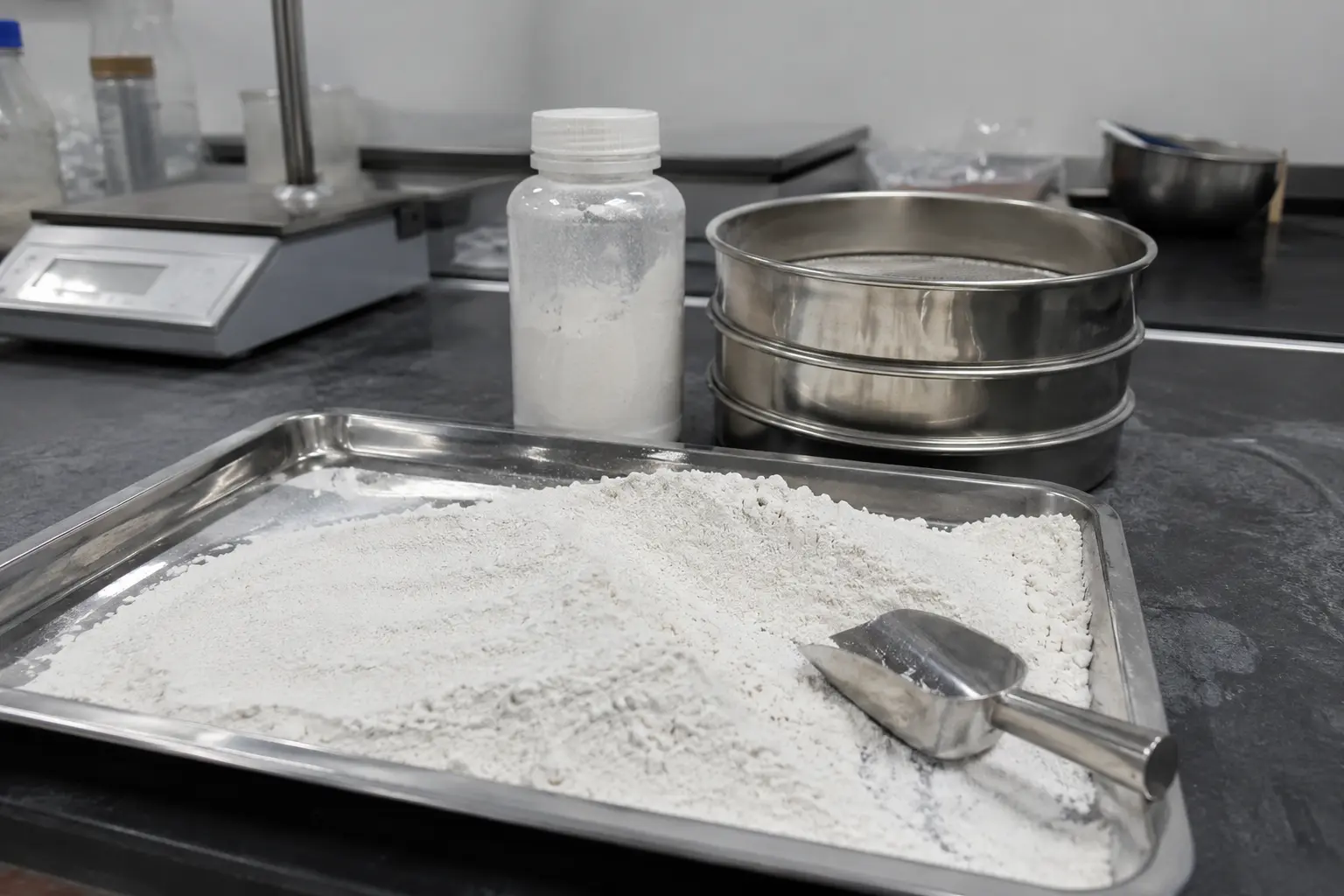
Ammonium polyphosphate flame retardant white powder at the Rectivas QC lab Fig. APP01 — APP powder at incoming QC

White APP flame retardant powder checked before compounding.

APP series
Form — Phase II / coated powder
Goal — halogen-free V-0 char
Use — PP, PE, coatings
01 / 07Definition

What Is Ammonium Polyphosphate?

Ammonium polyphosphate — (NH₄PO₃)ₙ, "APP" — is a halogen-free phosphorus-nitrogen flame retardant. In a fire it decomposes into polyphosphoric acid and ammonia: the acid drives the polymer surface to char instead of burn, and that char is the protection. Which grade you need depends on where it goes — the two crystal phases and the coated variants behave very differently in water and heat.

Role: acid source of intumescent systems Profile: halogen-free · low smoke · antimony-free Forms: Phase II powder · coated grades · formulated systems
APP-01

APP Phase II

The plastics-compounding standard: long-chain crystalline APP, thermally stable above ~275 °C with low water solubility — it survives polyolefin extrusion and molding temperatures.

  • Standard grade for PP / PE compounds
  • Higher decomposition onset than Phase I
  • Fine particle grades for thin-wall parts
APP-02

Coated / Microencapsulated APP

Silane, melamine-resin or polyurethane shells around each particle: sharply lower water uptake, better dispersion and stronger char — V-0 in PP from around 20% loading.

  • For humid end-uses and water-contact parts
  • Improves compound aging behavior
  • The upgrade path when plain APP blooms or leaches
APP-03

Formulated Intumescent Systems

APP plus char former and blowing agent, pre-balanced and ready to dose — for compounders who want a one-pack system instead of sourcing three components and tuning ratios themselves.

  • One-pack dosing, validated ratios
  • Supplied as powder blend or masterbatch
  • Matched to resin and target standard
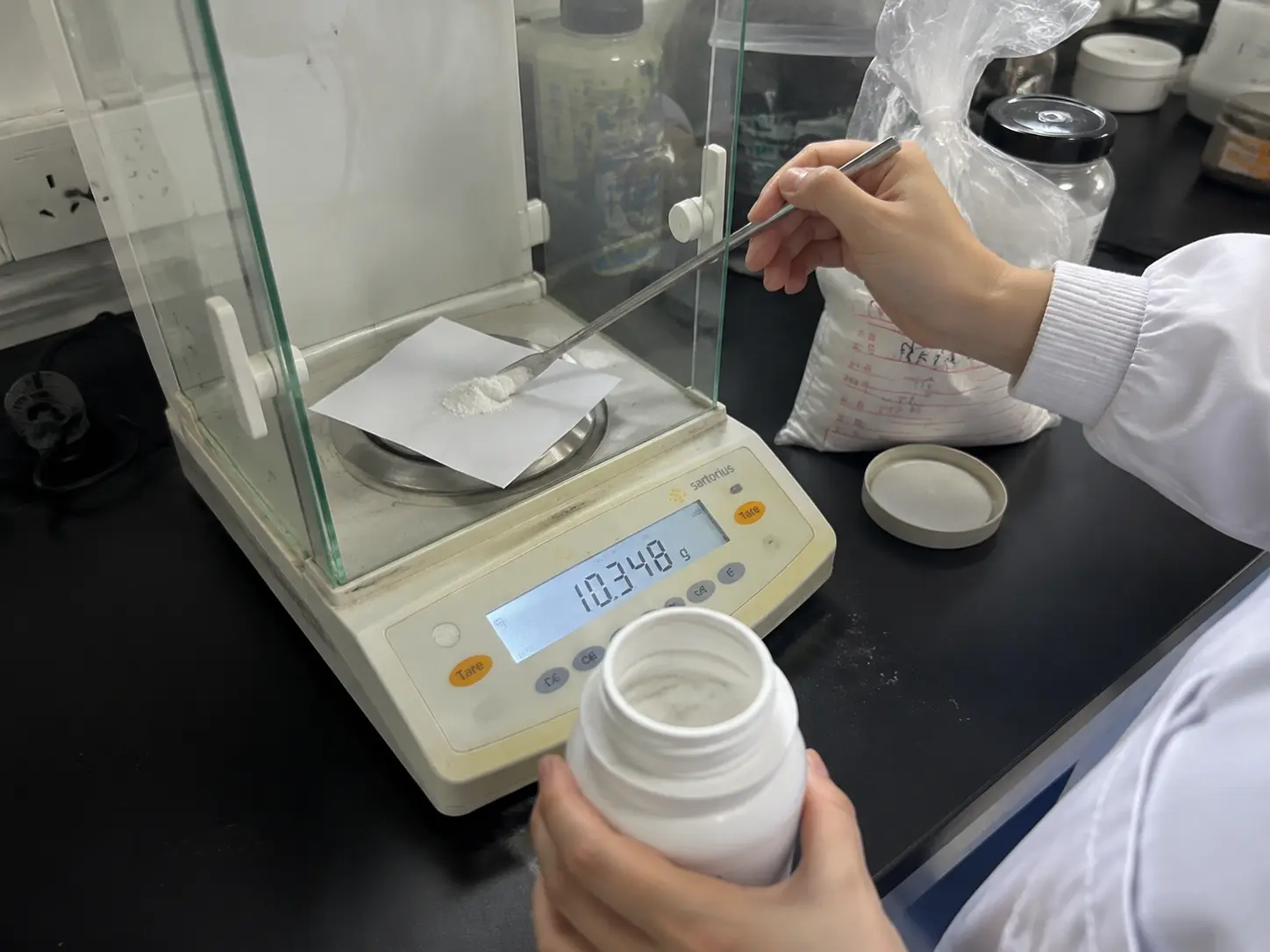
Weighing APP flame retardant powder for an intumescent formulation trialFig. APP02 — weighing an intumescent trial ladderRatio balance between acid source, char former and blowing agent.
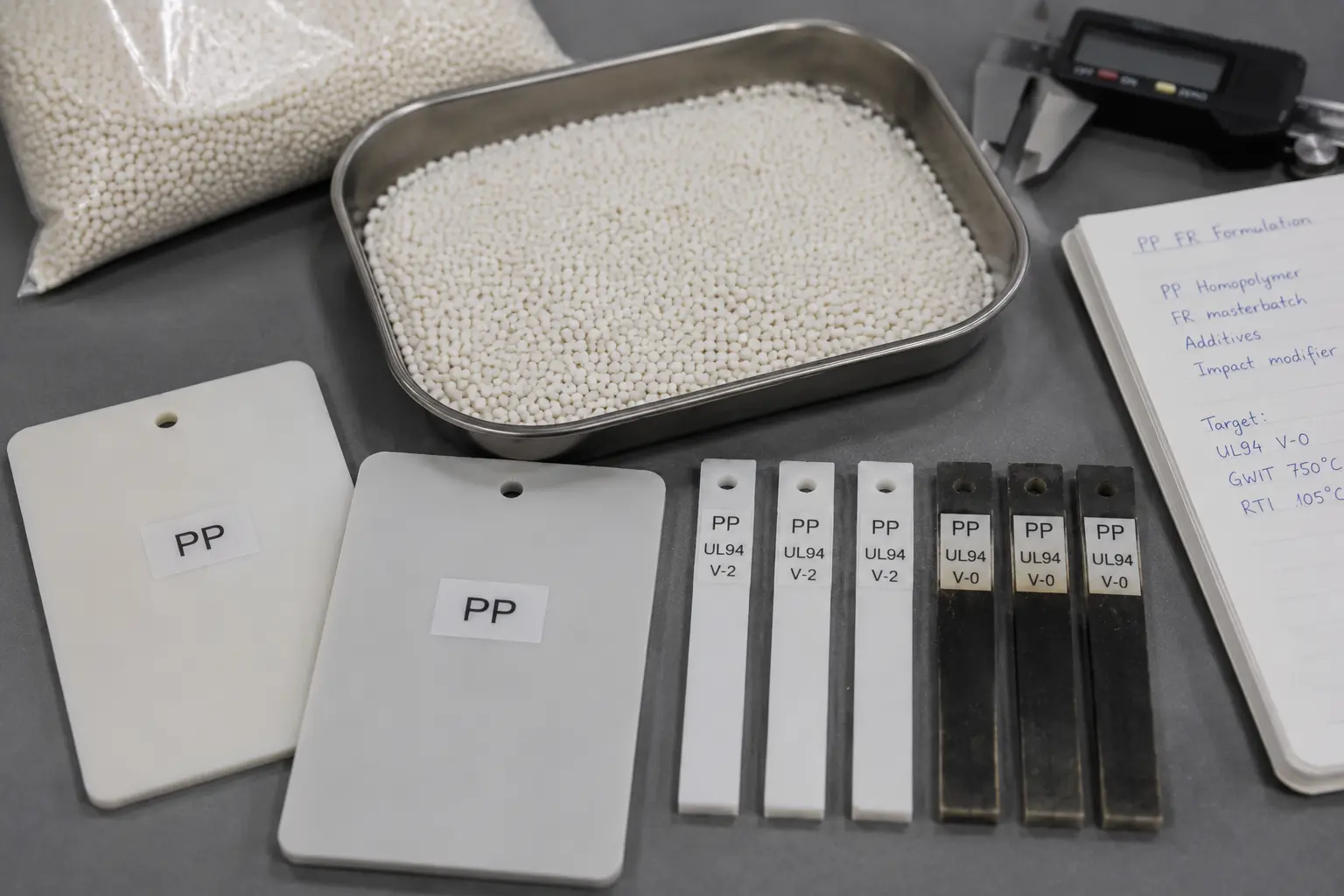
Intumescent flame retardant PP pellets and UL94 test barsFig. APP03 — intumescent PP compound and burn barsThe swelling char is visible on tested specimens.
02 / 07Mechanism

How APP Intumescent Systems Work

Intumescent means "swelling": three components act in sequence to grow an insulating carbon foam over the burning surface. APP is the trigger — but it needs its two partners.

I-01

Acid Source — APP

Heat decomposes APP into polyphosphoric acid, which dehydrates the surrounding material toward carbon instead of letting it volatilize as fuel.

I-02

Char Former — Polyol

A carbon donor — classically pentaerythritol — reacts with the acid to build the char skeleton. Some engineered systems build the char source into the APP coating itself.

I-03

Blowing Agent — Melamine

Nitrogen gases released by melamine inflate the forming char into a thick, insulating foam — a physical barrier that cuts heat flux and starves the flame of fuel.

03 / 07Applications

Where APP Is Used

APP dominates wherever a halogen-free V-0 is required in polyolefins — resins that make no char of their own and cannot carry the mineral loads cable compounds tolerate.

ApplicationSystemTypical LoadingKey TargetsNotesRelated Page
PP compounds & molded partsAPP intumescent one-pack18–30% (coated: from ~20%)UL94 V-0 · LOI 28+ · GWFIThe flagship APP application — halogen-free V-0 PPFR polypropylene
PE film, sheet & thick partsAPP intumescent20–25%UL94 · LOI 26+Halogen-free alternative where mineral loads are too stiffFR polyethylene guide
Recycled polyolefins (rPP / rHDPE)APP intumescent, re-validated per stream20–30%UL94 · batch consistencyGrowing PCR demand; contamination shifts burn behaviorrPE notes
Intumescent & fireproof coatingsAPP (Phase I or II) + binder systemsFormulation-dependentFire-resistance time ratingsSteel-structure and wood coatings; water resistance decides grade
PU foam & thermosetsAPP as co-flame-retardant10–25 phrApplication-specificPartnered with liquid phosphates in flexible foam
04 / 07Comparison

APP Intumescent vs the Other Halogen-Free Route

Halogen-free polyolefins have two main roads: an APP intumescent system or a mineral (MDH/ATH) load. They win in different places — and the deciding factors are loading tolerance and smoke.

Choose APP Intumescent When…

The part cannot carry a 60% mineral load — which is most injection molded and thin-wall work.

  • UL94 V-0 in PP or PE at 20–30% total loading
  • Mechanicals and flow must survive (thin walls, molded parts)
  • Char-barrier protection suits thick sections and GWFI targets
  • Humid environments → specify the coated grade

Choose Mineral MDH / ATH When…

Smoke numbers rule and the application tolerates high filler — the cable-compound world.

05 / 07Selection

What Decides an APP Grade

"APP" on a datasheet hides the choices that make or break the compound: phase, particle size, coating and the ratio of the full intumescent package.

01Phase I vs Phase II
02Coating / encapsulation type
03Water resistance requirement
04Particle size & dispersion
05Char former & blowing agent ratio
06Processing temperature
07Target standard (UL94 / LOI / GWFI)
08Mechanical & aging floor
09Cost per rated part
06 / 07Manufacturing

APP Supply from Rectivas

We supply APP as Phase II and coated powders, and — where it saves the customer three sourcing headaches — as complete pre-balanced intumescent systems in powder or masterbatch form, burn-verified in-house before shipment.

Forms: powder · one-pack system · masterbatch Testing: in-house UL94 · LOI ladders Documents: TDS · SDS · COA · CTI (Hebei) reports
  • C-01Grade selection: phase, particle size, coating
  • C-02Full intumescent system formulation and ratio tuning
  • C-03Twin-screw loading ladders and burn verification
  • C-04Water-resistance and aging validation support
  • C-05Pre-dispersed masterbatch on PP / PE carriers
  • C-06Batch QC with TDS / SDS / COA per shipment
  • C-07Export packaging and worldwide delivery
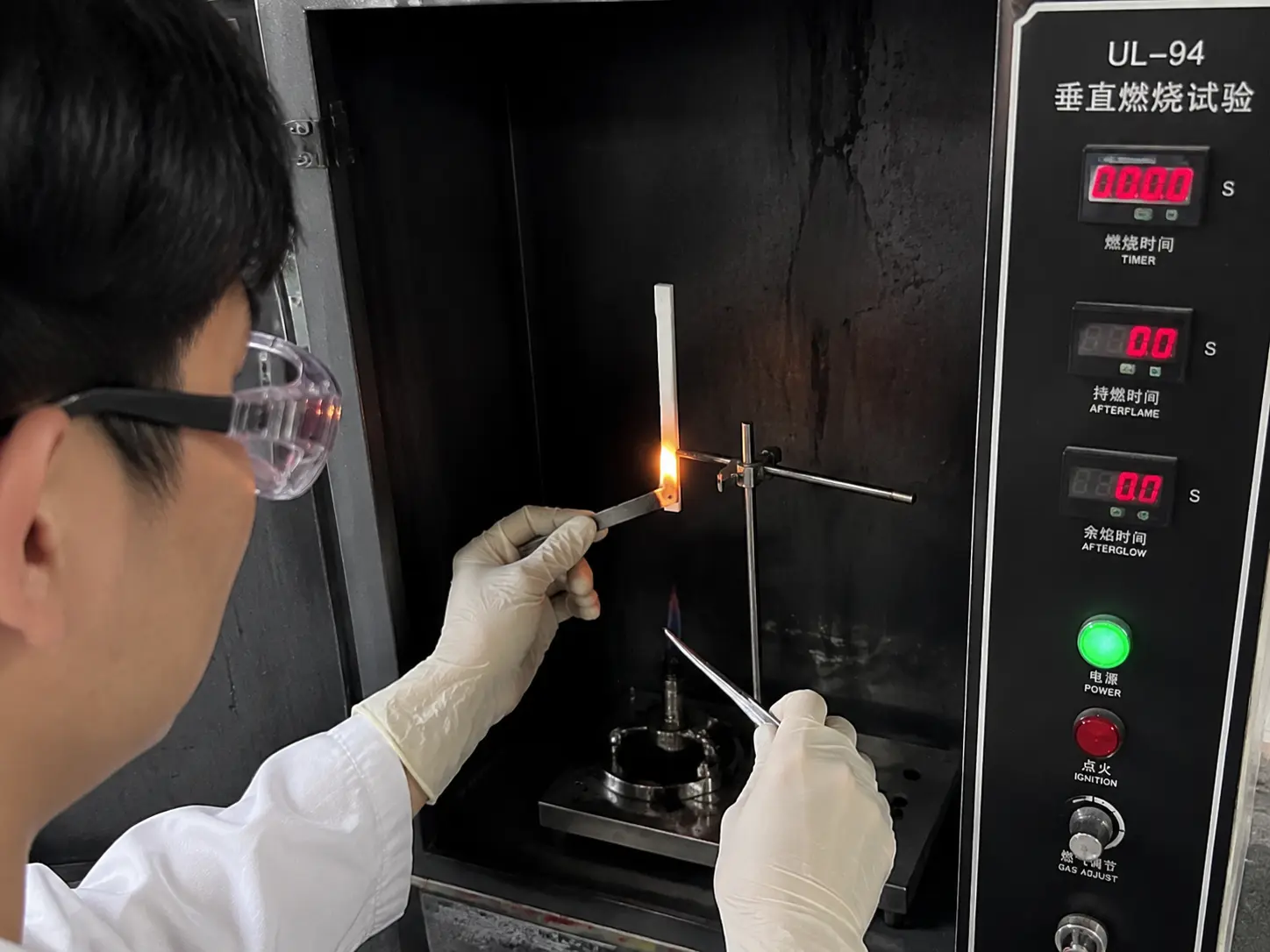
UL94 vertical burn verification of an APP intumescent compoundFig. APP04 — burn verification in our labEvery intumescent ratio is burn-tested before recommendation.
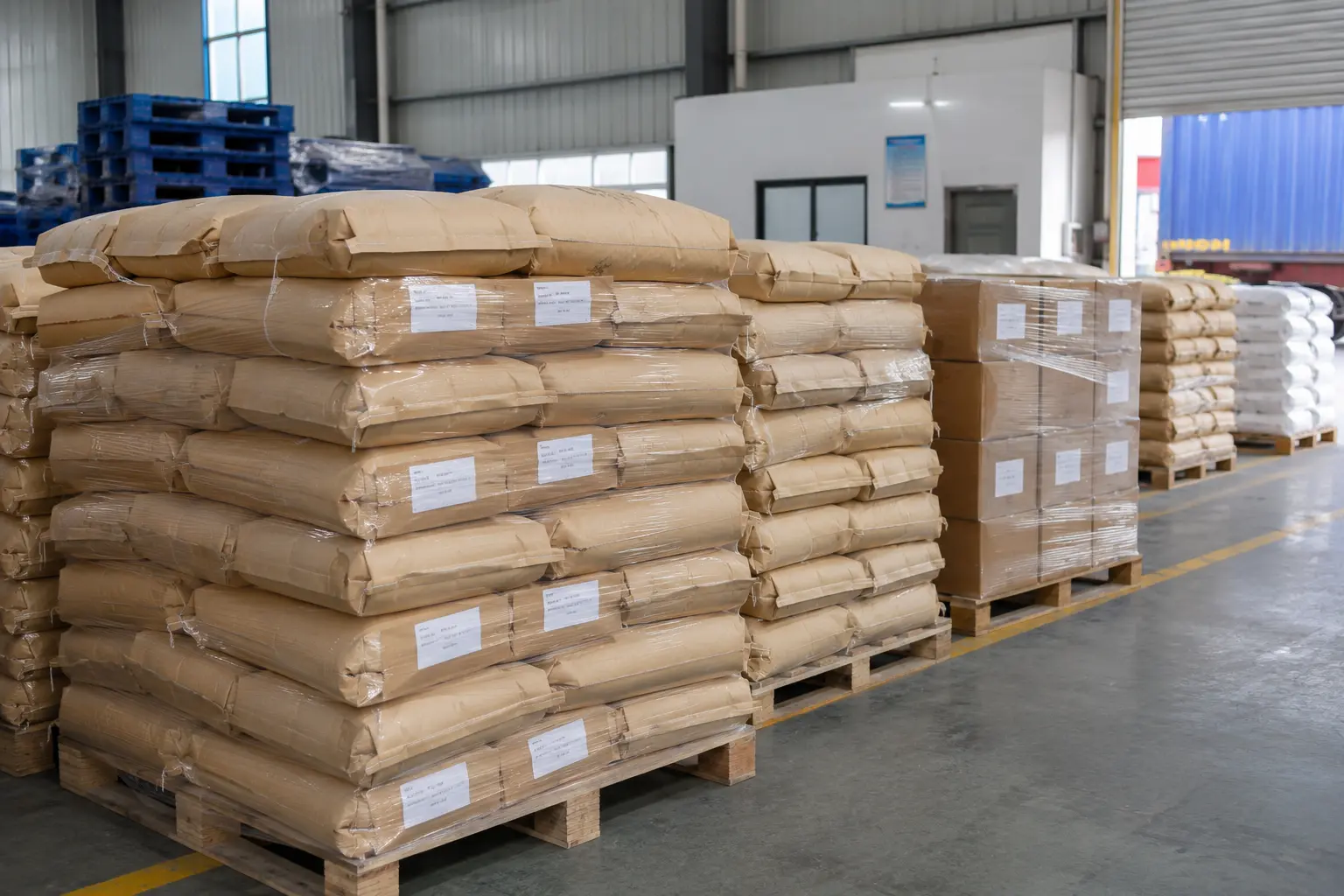
Export packaging of APP flame retardant powder and masterbatchFig. APP05 — export packagingBags, big bags and palletized supply for overseas buyers.
07 / 07FAQ

Buyer Questions About APP

Direct answers for engineers and procurement evaluating ammonium polyphosphate before sampling.

What is ammonium polyphosphate flame retardant?

A halogen-free phosphorus-nitrogen flame retardant that decomposes in fire into polyphosphoric acid — the acid source of intumescent systems, driving the polymer surface to form an insulating swollen char instead of burning as fuel.

What is the difference between APP Phase I and Phase II?

Phase I is short-chain: lower thermal stability, higher water solubility, used mainly in coatings. Phase II is long-chain crystalline — stable above ~275 °C with low water solubility — the standard for plastics compounding, where it must survive extrusion temperatures.

How much APP does a compound need for V-0?

In polypropylene, complete APP-based intumescent systems typically reach UL94 V-0 at 18–30% total loading. Microencapsulated grades reach V-0 from around 20% while adding water resistance — loading depends on wall thickness and the exact system balance.

Why choose a coated (microencapsulated) APP grade?

Plain APP is hygroscopic: in humid service it can migrate and leach, degrading both flame rating and surface quality. Silane, melamine-resin or PU coatings cut water uptake sharply, improve dispersion and typically strengthen the char — the default choice for outdoor and humid applications.

Request an APP Recommendation

Send your resin, wall thickness, target standard and the service environment (humidity matters for grade choice). We will recommend the APP grade or complete intumescent system — and prove the loading in our burn lab before you commit a line trial.

Include in your inquiryAPP-RFQ
  • Host resinPP, PE, recycled polyolefin, coating or foam
  • Wall / partThickness and processing method
  • Target standardUL94 V-0 / V-2, LOI, GWFI, coating fire rating
  • EnvironmentHumidity / outdoor exposure (decides coated grade)
  • Trial volumeSample quantity and expected annual demand