Rectivas Materials · Flame retardant manufacturer and formulation partner sales@rectivas.com  ·  WhatsApp +86 180 3191 1520

Flame Retardant Masterbatch for PP Cable Filler Yarn

Rectivas Materials sources flame retardant masterbatch for manufacturers of PP cable filler yarn and filler rope. Candidate selection considers the PP formulation, extrusion and drawing route, filler content and cable specification. We coordinate sample matching with partner factories for evaluation in the filler and the intended cable construction.

Request a grade review
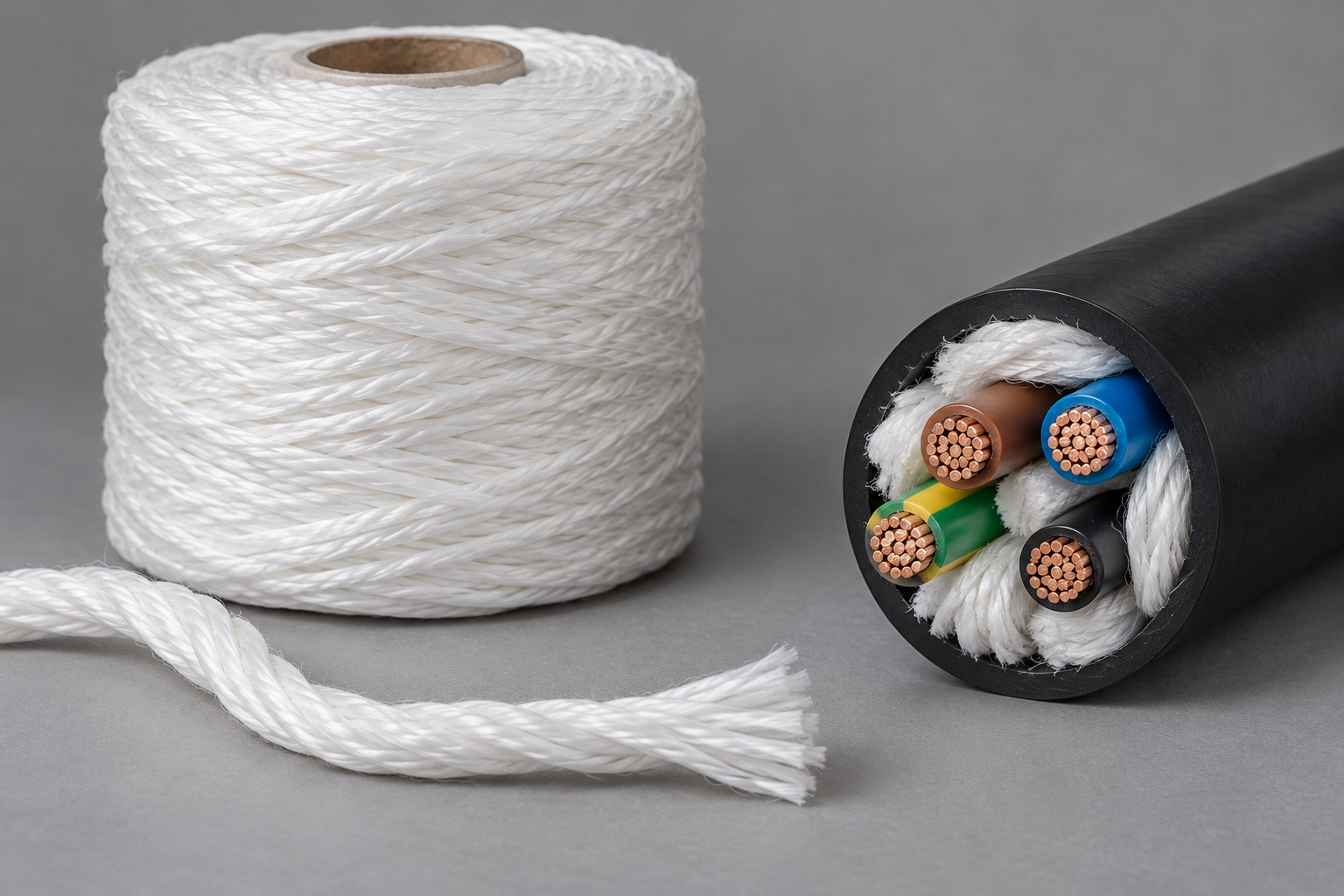
Conceptual PP filler yarn spool beside a cable cross-section
AI-generated application illustration. Not an actual product photograph or test result.

Masterbatch for making cable filler yarn

Polypropylene cable filler yarn occupies spaces within a cable construction and helps establish its geometry. Buyers may describe the material as filler yarn, filler rope or fibrillated tape, depending on its form and processing route. Explain the construction you make so the sample review addresses the correct product.

This product scope concerns concentrate for producing PP cable filler. It is separate from finished filler rope, cable insulation and outer sheath compound. A concentrate chosen for one component should not be assumed suitable for the others. The contribution of the filler must be assessed within the cable design specified by the customer.

Define extrusion, drawing and filler content

Describe whether the filler is produced from slit tape, fibrillated tape, filament or another route. Include the PP grade, extrusion conditions, drawing arrangement and target yarn specification. Yarn count, bulk, twist and handling requirements can matter to the subsequent cable assembly process.

If calcium carbonate or another mineral is present, state the amount and relevant grade information. Do not compare candidates only by the flame retardant percentage while the filler package changes. A calcium-carbonate-filled recipe and an unfilled recipe need their own evaluation of processing, mechanical behavior and fire performance.

What to observe during a filler-yarn trial

Record extrusion pressure behavior, dispersion, deposits, tape or filament breaks and drawing consistency. Retain the approved trial recipe and samples so that later cable results can be traced back to the filler material. Check whether the yarn remains suitable for winding, storage and feeding into the cable line.

Evaluate the handling properties required by the cable maker, including relevant tensile behavior, elongation, bulk and dimensional consistency. Excessive breakage or loose particles can create conversion problems even where a separate flammability screening looks promising. Agree measurable acceptance criteria rather than relying on the appearance of a single spool.

Cable fire performance belongs to the construction

A filler material result cannot by itself establish a finished cable classification. The insulation, jacket, fillers, geometry and other components contribute to the cable result. Identify the cable standard, specimen arrangement and acceptance criteria before selecting the concentrate. Component screening and finished-cable testing should be documented separately.

IEC 60332-1-2 concerns a single vertical insulated wire or cable flame-propagation test. It is not a universal grade designation for loose PP rope. Other cable projects may require different flame-spread, smoke or halogen-related tests. Share the actual requirement instead of requesting a generic fireproof filler.

Halogen-free filler and LSZH cable projects

If the cable is intended for an LSZH design, specify the requirements imposed on each component and the evidence needed for the completed cable. Choosing a halogen-free masterbatch for the filler does not establish the smoke or gas performance of the whole construction. Those properties need their own relevant verification.

We review the requested chemical restrictions and candidate documentation with partner factories. The appropriate route depends on the formulation and cable project. We do not publish a universal loading or promise that a particular filler concentrate will make any cable pass its end-use classification.

Approve a repeatable filler formulation

Begin with the existing filler recipe, production route and the cable customer specification. Select candidate concentrates and agree a controlled trial. Check yarn processing and handling first, then provide representative material for the relevant cable build and qualification. Identify exactly which formulation was used in each tested cable sample.

For commercial supply, agree the grade identity, documents and change-review conditions. A new mineral filler, pigment, recycled resin proportion or drawing setup can change the approved material. Keep those changes visible to the cable maker so that repeat orders preserve the intended construction and the evidence supporting it.

Information for sample selection

Selection itemWhat to confirm
ApplicationPP cable filler yarn and filler rope production
Product formConcentrate added to the filler formulation
Process detailsExtrusion, tape or filament route, drawing and winding
Filled PPConfirm calcium carbonate grade and loading
VerificationFiller properties and finished-cable requirements separately

Grade, addition rate, processing window, color, packing, minimum order and lead time are confirmed with the quotation. Ask which TDS, SDS, batch information and relevant test evidence are available for the proposed grade before approving a purchase.

Request a sample and comparable quotation

Send the base resin designation, full formulation, current process, target specification and expected order quantity. Include the country of use and any restricted-substance requirements. If a trial has already failed, provide the test method and observations so the next sample addresses a defined problem.

Rectivas Materials acts as a sourcing and technical partner. We coordinate candidate selection, sampling and supply discussions with partner factories. Pricing depends on the proposed grade and supply conditions. Compare the finished-product cost and qualification effort as well as the price per kilogram of concentrate.

Buyer questions

Do you supply finished cable filler rope on this page?

This page describes flame retardant masterbatch used by filler yarn and rope producers. Tell us the filler manufacturing route and specification when requesting a candidate. Finished rope procurement is a separate product inquiry.

Does flame retardant filler make the cable LSZH?

No. LSZH requirements depend on the specified smoke and halogen-related evidence for the relevant cable construction. Filler selection is one part of that design and does not replace finished-cable qualification.

Can you match a calcium-carbonate-filled PP recipe?

We can review both a flame retardant concentrate for an existing filled PP formulation and an integrated filler/flame-retardant masterbatch route. Selection requires the full recipe, drawing process and cable acceptance criteria.

Related PP material options

Compare the wider PP flame retardant masterbatch range and the PP additive selection guide. For projects specifying non-halogenated systems, review the halogen-free masterbatch options. Contact Rectivas with the application details for a sample review.

Reference for the test or application discussion: IEC single-cable test scope. This reference defines context; it is not a test report for a Rectivas-supplied grade.

Prepare the first production trial

Before a sample is dispatched, agree what the trial must establish and who will evaluate each result. Purchasing can define the required delivery conditions while production records the processing baseline and the quality team identifies the acceptance method. This prevents a successful startup from being mistaken for approval of all product requirements.

Keep an untreated or current-production reference where practical. Label every candidate and retain the formulation and process settings with the sample. If the line conditions change during a run, identify which material was produced before and after that change. A useful trial record makes the next decision specific: continue with the candidate, adjust the formulation, or investigate a process issue.

For repeat supply, confirm how grade changes and document revisions will be communicated. Review the available technical documents against the exact supplied material. Test evidence should identify the sample and relevant conditions clearly enough for the buyer to judge its applicability to the intended production recipe.