Rectivas Materials · Flame retardant manufacturer and formulation partner sales@rectivas.com  ·  WhatsApp +86 180 3191 1520

Flame Retardant Masterbatch for PP Corrugated Pipe

Rectivas Materials sources flame retardant masterbatch for manufacturers of PP corrugated pipe and electrical conduit. We match candidate grades to the polypropylene resin, extrusion process, pipe geometry and required fire test, then coordinate samples with partner factories. Send your pipe specification and target standard to start a grade review.

Request a grade review
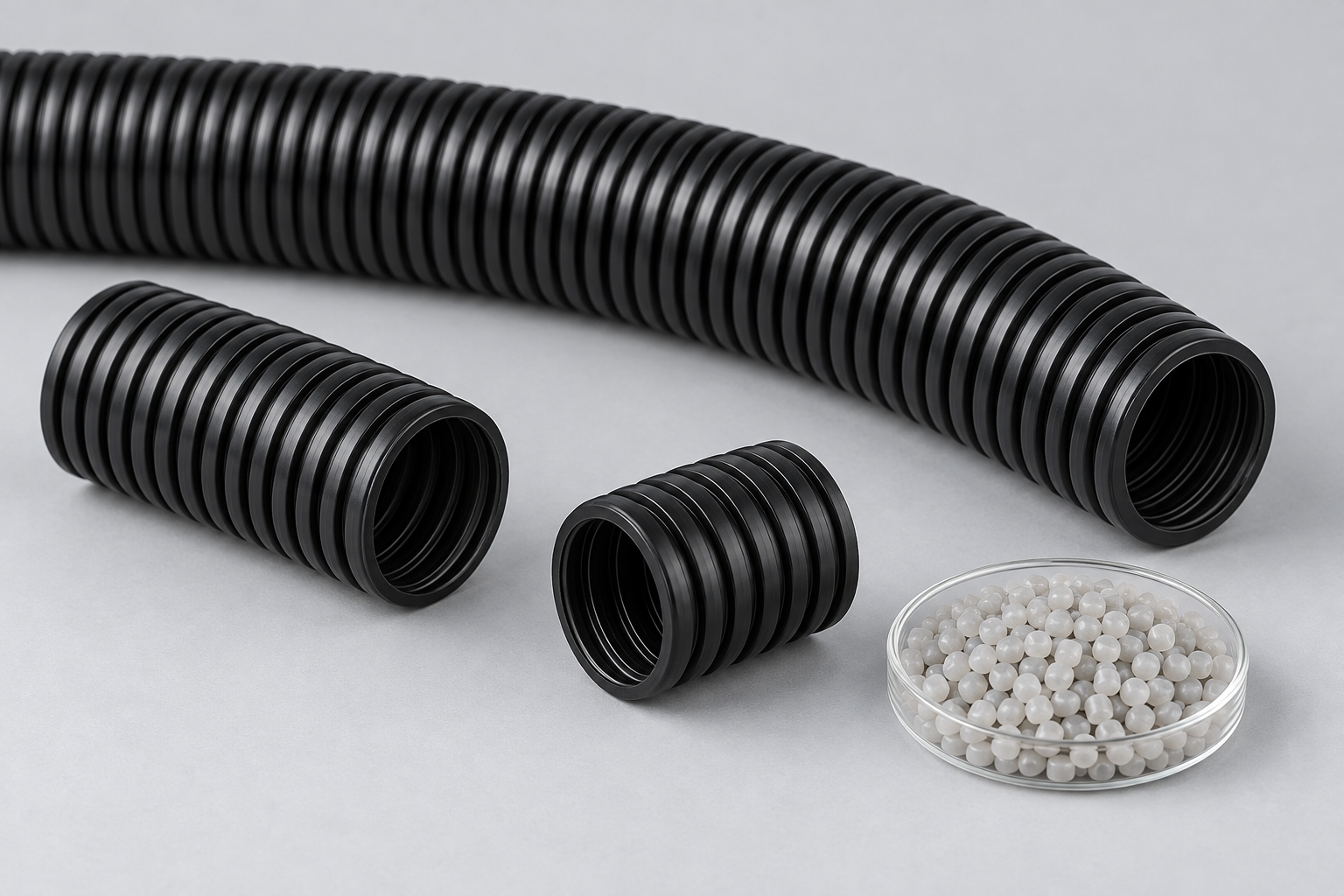
Conceptual black PP corrugated conduit tubes with polymer pellets
AI-generated application illustration. Not an actual product photograph or test result.

Masterbatch for corrugated PP pipe extrusion

A corrugated pipe line needs a formulation that forms the ribs consistently while maintaining the required behavior under flame exposure. Pipe diameter alone is insufficient for selection. The minimum wall section, rib geometry, cooling arrangement and extrusion conditions all matter. A candidate that performs well in a solid molded plaque still needs evaluation in the actual pipe.

Our supply scope covers flame retardant concentrates for PP corrugated pipe production. The concentrate is blended with the base resin at a grade-specific let-down ratio. This page concerns masterbatch supplied to pipe manufacturers. Finished pipe, conduit fittings and installation-system approval are separate purchasing and qualification subjects.

Define the pipe before selecting the grade

Tell us whether the product is electrical conduit, cable protection tubing or another type of corrugated PP pipe. Identify whether the construction is single-wall or double-wall and whether the installation requires a particular mechanical classification. Corrugated geometry does not by itself establish that a conduit belongs to a flexible or pliable standard category.

Include the PP grade and melt flow test conditions, color masterbatch, mineral filler and recycled content. These materials form the formulation that will actually be tested. Changing the base resin or color after a successful trial should trigger a review rather than an assumption that the previous result still applies.

What to compare on the extrusion line

During a trial, record actual melt temperature, output, pressure behavior, screen condition and visible deposits. Check whether the extrudate forms ribs cleanly and whether the smallest wall sections remain consistent. Evaluate the required bending, impact or compression properties using the methods specified for the finished conduit.

A useful comparison keeps the pipe design and production conditions as consistent as practical. Record deviations instead of attributing every defect to the flame retardant. Poor drying practice where drying is required, contamination, feed inconsistency and excessive residence time can complicate the interpretation of a sample run.

Halogen-free and other formulation requirements

State explicitly whether a halogen-free system is required. That requirement should include the definition and evidence accepted by the customer. RoHS compliance, halogen content, smoke density and fire behavior answer different questions. A declaration for one requirement cannot automatically stand in for the others.

Selection also needs to account for the balance between loading, appearance, stiffness and process stability. We review the requested direction with partner factories before proposing a sample. We do not assign a common addition rate or flame classification to every pipe diameter and PP formulation.

Specify the finished-conduit test

For electrical conduit, start with the applicable conduit specification and its relevant parts. IEC 61386-1 describes general requirements for conduit systems for cable management. The required edition, particular part and product classification must be identified for the project. Share the relevant clause or customer drawing where available.

UL 94 describes small-scale plastic flammability testing. A result for a material specimen can support material screening, but does not establish approval of an entire corrugated conduit system. Ask for the tested resin, formulation, thickness, color and conditioning so that the evidence can be compared with your actual product.

A practical pipe qualification sequence

First review the current resin formulation and acceptance criteria. Next select candidate masterbatch grades with documented processing guidance. Produce a controlled line trial and retain labeled samples from the actual pipe. Examine geometry and mechanical behavior alongside the specified fire performance before moving to commercial approval.

For scale-up, agree which formulation and process changes require another review. Recycled feedstock, a different pigment package, reduced wall thickness or altered filler content may change the relevant evidence. Keep sample identifiers, production settings and test reports linked so purchasing can repeat the approved formulation rather than buying only by a generic product name.

Information for sample selection

Selection itemWhat to confirm
ApplicationPP corrugated pipe and conduit extrusion
Product formFlame retardant masterbatch concentrate
Let-down ratioConfirm for the selected grade and full formulation
Fire performanceVerify on the specified specimen or finished conduit
Mechanical checksProject-specific bending, impact and compression requirements

Grade, addition rate, processing window, color, packing, minimum order and lead time are confirmed with the quotation. Ask which TDS, SDS, batch information and relevant test evidence are available for the proposed grade before approving a purchase.

Request a sample and comparable quotation

Send the base resin designation, full formulation, current process, target specification and expected order quantity. Include the country of use and any restricted-substance requirements. If a trial has already failed, provide the test method and observations so the next sample addresses a defined problem.

Rectivas Materials acts as a sourcing and technical partner. We coordinate candidate selection, sampling and supply discussions with partner factories. Pricing depends on the proposed grade and supply conditions. Compare the finished-product cost and qualification effort as well as the price per kilogram of concentrate.

Buyer questions

Can this be used for every PP pipe?

Selection is application-specific. Corrugated electrical conduit, solid-wall pressure pipe and other PP tubing have different construction and acceptance requirements. Share the product drawing and intended use before requesting a sample.

Does a V-0 material automatically qualify the conduit?

No. A material flammability classification and a finished-conduit requirement have different scopes. Approval must follow the specified method on the required construction, with the appropriate supporting evidence.

What addition rate should we use?

The recommendation must come from the selected grade and be checked with your PP, fillers, color and pipe wall. We confirm proposed trial conditions during the sample review rather than publishing an unsupported universal percentage.

Related PP material options

Compare the wider PP flame retardant masterbatch range and the PP additive selection guide. For projects specifying non-halogenated systems, review the halogen-free masterbatch options. Contact Rectivas with the application details for a sample review.

Reference for the test or application discussion: IEC conduit-system scope. This reference defines context; it is not a test report for a Rectivas-supplied grade.

Prepare the first production trial

Before a sample is dispatched, agree what the trial must establish and who will evaluate each result. Purchasing can define the required delivery conditions while production records the processing baseline and the quality team identifies the acceptance method. This prevents a successful startup from being mistaken for approval of all product requirements.

Keep an untreated or current-production reference where practical. Label every candidate and retain the formulation and process settings with the sample. If the line conditions change during a run, identify which material was produced before and after that change. A useful trial record makes the next decision specific: continue with the candidate, adjust the formulation, or investigate a process issue.

For repeat supply, confirm how grade changes and document revisions will be communicated. Review the available technical documents against the exact supplied material. Test evidence should identify the sample and relevant conditions clearly enough for the buyer to judge its applicability to the intended production recipe.