Rectivas Materials · Flame retardant manufacturer and formulation partner sales@rectivas.com  ·  WhatsApp +86 180 3191 1520

Flame Retardant Masterbatch for PP Nonwoven

Rectivas Materials sources flame retardant masterbatch for PP nonwoven fabric production. Candidate selection considers the spinning route, fiber size, fabric construction and end-use fire requirement. We coordinate formulation review and samples with partner factories so converters can evaluate flame performance together with spinning and fabric properties.

Request a grade review
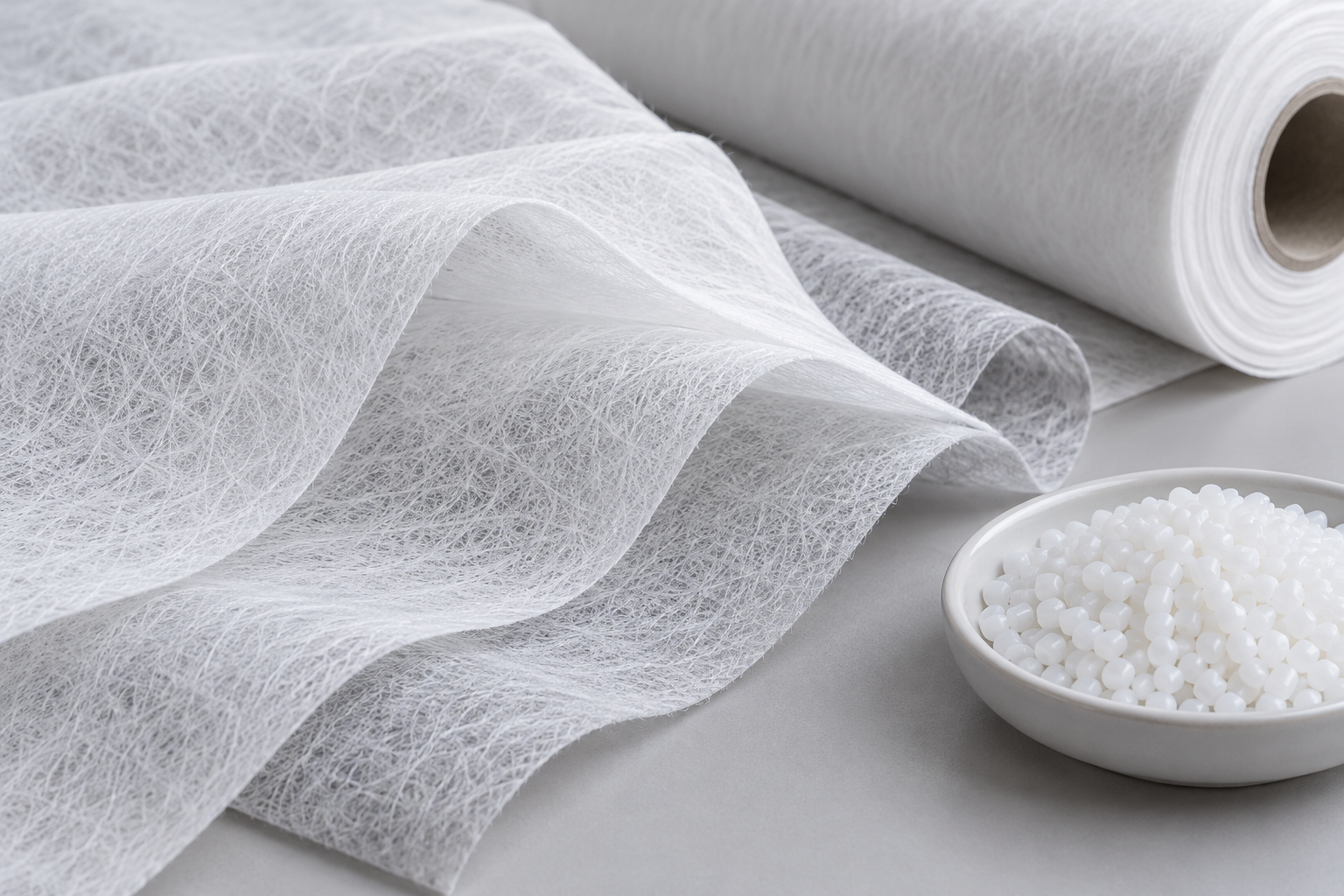
Conceptual white polypropylene nonwoven fabric roll and polymer pellets
AI-generated application illustration. Not an actual product photograph or test result.

PP nonwoven needs a spinning-specific review

A masterbatch used successfully in a thick molded PP part is not automatically suitable for a nonwoven line. Fine fibers place different demands on dispersion and melt processing. The trial must consider filament continuity, filtration behavior and the fabric properties needed after bonding or other finishing operations.

Our supply scope is the flame retardant concentrate added during PP nonwoven production. The buyer supplies the base resin and production context. We match that context with candidate grades through partner factories. Finished nonwoven fabric and its downstream assembly remain separate products with their own approval requirements.

Identify spunbond, meltblown or another route

State the production route before comparing candidates. Spunbond, meltblown and staple-fiber nonwovens should not be treated as interchangeable. Include the PP resin grade, melt flow measurement conditions, fiber fineness or target diameter where known, and the relevant spinning and bonding conditions.

Also describe the fabric basis weight and construction. A lightweight single layer can behave differently from a bonded or laminated assembly. If the fabric will be coated, printed or combined with a backing, identify which construction will be submitted for the final acceptance test. The flame retardant sample should be assessed in that construction.

Evaluate spinning stability and usable fabric

Record screen pressure trends, spin-pack condition, filament breaks, deposits and any visible agglomerates during the trial. Compare candidate formulations against a documented baseline. Stable output alone is not enough if the fabric loses the required tensile behavior, hand feel or bonding consistency.

Retain fabric across the width and along the run to assess uniformity. Confirm whether the customer needs particular tensile, elongation, softness, air permeability or appearance properties. Keep the measurements relevant to the end use rather than treating a larger list of laboratory values as proof that a candidate is suitable.

Confirm the required flame and chemical criteria

The phrase flame retardant nonwoven does not define a single acceptance test. Furniture interliners, industrial fabrics, construction layers and other uses may follow different methods. Share the named standard, specimen preparation, conditioning and pass criteria. Where laundering, aging or another exposure is required, include that condition in the qualification plan.

Halogen-free is a separate formulation request. It does not establish low smoke, low toxicity, skin-contact suitability or medical approval. Identify any restricted-substance requirements and the documents the end customer will accept. We review availability for the candidate grade without treating a generic masterbatch description as a compliance certificate.

Choosing a candidate and trial loading

Let-down ratio is tied to the concentrate composition, resin and fabric specification. A higher addition can also change processing or fabric properties, so approval should consider the full balance. An academic formulation or a competitor dosage cannot be used as a Rectivas grade specification.

Ask for candidate-specific handling and processing guidance before the line trial. Define how the masterbatch is metered and mixed with the resin so the comparison reflects the intended production method. Document any adjustment made during startup and separate startup material from samples used for the final fabric evaluation.

Moving from sample fabric to repeat orders

Start with the fabric requirement and current production recipe. Review candidate grades, agree trial conditions and run a labeled sample lot. Evaluate the specified fire test alongside the fabric properties that affect conversion and use. Repeat the relevant checks after finishing if the approved product includes a coating, lamination or other treatment.

Once a formulation is approved, record the resin, concentrate, color package and fabric construction together. Changes to basis weight, resin sourcing or downstream finishing can affect the evidence. Purchasing should order against the agreed grade and document version rather than only the broad description of PP flame retardant masterbatch.

Information for sample selection

Selection itemWhat to confirm
ApplicationPP nonwoven fiber and fabric production
Process reviewSpunbond, meltblown or staple route to be specified
Key production checksDispersion, filtration and filament continuity
Fabric checksBasis weight, bonding, mechanical properties and appearance
AcceptanceEnd-use method and final fabric construction

Grade, addition rate, processing window, color, packing, minimum order and lead time are confirmed with the quotation. Ask which TDS, SDS, batch information and relevant test evidence are available for the proposed grade before approving a purchase.

Request a sample and comparable quotation

Send the base resin designation, full formulation, current process, target specification and expected order quantity. Include the country of use and any restricted-substance requirements. If a trial has already failed, provide the test method and observations so the next sample addresses a defined problem.

Rectivas Materials acts as a sourcing and technical partner. We coordinate candidate selection, sampling and supply discussions with partner factories. Pricing depends on the proposed grade and supply conditions. Compare the finished-product cost and qualification effort as well as the price per kilogram of concentrate.

Buyer questions

Can a general PP masterbatch run on a spunbond line?

It needs a process-specific review. Resin compatibility alone does not establish spinning suitability. Confirm the dispersion, processing guidance and fabric requirements for the candidate, then verify them on the intended line.

Is halogen-free automatically suitable for medical nonwoven?

No. Halogen content is one requirement. Medical, hygiene, skin-contact and other regulated uses need their own applicable assessment and supporting documentation. A flame retardant claim does not establish that suitability.

Can you guarantee a fabric flame result before a trial?

A result depends on the complete recipe, fabric construction and required method. We coordinate candidate selection and samples. The agreed final construction needs appropriate testing before a performance claim is made.

Related PP material options

Compare the wider PP flame retardant masterbatch range and the PP additive selection guide. For projects specifying non-halogenated systems, review the halogen-free masterbatch options. Contact Rectivas with the application details for a sample review.

Reference for the test or application discussion: Research on masterbatch for PP fibers. This reference defines context; it is not a test report for a Rectivas-supplied grade.

Prepare the first production trial

Before a sample is dispatched, agree what the trial must establish and who will evaluate each result. Purchasing can define the required delivery conditions while production records the processing baseline and the quality team identifies the acceptance method. This prevents a successful startup from being mistaken for approval of all product requirements.

Keep an untreated or current-production reference where practical. Label every candidate and retain the formulation and process settings with the sample. If the line conditions change during a run, identify which material was produced before and after that change. A useful trial record makes the next decision specific: continue with the candidate, adjust the formulation, or investigate a process issue.

For repeat supply, confirm how grade changes and document revisions will be communicated. Review the available technical documents against the exact supplied material. Test evidence should identify the sample and relevant conditions clearly enough for the buyer to judge its applicability to the intended production recipe.