Quick answer: Flame retardant nylon 66 (PA66) reaches UL94 V-0 by three main routes: brominated polystyrene + antimony (efficient, cheapest), red phosphorus (efficient but dark red only), or halogen-free phosphinate systems like aluminium diethylphosphinate (clean, laser-markable, RoHS-friendly — now the default for E&E and EV parts). Glass-filled PA66 is the hard case because the fibers wick flame, so it needs a stronger package. In 2026 the bar has moved past UL94 alone: connector specs increasingly demand glow wire performance (GWIT 750 °C+, GWFI 850 °C+) on top of V-0.
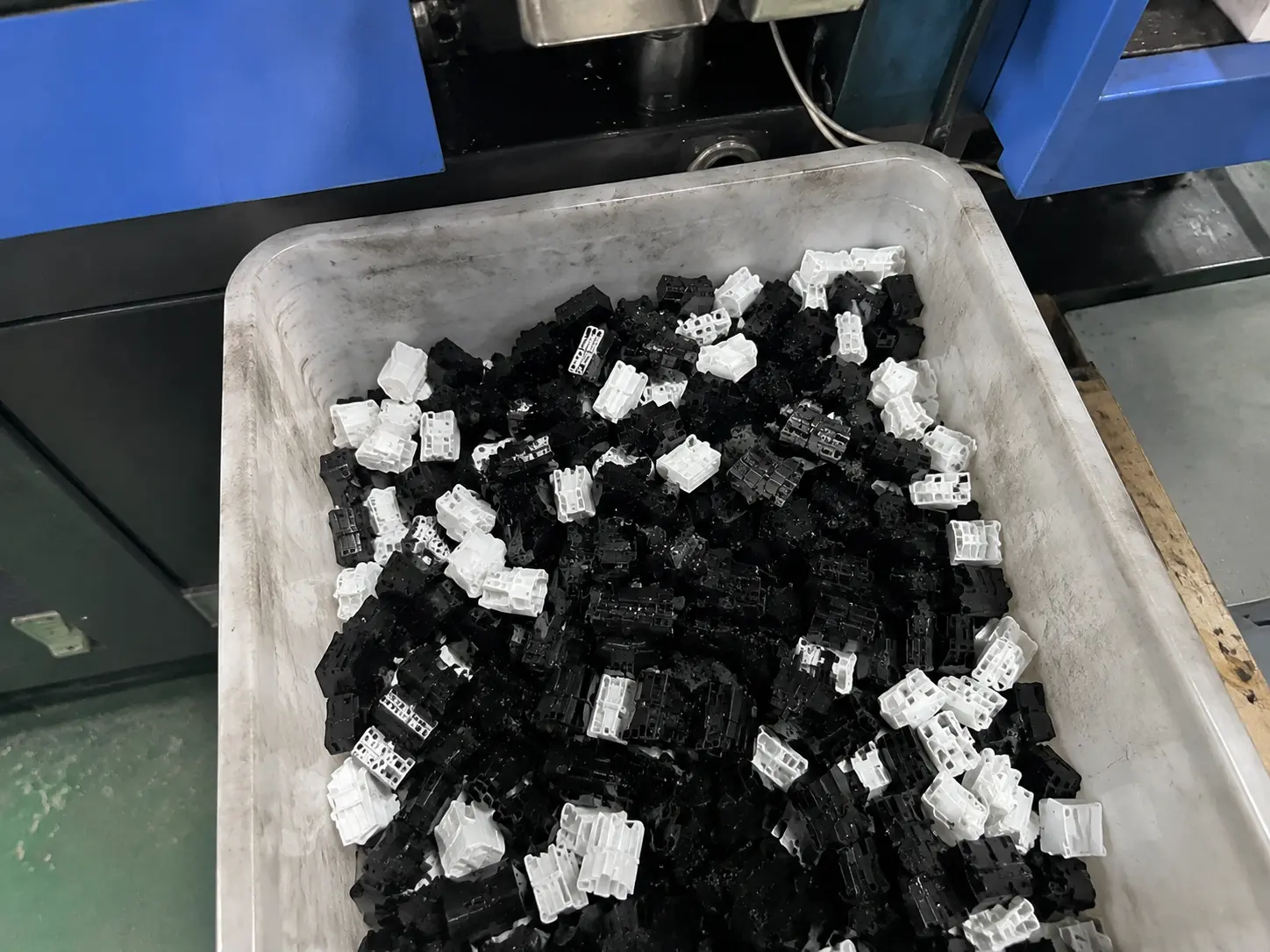
Nylon 66 sits in more fire-critical parts than almost any other engineering plastic — connectors, contactors, relay housings, terminal blocks, and now EV charging and battery hardware. Which also means it fails more audits than any other resin when the flame retardant package is chosen on price alone. Here is how we walk customers through the selection.
Why nylon 66 is harder to flame-retard than it looks
Unfilled PA66 is deceptively cooperative: it drips when it burns, and dripping carries the flame away, so thin unfilled parts sometimes scrape a V-2 with little help. The moment you add glass fiber — and most structural PA66 is 25–35% glass-filled — that trick disappears. The fibers act as a wick: molten polymer clings to the glass and keeps feeding the flame instead of dripping clear. This “candlewick effect” is why a flame retardant loading that passes on neat PA66 can fail outright on PA66-GF30.
Add the processing problem: PA66 is molded at 280–300 °C. Any flame retardant that starts decomposing there will give you gassing, screw plating corrosion and yellow parts. That thermal window rules out several additives that work fine in flame retardant polypropylene, and it is the main reason nylon has its own dedicated FR chemistry.
The three flame retardant systems for nylon 66
Which package should you run? It comes down to color needs, compliance targets and cost. The three commercial routes:
| System | Typical loading | Strengths | Watch-outs |
|---|---|---|---|
| Brominated polystyrene + Sb₂O₃ | ~18–25% | Proven V-0 on GF grades, best cost, any color | Halogenated — blocked by halogen-free specs; antimony price risk |
| Red phosphorus | ~6–10% | Very efficient, low loading preserves mechanicals | Dark red/black parts only; handling and phosphine concerns |
| Phosphinate (DEPAL) + N-synergist | ~15–20% | Halogen-free, light colors, good CTI and glow wire | Highest cost; formulation sensitive at 280 °C+ |
The market direction is unambiguous: E&E and automotive specs keep migrating to the halogen-free phosphinate route, because it clears RoHS/REACH conversations, holds a high comparative tracking index (CTI) for dense connector pitches, and doesn’t lock you into dark colors the way red phosphorus does. That said, brominated polystyrene + antimony is far from dead — where the spec allows halogen, it is still the most economical way to hold V-0 on glass-filled PA66. We supply both directions: halogen-free flame retardant additives and brominated flame retardant additives, plus pre-dispersed masterbatch on PA carrier for plants that dose at the press.
PA66 vs PA6: does the flame retardant choice change?
Mostly no — the same three chemistries serve both — but the operating windows differ, and that shifts the balance:
| Factor | PA66 | PA6 |
|---|---|---|
| Melting / processing temp | ~262 °C melt, molded 280–300 °C | ~220 °C melt, molded ~250–270 °C |
| FR thermal stability demand | Higher — additive must survive hotter melt | Lower — wider additive choice |
| Typical fire-critical use | Connectors, relays, EV/auto E&E | Housings, cable ties, general E&E |
| Our matching grades | FR-PA66 | FR-PA6 |
Practical consequence: a package validated on PA6 cannot be assumed onto PA66. We keep FR-PA6 and FR-PA66 as separate qualified grades for exactly this reason — same chemistry family, different stabilization and loading. (The same logic extends to polyester: our FR-PBT grade handles PBT’s own processing window for connector and coil-former work.)
2026 spec check: UL94 V-0 is no longer the whole exam
If you sell into appliances or EV hardware, the fire spec now has three lines, not one:
- UL94 V-0 at the actual wall — and connector walls keep getting thinner. Current halogen-free PA66 compounds are being certified at 0.75 mm and even 0.4 mm, not just the classic 1.6 mm test bar.
- Glow wire per IEC 60695 for unattended appliances under IEC 60335-1: typical targets are GWIT 750 °C / GWFI 850 °C on the finished part, with premium grades reaching GWFI 960 °C. A compound can hold V-0 and still fail glow wire — test both.
- LOI and CTI as supporting data: FR nylon 66 typically runs LOI 28–34, and CTI matters wherever creepage distances are tight.
The buyer’s lesson: send your compounder the full spec line, not just “V-0.” The flame retardant loading that passes UL94 at 1.6 mm may need rebalancing for a 0.75 mm wall with a 775 °C GWIT requirement — better to formulate against the real target from day one. If you are still mapping which standard applies to your part, our guide on how to choose flame retardants covers the decision path resin by resin.
How Rectivas supports flame retardant nylon projects
We supply the flame retardant side of the equation in two forms: additive packages (powder/blend) for compounders running their own twin-screw lines, and masterbatch on PA carrier for molders who dose at the machine. FR-PA66 and FR-PA6 are standing grades — both halogen-free — validated in-house on our UL94 vertical burn chamber and backed by an accredited third-party laboratory third-party test reports with the TDS/SDS/COA set your quality team will ask for. A real case from last quarter: a connector maker came to us failing V-0 at 0.8 mm on a PA66-GF30 part with a generic phosphinate dose; rebalancing the synergist ratio — not raising the total loading — got the part through both V-0 and GWFI 850 °C without dropping its impact strength.
Tell us the resin (PA66 or PA6), glass content, wall thickness, color, and the full spec line — UL94 class plus any glow wire or CTI numbers. We will recommend the halogen-free or brominated route on real economics and send a sample to burn on your own parts. See our flame retardant nylon (PA6/PA66) product line, or request a quote to start the match.
FAQ
Is nylon 66 naturally flame retardant?
No. Unfilled PA66 can sometimes reach UL94 V-2 because it drips away from the flame, but that is not flame retardancy — and glass-filled PA66 loses even that, because the fibers wick the flame. Any serious rating (V-0, glow wire) requires a flame retardant package.
What flame retardant is used in nylon 66?
Three commercial systems: brominated polystyrene with antimony trioxide (economical, any color), red phosphorus (very efficient, dark colors only), and halogen-free phosphinates such as aluminium diethylphosphinate with nitrogen synergists — the current default for connectors, appliances and EV parts.
Can flame retardant PA66 reach UL94 V-0 with glass fiber?
Yes — 25–35% glass-filled PA66 routinely certifies V-0, but it needs a stronger package than neat resin because glass fibers cause candlewicking. Modern halogen-free compounds hold V-0 down to 0.75 mm walls; validate at your actual wall thickness, not just the 1.6 mm bar.
Is flame retardant nylon 66 RoHS and REACH compliant?
The halogen-free phosphinate route is the straightforward path to RoHS/REACH-clean parts. Brominated polystyrene systems can also comply — BPS is not a restricted substance — but expect more documentation requests from EU customers. Ask for a third-party test report on the regulated substances either way.
What is the difference between UL94 V-0 and glow wire (GWIT/GWFI)?
UL94 V-0 tests open-flame self-extinguishing on a bar. Glow wire tests simulate an overheated conductor pressing into the part — the failure mode of real electrical faults. Unattended appliance and connector specs under IEC 60335-1 typically require both, and passing one does not guarantee the other.
Final Thoughts
For PA66 the decision splits on one question: is the grade reinforced? Glass fibre rules out melamine cyanurate and pushes you to phosphinate, usually with MPP alongside. Unfilled grades can use MCA at lower cost. Send the glass content and the CTI target with your wall thickness and we will propose a starting loading.
—— Rectivas Materials 团队 技术工程师老陈