Quick answer: Flame retardant PETG filament exists commercially and reaches UL94 V-0, but almost every brand on the market uses a halogen-free phosphorus system, not bromine. PETG is a polyester — chemically closer to PBT than to ABS — and it drips when it burns, so the additive has to stop the drip and stop it fast. The standard route mirrors what we build for PBT: a phosphorus-based package, not the brominated + antimony combo you’d reach for in ABS or HIPS.
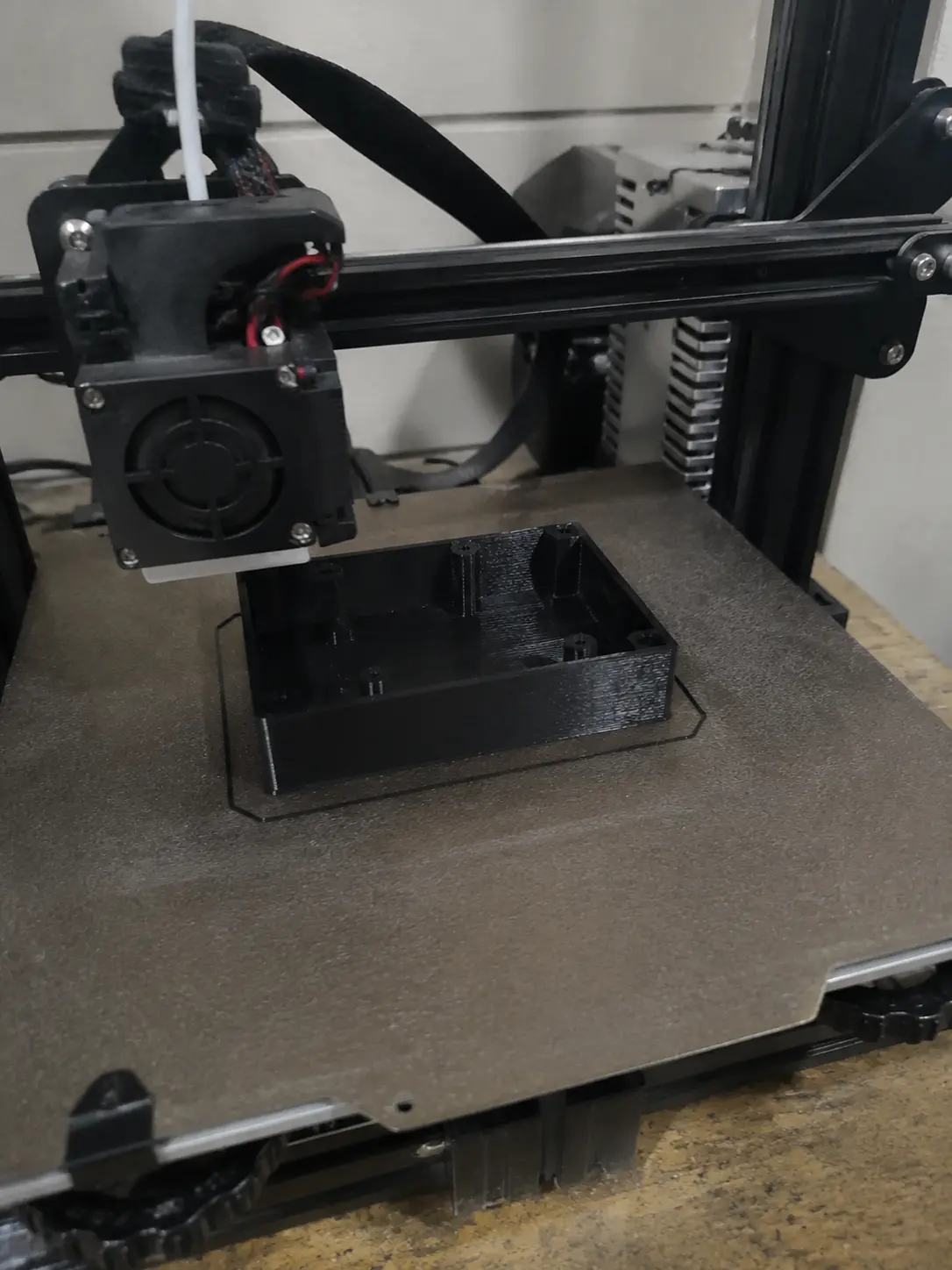
PETG got popular in 3D printing because it splits the difference between PLA (easy, brittle) and ABS (tough, fussy) — good layer adhesion, decent heat resistance, doesn’t warp much. None of that solves the fire problem. Unmodified PETG burns steadily and drips, same failure mode as its polyester cousins. Once a print needs a UL94 rating — an enclosure, a bracket near electronics — it needs the same additive thinking any polyester does.
Why PETG behaves like PBT, not ABS
Both PETG and PBT are polyesters — ester linkages in the backbone, moderate LOI, a tendency to drip rather than char. ABS and HIPS are styrenics; different backbone, different failure mode, different additive package. That’s why the commercial FR-PETG filaments on the market almost all run halogen-free phosphorus chemistry instead of the brominated route you’d see in an ABS housing: a phosphorus source promotes char and interrupts the flame in the gas phase, and it does it without the drip-friendly, smoke-heavy profile bromine brings to a polyester.
| Property | Unmodified PETG | FR-PETG (V-0 grade) |
|---|---|---|
| UL94 rating | None / HB at best | V-0 (self-extinguish <10s) |
| Chemistry | — | Halogen-free phosphorus |
| Print settings | Standard PETG profile | Same profile, no enclosure or hardened nozzle needed |
| Moisture sensitivity | Hygroscopic | More hygroscopic — dry before printing, every time |
What’s actually in an FR-PETG filament
Commercial V-0 PETG grades lean on the same phosphorus toolbox we cover for engineering polyesters: a phosphinate or phosphate-ester system, sometimes with a nitrogen synergist to sharpen the char. It is functionally the same logic as the halogen-free route we build for flame retardant PBT — different resin, same phosphorus mechanism, same reason it beats bromine here: no antimony, lower smoke, and it doesn’t fight the polyester’s own chemistry the way it can in a hydrolysis-sensitive resin. For the full menu of phosphorus routes and where each one fits, see our phosphorus flame retardants page; the phosphinate end specifically is detailed on the DEPAL page.
One filament-specific wrinkle: the additive still has to survive being drawn into 1.75 mm strand at a consistent diameter, then re-melted at a small nozzle. Particle fineness and dispersion matter here the same way they do in flame retardant ABS filament — an agglomerate that’s invisible in a molded part will jam a 0.4 mm nozzle in a heartbeat.
Printed part ≠ test bar — same warning as any FR filament
Everything we said about ABS filament applies here too: a UL94 V-0 claim on the spool is usually based on a molded or extruded test specimen, not an FDM print. Layer lines, infill voids and print orientation change how a part burns. If your printed part is going into a certified assembly, test specimens printed on your own machine, at your own settings, before you trust the rating on the label.
Where Rectivas fits
To be straight about it: FR-PETG filament itself isn’t a standing Rectivas product — we don’t spool filament. What we do supply is the phosphorus-based halogen-free chemistry that filament makers compound into PETG and similar polyesters, built on the same systems behind our FR-PBT line. If you compound polyester resin, extrude filament, or mold PETG parts and need the fire side solved, send us the target UL94 class, wall thickness, and color requirement — we’ll propose a package and prove it at our partner factory’s UL94 chamber. Request a quote to start.
FAQ
Is PETG flame retardant on its own?
No. Unmodified PETG has no meaningful UL94 rating and drips when burned, the same as other polyesters. A UL94 V-0 claim always means a flame retardant package was compounded in before the filament was drawn.
What flame retardant is used in FR-PETG filament?
Almost universally a halogen-free phosphorus system — a phosphinate or phosphate-ester type, sometimes paired with a nitrogen synergist. Brominated PETG filaments are not common in the commercial market.
Does flame retardant PETG print differently from standard PETG?
Not in temperature or enclosure requirements — most brands print on a standard PETG profile with no hardened nozzle needed. It does tend to be more hygroscopic, so dry the spool before every print, more aggressively than you would with standard PETG.
Will a UL94 V-0 PETG filament guarantee my printed part passes V-0?
Not automatically. The rating is usually earned on a solid test specimen, not an FDM print with layer lines and infill voids. Print and burn-test your own specimens at your actual settings before relying on the spool’s rating for a certified assembly.
Final Thoughts
PETG sits between easy and difficult: it chars reasonably but drips, so anti-drip help matters more than raw flame retardant efficiency. Thin sheet makes that worse. If you are running sheet or thermoformed parts, tell us the gauge and whether clarity matters – our additive systems include the phosphorus and anti-drip packages that suit polyester, and we will pre-screen at your actual thickness.
—— Rectivas Materials 团队 技术工程师老陈