Quick answer: UL 94 V-0 is not a substitute when a project requires FM 4910 flame retardant plastics. The two evaluations address different fire-performance questions. Start with the exact material grade and current listing evidence, then check the conditions relevant to your equipment. A generic resin name, a V-0 report or an additive supplier’s claim cannot by itself establish that a proposed sheet meets the project’s FM 4910 requirement.
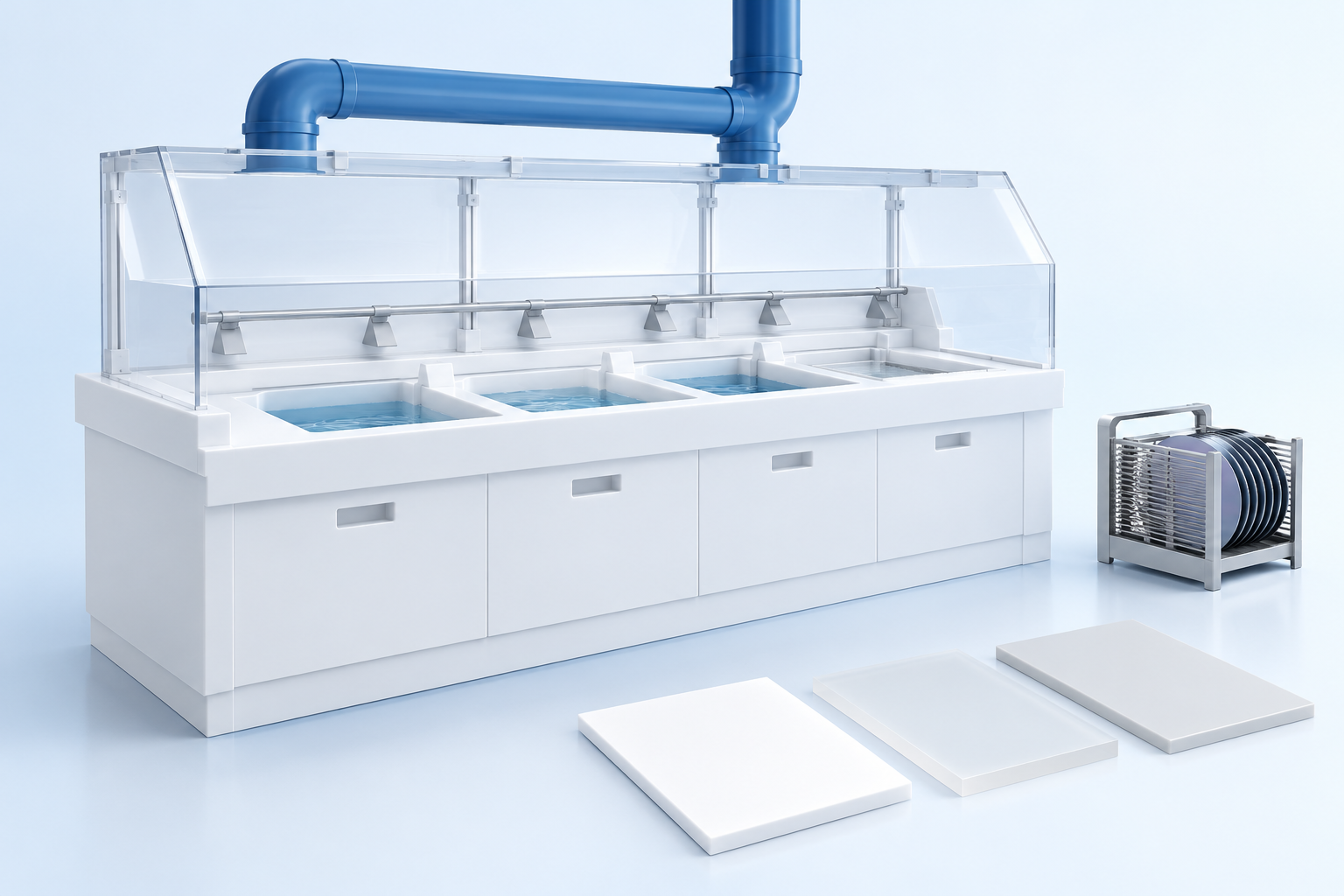
Is UL 94 V-0 Enough for a Cleanroom Material?
The answer depends on the written project requirement. If it specifically calls for FM 4910, a UL 94 V-0 result answers a different question. Do not approve a substitution solely because both documents concern fire behavior.
UL Solutions’ combustion testing guidance explains that the vertical classifications evaluate burning, afterglow and dripping under specified laboratory conditions. Those observations do not supply an FM 4910 listing. The test methods and resulting evidence should remain separate in the material specification.
A material may have evidence for more than one requirement. That does not make the requirements interchangeable. Ask which documents cover the exact proposed product, instead of asking which label sounds more demanding. For details of the vertical classifications, see the UL 94 ratings guide.
What Does FM 4910 Address?
FM 4910 is the Cleanroom Materials Flammability Test Protocol. The publicly available June 2004 ANSI/FM 4910 document describes evaluation of fire propagation and the potential for smoke contamination, using the Fire Propagation Index, or FPI, and Smoke Development Index, or SDI.
That archived document is useful for understanding the purpose and terminology. It should not be treated as confirmation of the current edition, current acceptance route or a particular product’s present listing. Obtain the applicable requirements and current material evidence for the project before specifying or testing a product.
FM 4910 and UL 94: Compare the Evidence
| Question | UL 94 V-0 evidence | FM 4910 evidence |
|---|---|---|
| What is being evaluated? | Behavior in a specified vertical flame test | Cleanroom material fire propagation and smoke-contamination potential |
| What should procurement identify? | Exact grade and applicable tested or recognized conditions | Exact product and the relevant current listing information |
| Can one replace the other? | Does not establish FM 4910 status | Does not replace a separately specified UL 94 requirement |
| Does it settle every service question? | No; review the application separately | No; review chemical, thermal and fabrication requirements separately |
The comparison is about scope, not a conversion scale. Avoid writing “V-0 equals FM 4910” or inventing an intermediate rating between them. If the customer requires both, identify evidence for both. If the wording is ambiguous, resolve the specification before comparing quotations.
Which Plastics Appear in Cleanroom Material Ranges?
Manufacturer ranges include selected PVC, CPVC, polypropylene and fluoropolymer products. The key word is selected. Polymer identity helps organize a shortlist; it does not establish listing status for every grade made from that polymer.
Röchling’s FM 4910 material page identifies Trovidur EC-FR PVC-U and Polystone PVDF as specification-tested material examples. It also shows applications including wet benches, housings and tanks. These are manufacturer examples, not Rectivas products or a claim that all PVC-U and PVDF materials qualify.
SIMONA’s material FAQ names a range that includes CRP-1, 2000, PVDF and FRP-3. Use such information to find the exact product documentation and current listing, not as permission to substitute a similarly named sheet from another source.
For a wet-process application, build the comparison around the intended chemical exposure, temperature and fabricated form. A familiar polymer may be a sensible starting point, but the grade and supporting evidence decide whether it belongs in the actual project.
A Useful PP Example: Similar Resin Names, Different Claims
SIMONA’s product information distinguishes FRP-3 and FRPP polypropylene materials with FM 4910 and UL V-0 descriptions respectively. That distinction makes a practical purchasing point: “flame-retardant PP” is not a sufficiently precise substitute description.
Do not interpret this example as a current database verification of either product. The source is the manufacturer’s published product information. A purchase still needs the current exact-grade documentation and any relevant listing conditions checked at the time of specification.
If a drawing names a specific listed sheet, changing to another FR-PP is a material change that needs review. Matching color, density or a vertical burn rating would not by itself resolve the missing evidence. Put the full grade identification on the inquiry and purchase record.
How to Check an FM 4910 Material Claim
The FM Approvals Approval Guide describes itself as a source of current product information and provides account access. Use the relevant entry and supporting documents for the proposed material. A search-engine snippet or undated catalog page is a lead to investigate, not the final procurement record.
Our recommendation is to keep a compact evidence package containing the manufacturer, exact trade name, material form, supplier quotation and listing reference. Record when the information was checked. Save any relevant conditions or footnotes with the entry rather than retaining only a screenshot of the product name.
Compare the purchase description with that evidence line by line. If the supplier quotes an alternative grade, ask for its own documents. If the distributor uses a different stock code, request a traceable connection to the manufacturer’s product identity before treating it as equivalent.
Where an entry does not clearly cover the proposed configuration, ask the manufacturer or FM Approvals for clarification. Do not infer coverage from a neighboring product. This article has not authenticated current individual material entries in the account-based directory.
Fire Performance Is Only One Part of Material Suitability
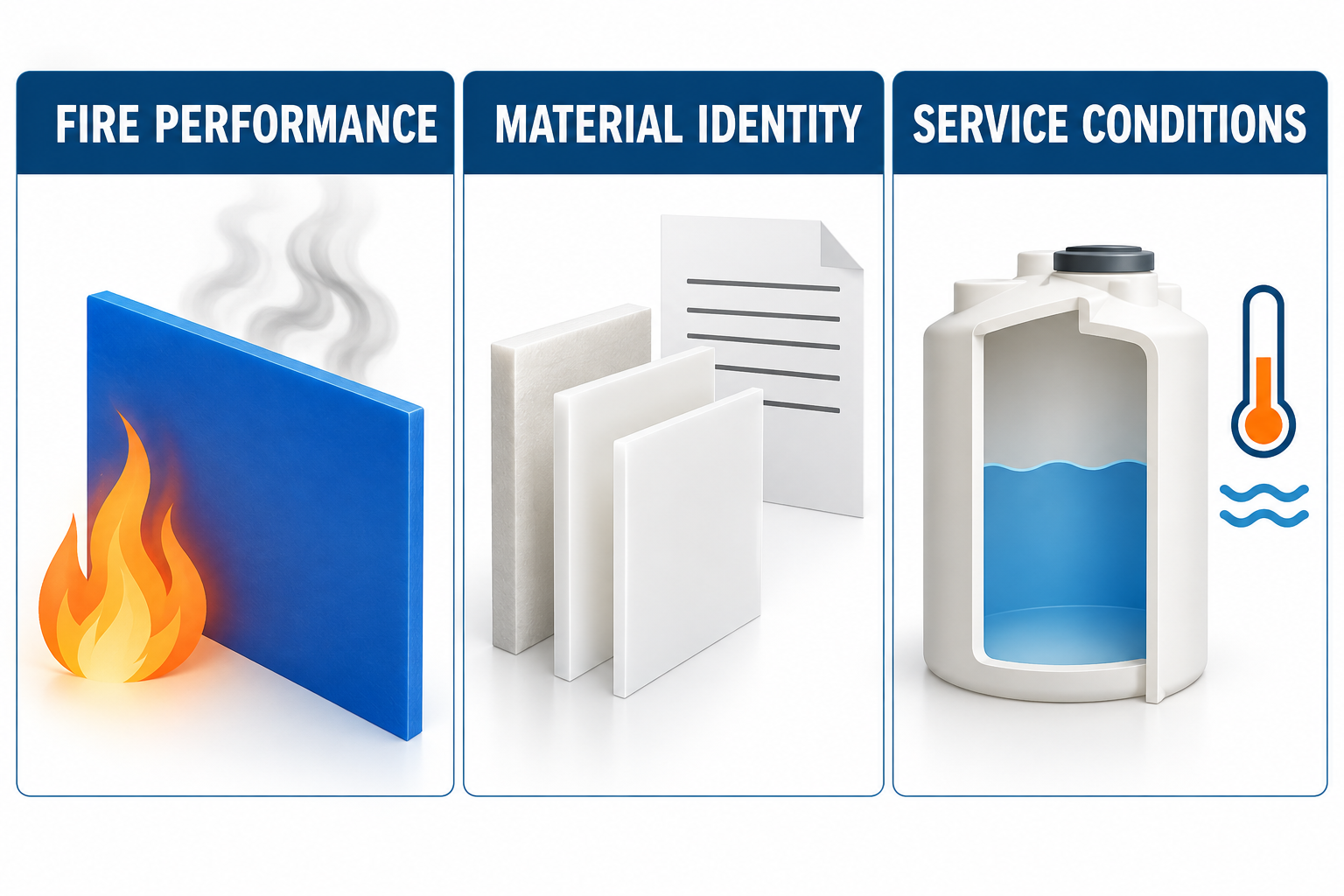
A wet bench material also has to function during normal operation. Ask which chemicals contact the surface, at what concentrations and temperatures, and whether the exposure is continuous, intermittent or limited to cleaning. Keep those conditions in the material review rather than relying on a general chemical-resistance description.
Mechanical design and fabrication deserve their own review. A sheet used in a loaded tank, an equipment enclosure or a viewing panel presents different questions. Ask the fabricator about the intended joints, supports and service conditions, with the material supplier providing grade-specific guidance.
Cleanliness requirements also need to be stated. FM 4910’s fire-related scope should not be read as a universal guarantee of particle control, extractables, outgassing or compatibility with a semiconductor process. ChemTrace’s cleanroom materials analysis brochure describes separate contamination-analysis work, illustrating why these questions need their own evidence.
Ask the project team to identify which properties require data and which acceptance criteria apply. Keeping fire, contamination and service requirements in separate lines makes the specification easier to evaluate and reduces the chance that one favorable report is used to answer every question.
Why an Additive or Masterbatch Cannot Supply a Blanket Listing
The phrase “FM 4910 flame retardant” can sound like the name of an ingredient. In procurement, distinguish an additive development proposal from evidence for the exact material being specified. A statement about a powder does not identify a finished sheet’s formulation, production route or listing.
Adding a concentrate to a resin creates a new material combination that needs evaluation. The same caution applies when changing pigments, stabilizers, filler or recycled content. Ask what evidence remains applicable and what additional work is required, rather than assuming that a familiar ingredient carries a listing into any recipe.
Our flame retardant additives for polypropylene page describes general formulation routes. It does not establish FM 4910 status for a PP sheet or authorize substitution for a listed product. Keep that distinction explicit when discussing a development project.
The same boundary applies to flame retardant additives for PVC. A chemistry discussion may help organize questions for a supplier, but the acceptance of a cleanroom construction material rests on the exact material evidence and project requirements.
A Practical Procurement Scenario
Consider a hypothetical wet-bench project. The drawing calls for an identified FM 4910-listed material. One supplier quotes the specified grade; another offers a lower-priced sheet described as “FR polypropylene, UL 94 V-0.” Both quotations say the material is suitable for industrial equipment.
The immediate task is to reconcile the evidence, not choose the lower price. Ask the second supplier for the exact manufacturer and grade, the current relevant listing reference and a clear statement of any differences from the specification. A V-0 document alone leaves the FM 4910 question unanswered.
If that evidence is unavailable, refer the proposed substitution to the responsible project engineer. Do not silently replace the drawing requirement in the purchase order. A documented decision is more useful than discovering the mismatch after sheet cutting and fabrication.
Our Recommendation: Specify the Material Before Asking for Price
If you fabricate cleanroom equipment, identify the required grade or acceptance route first. Share the material form, relevant dimensions, service conditions and fabrication plan with the supplier. Ask whether the quotation matches the specification exactly or proposes an alternative.
| Inquiry item | What to provide or request | Why it matters |
|---|---|---|
| Project requirement | Named standard, edition or specified material | Prevents substitution of a different fire-performance claim |
| Material identity | Manufacturer, exact grade, form and supplied identification | Connects the quotation to the evidence |
| Listing information | Current reference and relevant conditions | Separates a documented product from a generic claim |
| Service and fabrication | Chemical exposure, temperature, supports and joints | Keeps normal-use suitability in the review |
| Proposed alternative | Written differences and the required approval route | Makes the purchasing decision traceable |
If you develop formulations, treat the project as material development with a defined verification route. A flame retardant compound discussion can help establish the starting resin and property requirements, but a general compound offering is not a claim of FM 4910 listing.
Rectivas Materials acts as a sourcing and technical partner. We can help coordinate candidate material information and supplier discussions. We do not claim that our general additives, concentrates or compounds are FM 4910-listed. Any project requiring a listed material needs its own exact-grade evidence before purchase.
Frequently Asked Questions
Does UL 94 V-0 mean a plastic meets FM 4910?
No. A V-0 result does not supply the separate evidence requested by an FM 4910 specification. Keep the two requirements distinct and identify documents for the exact material being offered. If a quotation provides only a V-0 report, ask for the missing listing information or refer the proposed alternative to the responsible project engineer before accepting it.
What does FM 4910 listed mean for a buyer?
For purchasing, treat it as a claim that must be connected to a specific material and current relevant listing information. Request the manufacturer, full grade name and supporting reference, then compare them with the quotation. Avoid relying on a generic description such as cleanroom plastic. Keep applicable conditions with the procurement record so later substitutions can be reviewed properly.
Are all PVDF or flame-retardant PP grades suitable?
Do not approve a material from the polymer name alone. Manufacturer ranges contain selected grades with different properties and supporting claims. The proposed material needs its own documentation and a match to the project requirements. A similarly colored sheet or familiar resin family is insufficient evidence of equivalence, even when the supplier describes both products as flame retardant.
Can a flame-retardant additive make any resin FM 4910 listed?
An additive recommendation is a development input, not a blanket listing for any formulation made with it. The final material combination and its relevant evidence must be identified. Ask the supplier what has actually been evaluated and which product the documents describe. Do not transfer a statement about an ingredient into an approval claim for an unverified sheet or compound.
Does a material listing approve the complete wet bench?
Do not describe material evidence as approval of a complete fabricated installation unless the appropriate documentation explicitly supports that claim. The project still needs review of its design, fabrication and service requirements. Keep material identification separate from equipment acceptance, and ask the responsible engineer which additional checks apply to the assembled bench rather than inferring them from a sheet description.
How should I compare quotations for FM 4910 plastics?
First check whether each quotation covers the same exact material and specification. Compare supporting evidence, supplied form, dimensions and any proposed substitutions before considering the price difference. Ask suppliers to identify exclusions and alternatives in writing. A cheaper quotation with a different grade or incomplete documentation may not represent the same purchase, so it needs a separate technical decision.
What if the listing is difficult to locate?
Ask the manufacturer or supplier for the precise reference and contact FM Approvals where clarification is needed. The Approval Guide provides account access, and broad web searches may not expose the relevant details. Do not treat a missing search result as proof of absence, or an old catalog as proof of current status. Resolve the documentation gap before accepting the claim.
Can Rectivas provide an FM 4910-listed material?
Contact Rectivas with the exact specified grade and project requirement so availability and supporting documents can be checked. Our general product pages do not establish FM 4910 listing, and we do not promise it for an unverified material. Any sourcing proposal must identify the actual manufacturer and grade, with the relevant evidence reviewed before the product is accepted for the project.
Final Thoughts
For FM 4910 flame retardant plastics, the decisive question is whether the exact proposed material has the evidence your project requires. UL 94 V-0 alone does not answer that question. Match the quotation to the material identity, check current listing information and review normal service conditions separately. Rectivas Materials can support sourcing discussions, with any listed-material proposal subject to exact-grade documentation and project acceptance.
— Rectivas Materials Team · Chen (老陈)