09 / 09Buyer Questions
Buyer Questions About Flame Retardant Additives and Masterbatch
Short answers for engineers and procurement teams comparing additives, masterbatch, halogen-free systems, halogenated systems and polymer-specific flame retardant requirements.
Question fit: additives, masterbatch, systems and RFQ
Answer value: direct language for engineers and buyers
Conversion value: removes basic uncertainty before inquiry
What is the difference between flame retardant additives and flame retardant masterbatch?
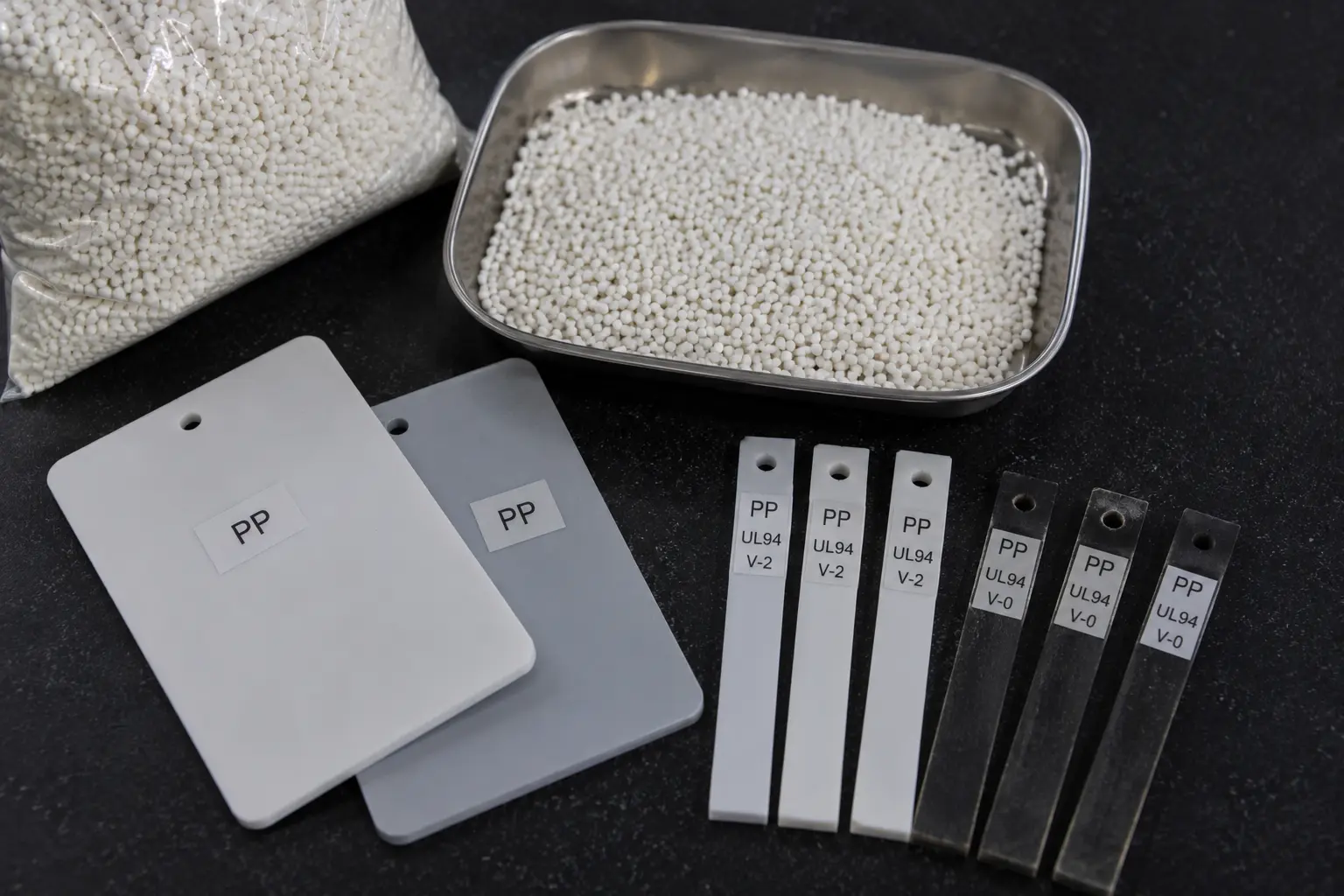
Flame retardant additives are powder, liquid or compounded ingredients added during formulation. Flame retardant masterbatch is a pre-dispersed pellet concentrate in a carrier resin, designed for easier dosing, cleaner handling and more consistent processing on extrusion or injection molding lines.
When should a buyer choose additives instead of masterbatch?
Additives are usually better when a compounder wants maximum formulation control, direct adjustment of active ingredients or integration with an existing compounding process. Masterbatch is usually better for direct let-down, cleaner feeding, smaller trials and converters without dedicated powder handling systems.
Do you support halogen-free and halogenated flame retardant systems?
Yes. Selection can include halogen-free flame retardants, halogenated flame retardants, brominated systems and low-smoke options. The right direction depends on base polymer, target flame rating, smoke requirements, cost target and compliance needs such as RoHS or REACH.
Which polymers and applications can be supported?
Typical applications include PP, PE, PVC, PC, PC/ABS, PA/Nylon, ABS, PU and LSZH cable compounds. Each polymer has different processing temperature, dispersion, smoke, mechanical and color requirements, so the recommended additive or masterbatch should be selected by application.
What information is needed before recommending a grade?
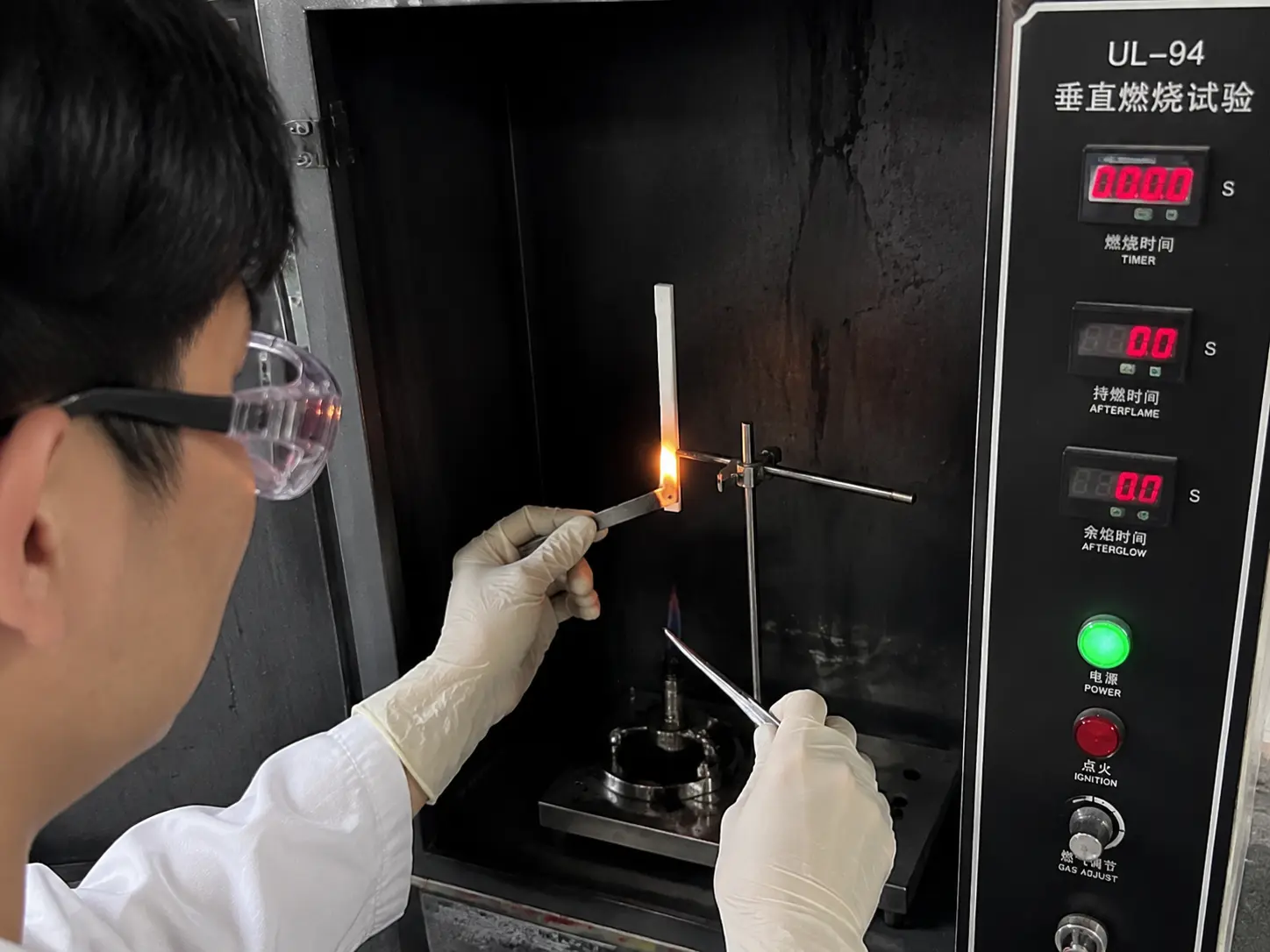
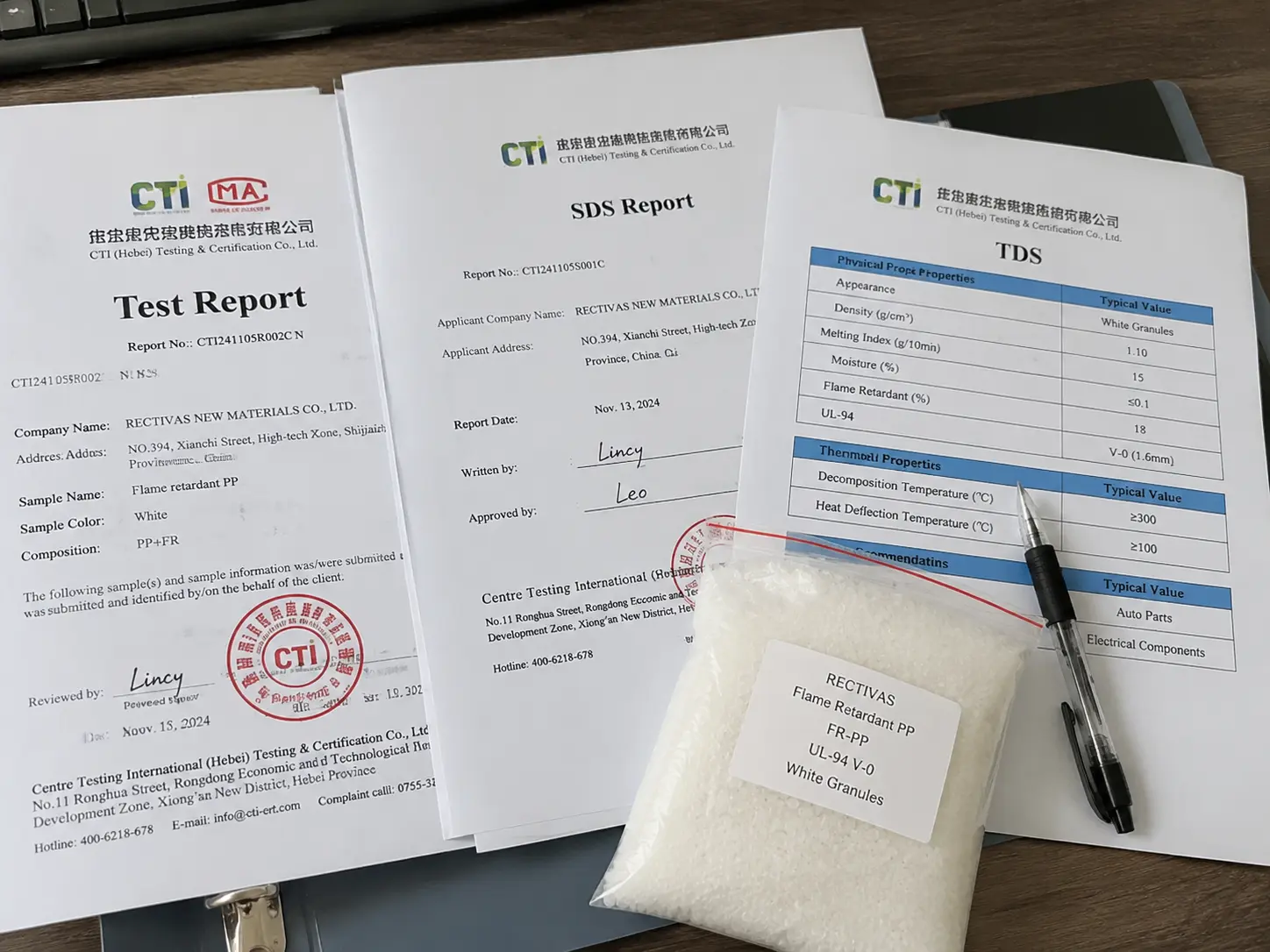
Useful RFQ details include base resin, processing method, target flame rating such as UL94 V-0 or LOI, halogen-free or halogenated requirement, color, transparency, mechanical performance, certification needs and expected trial or annual volume.
Selection note: the questions above connect product form, chemistry, polymer application, compliance and RFQ requirements so buyers can prepare a more useful first inquiry.
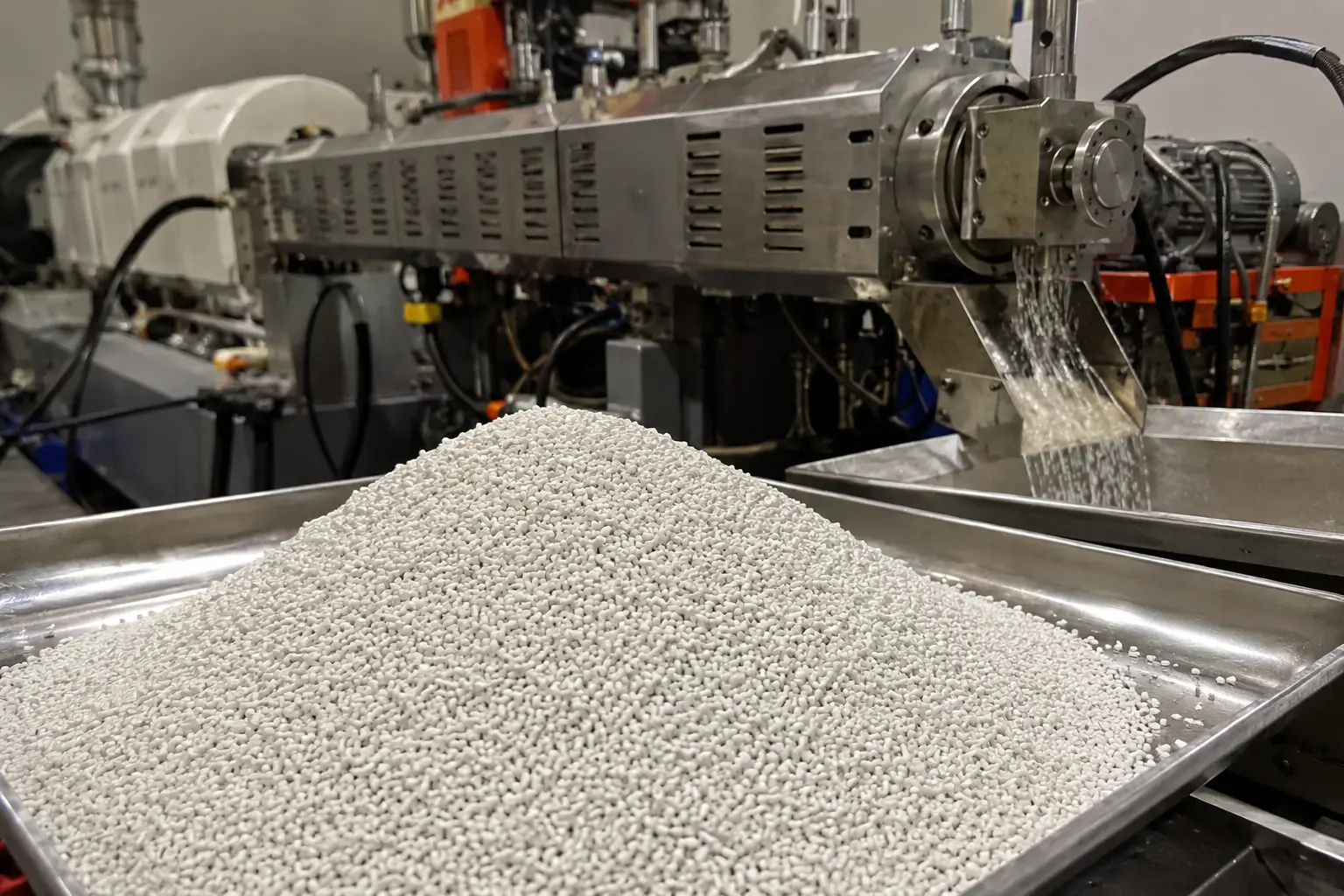
 Fig. 02 — white powder FR additive, sieve analysis benchProof point: additive form, particle control and QC handling before formulation.