Quick answer: Transparent flame retardant polypropylene is a possible formulation target, but clear appearance and a fire classification must be verified together on the proposed material. The result depends on the PP grade, additive package, processing and specimen thickness. A clear pellet, a patent or a result from an opaque grade does not establish success. Define the required haze, light transmission and fire test before selecting a candidate.
A request for “clear FR PP” looks simple on a quotation sheet. In practice, it combines two requirements that cannot be judged from one photograph. The material must look right in the actual product and meet the relevant fire criterion under the specified conditions.
The first useful step is to replace the word clear with an acceptance brief. Describe the part, viewing purpose, thickness and appearance limits, then name the fire method and required result. This gives the supplier a defined formulation task rather than an invitation to repeat a broad marketing claim.
Is Transparent FR Polypropylene Technically Possible?
Published technical work and product descriptions address transparent flame-retardant PP. For example, a published Korean patent application describes a flame-retardant polypropylene composition with transparency as an objective. It demonstrates that the combination is a development subject, not that any arbitrary commercial blend has achieved your specification.
A patent claim, a supplier description and a report on the exact grade are different kinds of information. Use the first two to identify potential approaches, then request evidence for the material being offered. Do not copy a reported addition level or performance label into a purchase specification without confirming its conditions.
The practical answer is therefore conditional. Evaluate a candidate at the needed construction and thickness, against agreed optical and fire requirements. Avoid treating transparent FR PP as a universal resin category in which every grade provides the same clarity, process window or classification.
Transparent, Translucent and Glossy Are Different Descriptions
A translucent cover may transmit light while obscuring the object behind it. A transparent viewing window may need enough image clarity to distinguish a marking or component. A glossy surface can look attractive without satisfying either function. Define which outcome the product actually needs.
A photograph of pellets is a weak acceptance reference because it does not reproduce the thickness, surface and viewing arrangement of the finished part. Ask for representative specimens and record the conditions used to examine them. The comparison should answer the intended use, rather than whether one sample appears attractive on a supplier’s desk.
Agree whether appearance is evaluated instrumentally, against an approved visual reference, or both. If a reference part is used, identify it and retain an agreed sample. That prevents the definition of acceptable clarity from changing between development, purchasing and production.
| Requirement | What to define | What is insufficient alone |
|---|---|---|
| Light transmission | Method, specimen thickness and required result | A photograph showing a bright object behind the plastic |
| Haze | Method and acceptable scattering for the application | A statement that the material transmits light |
| Visual appearance | Color, surface, viewing arrangement and reference | Gloss or pellet appearance |
| Fire behavior | Named method, grade identity and specimen conditions | A general “FR” or “fireproof” description |
Measure Haze and Transmission Separately
ASTM D1003 addresses haze and luminous transmittance of transparent plastics. Its public scope concerns specified light-transmitting and light-scattering properties of planar specimens. These are related measurements, but a transmission value is not a substitute for a haze result.
When comparing reports, keep the method, specimen preparation and thickness beside the numbers. A result measured on one specimen construction should not be presented as an unrestricted optical specification for every product made from the material.
For a viewing application, include the actual visual task in the evaluation. A part that lets enough light through may still obscure the detail that needs to be read. Conversely, a light-diffusing application may have a different acceptable appearance from a viewing window. The acceptance brief should reflect that distinction.
Do not invent one universal haze limit for all transparent PP uses. Agree the appropriate requirement with the product team or customer before selecting the sample. Keep the raw test result separate from the decision that it is acceptable for a particular application.
Why the Base PP Grade and Processing Matter
Begin with the exact PP designation rather than a general resin-family name. A clarified starting grade and another PP grade can enter the trial with different appearance characteristics. Record the starting formulation and make a reference specimen before attributing an optical change to the flame retardant.
Milliken describes clarification of PP through an additive that influences crystallization. This supports considering the base resin and clarifier package in optical selection. It does not establish that the clarifier is a flame retardant or that its appearance benefits will be retained after adding an unrelated FR system.
The processing history should also remain attached to the sample. Record the relevant molding or extrusion conditions and specimen preparation so that a comparison can be repeated. If several conditions change between samples, describe the result as a process-and-formulation comparison rather than assigning it to one ingredient.
For repeat supply, clarify which resin or additive substitutions require review. The approved material is the documented combination under its relevant conditions, not simply a bag carrying the same generic PP description.
The Flame Retardant Package Must Preserve the Required Appearance
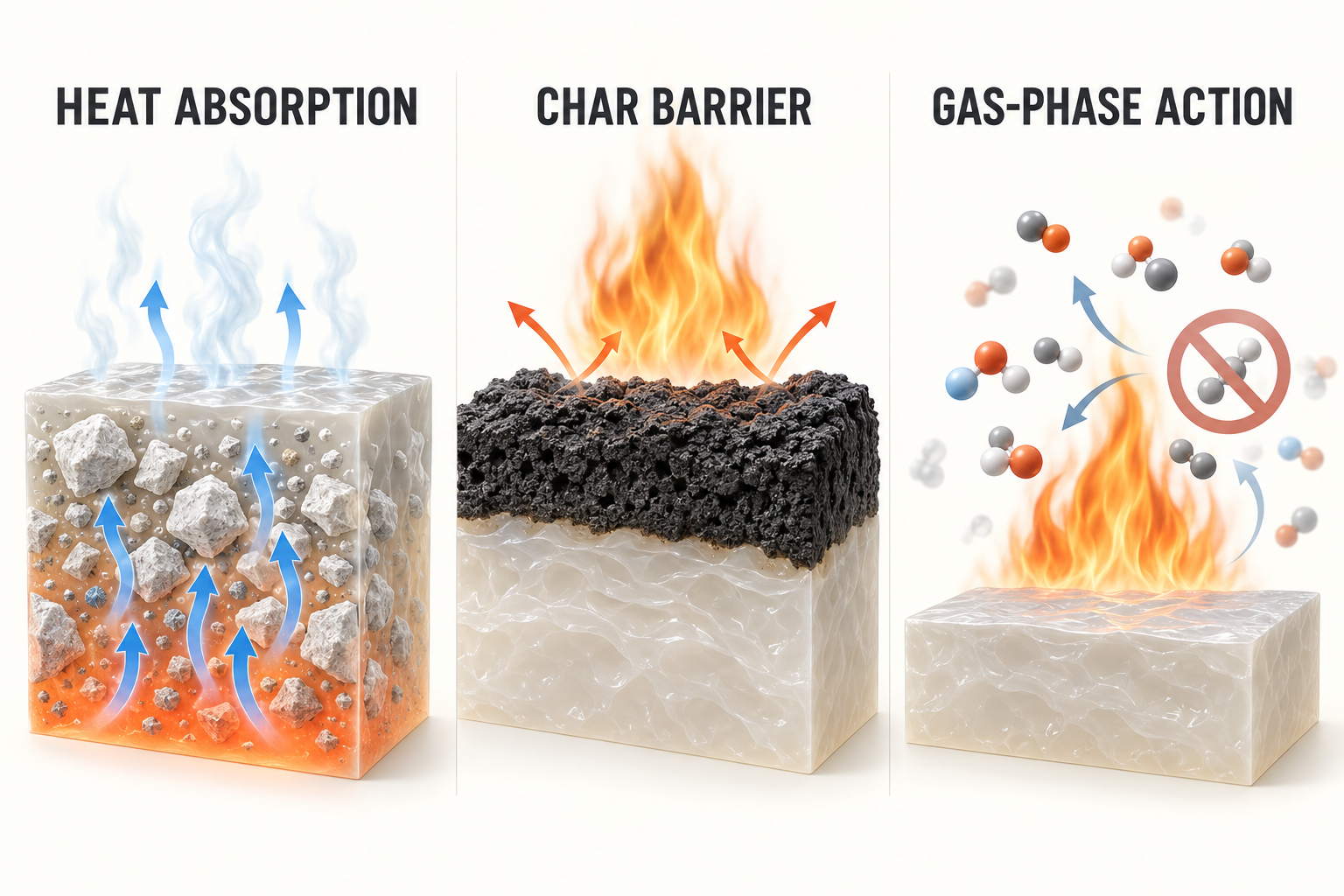
The full package matters: active ingredients, carrier, dispersing components, pigments and other formulation additions can all be part of the candidate. Ask what is being proposed and which information is available for assessing compatibility. A PP-compatible carrier alone is not proof of satisfactory optical performance.
Some suppliers describe specific additives for transparent PP products. Such offers can be starting points for investigation, but their claims need to remain connected to the named grade and conditions. They should not become a promise that any FR chemistry can be introduced while leaving clarity unchanged.
When reviewing candidates, consider both the initial material and any conditioning required by the application. Surface deposits, color change or a later appearance change should be investigated if they occur. Do not promise long-term optical stability from a short initial trial without the relevant evidence.
Use transparent PP masterbatch selection as the product route for a defined inquiry. Rectivas coordinates sourcing and sample discussions with partner factories. The achievable balance and supporting documents are confirmed for the proposed grade; this article does not assign a universal transparency or flame rating.
Thickness Connects the Optical and Fire Requirements
Keep the thickness relevant to the application visible in both the optical and fire records. Comparing a thin optical specimen with a thicker fire-test specimen may leave the actual product requirement unanswered. Identify what each report covers before treating the two results as evidence for the same use.
UL’s plastics recognition guidance identifies minimum thickness and color coverage among the information used with material classifications. Read the applicable grade record or report; do not assume that a result for an opaque color covers a separate clear formulation.
Likewise, a claim for transparent film is not automatically evidence for a molded enclosure or another construction. The intended fire method, specimen and acceptance requirement must be specified. A lower additive level may appear attractive for optics, but it cannot be chosen independently of the fire-performance evaluation.
For development, request specimens that make the relationship clear. Record whether optical and fire samples came from the same defined recipe, and identify their preparation conditions. If the final product differs from the tested specimens, agree how the remaining gap will be evaluated.
Compare Masterbatch and Finished Compound on the Final Material
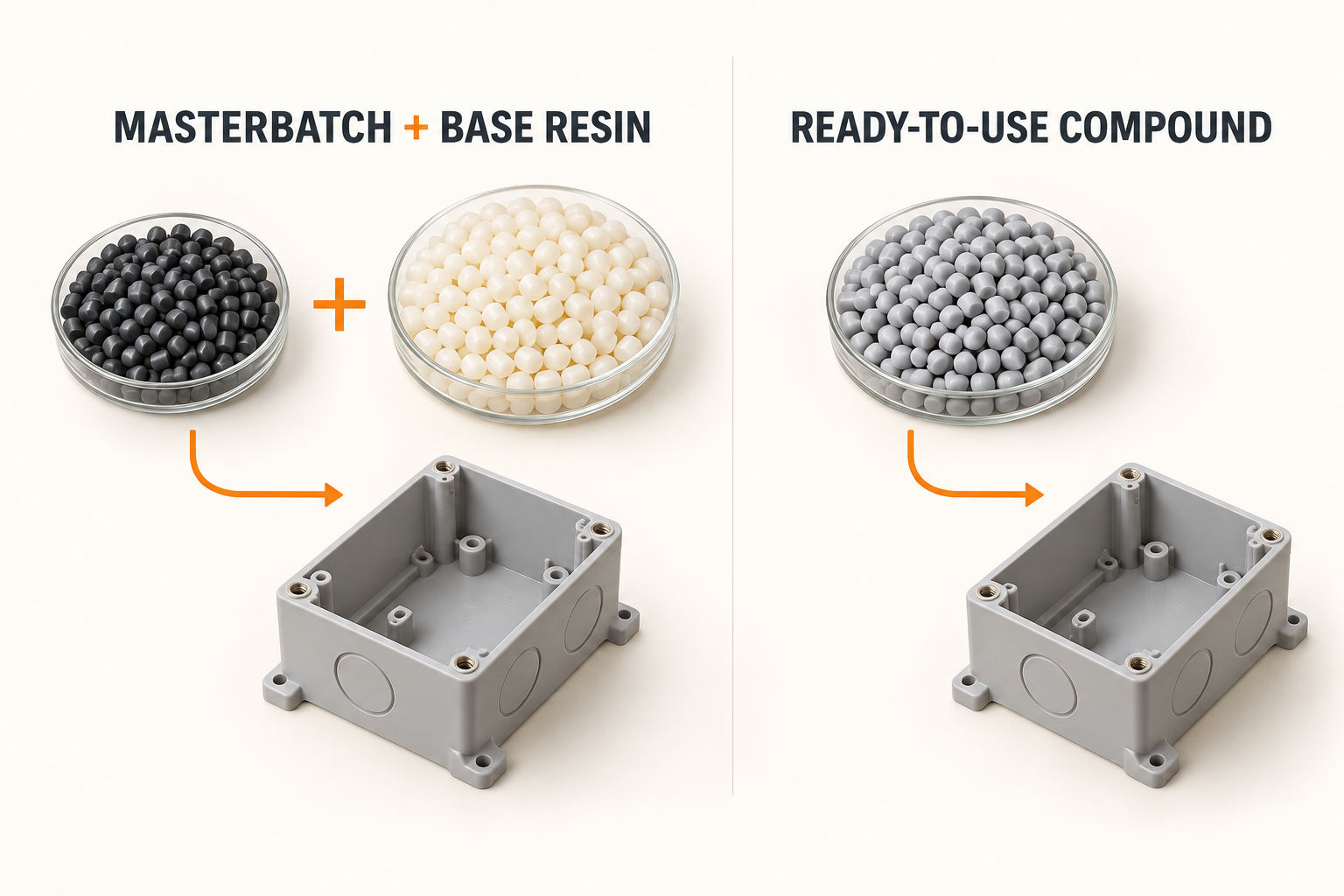
A masterbatch introduces a concentrate into a selected base resin. Its addition ratio and composition determine what enters the final blend. A finished compound supplies a prepared formulation. Both routes need grade-specific processing guidance and evidence for the relevant appearance and fire requirements.
Hypothetical arithmetic, not a recipe: if a concentrate makes up 10% of the final blend and contains 40% carrier, it contributes 4% carrier by blend mass. The remaining concentrate components also enter the part. This calculation describes composition only; it cannot predict transparency or establish a fire classification.
If an integrated material specification is preferred, compare the finished flame retardant compound route. If the project requires a non-halogenated concentrate, review the halogen-free masterbatch options. Confirm optical suitability separately; neither product category guarantees clear PP.
For broader optical background, the polycarbonate sheet article discusses a different resin system. Its data and grades should not be transferred to PP. Keep the selected polymer and actual material identity explicit throughout the comparison.
A Trial Brief for Clear FR PP
Start with the part’s purpose, resin, geometry, thickness and process. Add the required fire method, haze and transmission criteria, color and any essential mechanical or thermal properties. State which conditions must be evaluated after aging or another specified exposure.
Retain the reference resin and approved appearance sample where practical. Compare candidates under documented conditions, labeling any changes made during startup. A useful trial identifies the formulation behind each optical and fire result instead of combining attractive values from different sample sets.
For example, a hypothetical cover trial might meet an appearance reference but fail the specified fire criterion. Another candidate might meet the fire criterion while obscuring the component behind the cover. Neither is a complete approval. Review the formulation, processing and requirements with the supplier before declaring a successful material.
| Trial stage | Record | Decision |
|---|---|---|
| Baseline | Exact resin and reference appearance | Establish the starting optical condition |
| Candidate preparation | Recipe, addition basis, process and sample identity | Make the comparison repeatable |
| Evaluation | Optical and fire results with specimen conditions | Check both requirements for the intended use |
| Approval | Grade, document revision and substitution rules | Preserve the basis of repeat orders |
Frequently Asked Questions
Can polypropylene be transparent and flame retardant?
It is a formulation objective addressed in technical disclosures and supplier offers, but suitability must be established for the proposed grade and application. Define the optical requirements, thickness, process and fire method together. A patent or photograph is not a qualification report. Review representative samples and the relevant evidence before claiming the required combination for a finished product.
Does high light transmission mean low haze?
No. Transmission and scattering describe different aspects of how light passes through the specimen. A material can transmit light while obscuring detail. Request both measurements where they matter, together with the method and specimen conditions. Decide acceptance against the intended viewing or lighting task rather than treating one optical number as a complete description of clear appearance.
Can a PP clarifier replace a flame retardant?
No. A clarifier is selected for its role in the appearance of the PP formulation; that does not establish a fire classification. A flame retardant package addresses a different requirement and must be evaluated in the complete material. Where both functions are needed, review the combination rather than assuming that one additive provides the evidence for the other.
Does a V-0 result on opaque PP cover clear PP?
Check the exact grade, color coverage, thickness and test documentation. A result from an opaque formulation should not automatically be assigned to a different clear formulation. The proposed finished material needs evidence that applies to it. Also confirm that the test addresses the intended product requirement; a material classification is not an unrestricted approval for every application.
Is halogen-free FR PP automatically transparent?
No. Halogen content and optical behavior are separate requirements. A non-halogenated package still needs to be matched to the resin, process and required appearance. Request the applicable composition documentation alongside optical and fire evidence for the candidate. Do not infer low haze, low smoke or suitability for regulated uses from a halogen-free description alone; each has its own scope.
What information is needed for a sample inquiry?
Send the PP resin or current material, part geometry and thickness, processing route, appearance reference and optical limits. Include the named fire requirement and essential mechanical properties. State any restrictions on chemistry and any conditioning requirement. Rectivas can coordinate candidate sourcing with partner factories; sample conditions and available evidence are confirmed for the proposed grade rather than promised for all clear PP.
Final Thoughts
Transparent flame retardant polypropylene should be specified as a combined optical and fire-performance task. Define what clear means for the part, keep thickness and material identity attached to each result, and compare documented candidates under relevant conditions. The useful outcome is a repeatable grade that meets both requirements. A targeted sourcing discussion can establish the next trial without promising clarity or a fire rating before the evidence exists.
— Rectivas Materials technical content team