Quick answer: Cable filler yarn is a fibrous or tape-based material placed in the spaces within a cable construction. It helps build the required shape and supports consistent assembly, but it is different from insulation, the outer jacket and a dedicated strength member. Polypropylene is one material option. Ordinary and flame-retardant fillers need different specifications, and a filler-level result does not establish the fire performance of the complete cable.
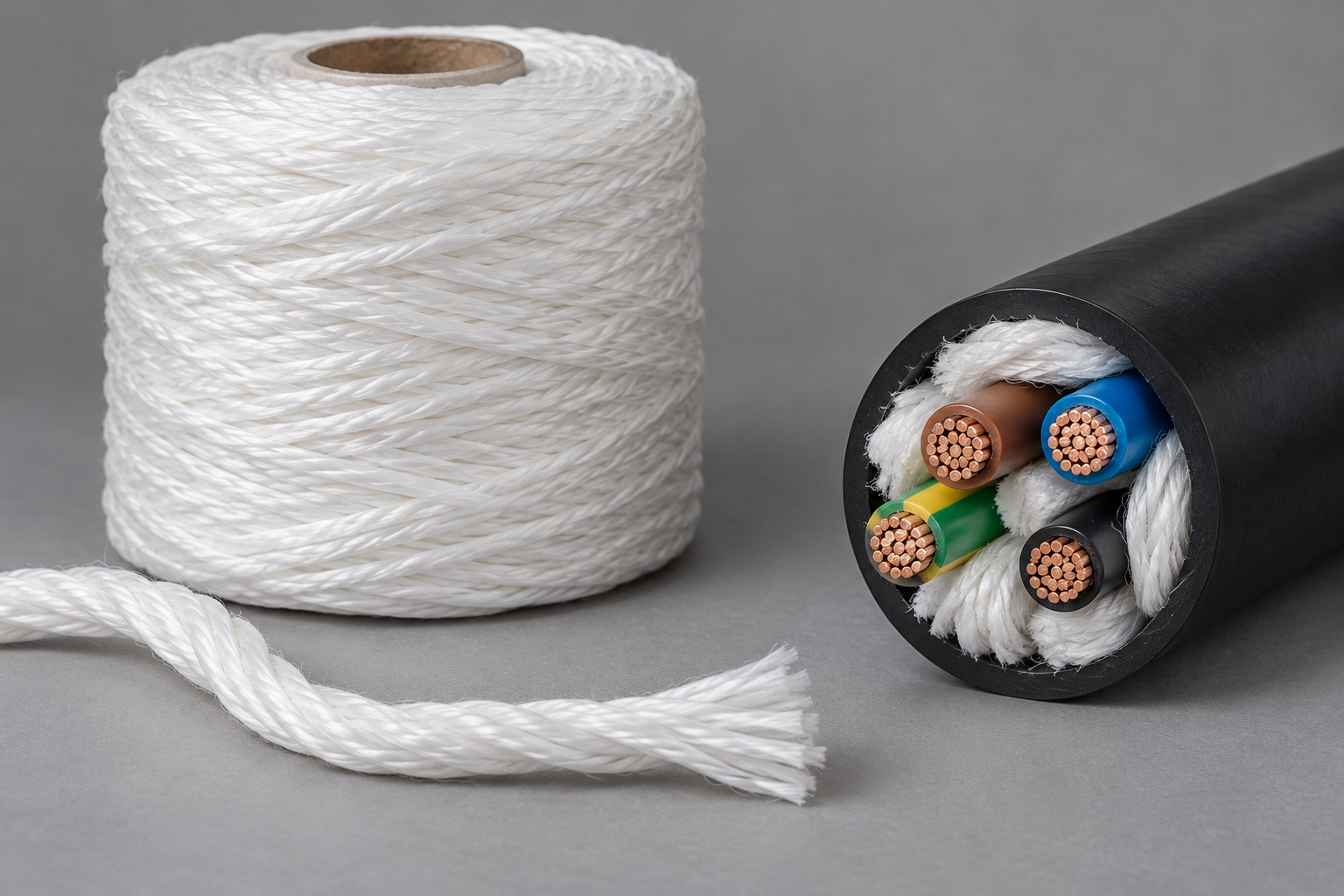
A cable specification may describe its conductor, insulation and sheath in detail while giving the filler only a short material name. That can leave purchasing comparing products that differ in composition, size, handling and fire-related requirements. “PP filler yarn” alone is not a complete approval specification.
This guide explains what cable filler yarn does, which material descriptions matter and how to separate ordinary filler from a documented flame-retardant option. It also distinguishes buying finished yarn from buying the masterbatch used to manufacture it. Those are different supply requirements and should not share an ambiguous quotation.
What Is Cable Filler Yarn Used For?
In a cable design, spaces can remain between insulated cores or other components. A suitable filler occupies those spaces and contributes to the intended construction before subsequent wrapping or sheathing operations. Its dimensions and handling behavior need to fit the assembly process.
The purpose is not simply to pack in the greatest possible amount of material. The cable maker needs a repeatable construction that can be assembled and finished as specified. A filler that handles poorly or changes the intended geometry can complicate processing even when its material designation appears acceptable.
Keep the role of the component clear. A filler is not automatically an electrical insulation material, a water-blocking yarn or a load-bearing strength member. If one component is expected to provide an additional function, specify that function and its evidence separately rather than inferring it from the word “yarn.”
When reviewing a drawing, identify where the filler sits, how it is introduced and what it must tolerate during the next operation. This turns a broad product name into a practical purchasing brief without inventing a universal filler size or construction.
Common Materials and Product Descriptions
Guelph Twines lists polypropylene, paper and flame-retardant cable filler options. This illustrates why cable fillers should be treated as a family of products rather than as one uniform yarn. Material choice depends on the cable design and required properties.
FIPCO describes cable filler yarns made from PP and PE. A buyer should still confirm the exact offered composition. A resin family name does not specify any mineral filler, additives or treatment that may be present in the commercial product.
For PP-based products, identify whether the offer concerns unfilled polypropylene, a mineral-filled formulation or a flame-retardant formulation. Ask which features are grade-specific. Do not assume that calcium carbonate filler automatically provides flame retardancy, or that an ordinary PP yarn is suitable wherever an FR yarn is requested.
Material identity and component construction should remain connected in the approval record. If the manufacturer proposes a substitute composition, review the resulting yarn and cable requirements before accepting it. A matching nominal size does not demonstrate that two materials are interchangeable.
| Product description | What it tells you | What remains to confirm |
|---|---|---|
| PP cable filler yarn | A polypropylene-based filler product is proposed | Full composition, construction, linear density and required properties |
| Paper cable filler | A paper-based filler route is proposed | Exact construction and any treatment needed for the application |
| Flame-retardant filler | The product carries a fire-performance claim | Test method, sample identity, conditions and the limits of that claim |
| Water-blocking or strength yarn | An additional component function is specified | Evidence for that function; do not substitute an ordinary filler without approval |
Yarn, Rope and Tape: Confirm What the Name Means
Commercial descriptions may use filler yarn, filler rope or a tape-related term. Ask for the actual construction instead of treating these labels as a common technical specification. Request a drawing, sample or clear product description showing how the material will be handled on the cable line.
For purchasing, linear density can be useful alongside nominal dimensions. Denier and tex describe mass per unit length; they do not directly establish diameter or how a compressible filler will occupy space in a cable. Check the unit and the supplier’s measurement conditions before comparing figures.
Also define the relevant package and winding requirements. The proposed spool must fit the feeding arrangement, and the material should be assessed for the continuity and handling needed in production. A laboratory sample that is convenient to examine may not represent the way the full package feeds during assembly.
A useful acceptance record combines the material designation, construction, measurement method and practical line observations. Keep those items with the approved sample so repeat orders can be checked against more than appearance or a shortened product name.
Ordinary Filler and Flame-Retardant Filler Are Different Purchases
Ordinary filler is selected against the requirements specified for its component role. If fire behavior is important, that requirement must be added explicitly. Do not treat an unqualified phrase such as “for flame-retardant cable” as proof that the supplied filler has been evaluated for your intended construction.
For a flame-retardant PP filler, the relevant formulation needs to balance processing and yarn properties with the required fire behavior. An additive system can change more than the response to flame, so production and mechanical requirements belong in the same trial brief.
Where calcium carbonate is present, identify the mineral grade and formulation context. An FR concentrate added to an existing filled PP recipe and an integrated filler/flame-retardant masterbatch are two different proposals. Compare them on the complete material and trial outcome, not on one ingredient percentage.
Our supply route is flame retardant masterbatch for PP cable filler yarn manufacturers. That is a concentrate for making the filler, not an offer of finished yarn under the same specification. Candidate composition, trial conditions and documents are confirmed for the application.
Why the Filler Cannot Certify the Whole Cable
The complete cable includes several components and a defined geometry. Evidence for one filler material cannot establish the behavior of every assembly containing it. Identify the required cable test, construction and acceptance criteria before deciding which component-level checks will be useful.
IEC’s 2025 publication record for IEC 60332-1-2 identifies the test family for vertical flame propagation on a single insulated wire or cable in its description of the 2025 edition. This is a cable-specimen test, not a universal classification for a loose filler yarn. Use the edition required by the applicable project specification.
A reported oxygen index for the filler answers a different question from a finished-cable flame propagation result. It can be part of a material comparison, but should not be converted into a promise that the cable will achieve a particular class. Keep the specimen and method visible next to every result.
The same boundary applies when a customer requests an LSZH design. Flame behavior, smoke and halogen-related requirements must be identified separately. A flame-retardant or halogen-free label on one filler does not establish that the completed cable satisfies all of those requirements.
| Evidence | Useful for | Does not automatically establish |
|---|---|---|
| Material datasheet | Identifying the offered grade and its declared properties | Approval of an unspecified cable construction |
| Filler-level fire screening | Comparing materials under the stated method and conditions | A finished-cable classification |
| Halogen-related documentation | Assessing the stated composition requirement | Low smoke or all cable fire requirements |
| Finished-cable test report | Evaluating the tested construction against its method | Coverage of all component substitutions or geometry changes |
Buying Finished Yarn or Buying Masterbatch?
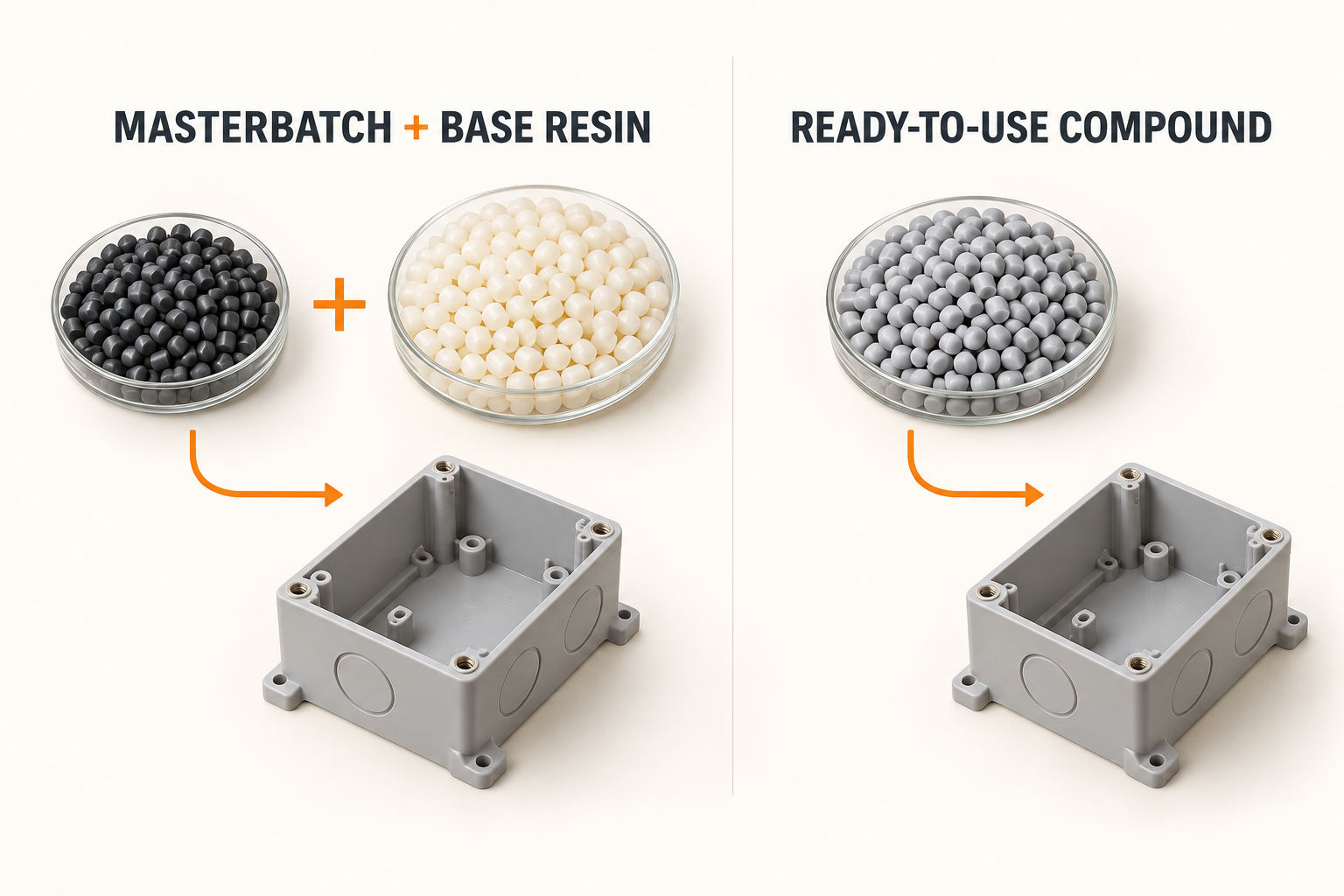
A cable maker purchasing finished yarn needs the component specification, package details and relevant documentation. A filler manufacturer buying masterbatch needs a different technical discussion: base resin, formulation, extrusion and drawing route, concentrate compatibility and the intended yarn properties.
Before comparing two concentrate quotes, clarify what the recommended addition refers to. A percentage of final-blend mass is different from kilograms added to a fixed quantity of base resin. The active-package content and carrier contribution also need to be known for a meaningful formulation comparison.
A candidate cannot be approved by dosage arithmetic alone. Verify that it can be processed into the required yarn and that the resulting component satisfies the agreed checks. Then assess the relevant cable construction where the end-use specification requires it. Do not skip the component trial because a material plaque has a favorable result.
For broader concentrate selection, compare the PP flame retardant masterbatch range. When the project specifies a non-halogenated route, review halogen-free masterbatch options with the actual processing and evidence requirements attached.
What to Include in a Useful Trial Brief
Begin with the cable drawing and the responsibility of the filler component. State the material route, yarn construction, required dimensions or linear density, processing conditions and essential handling properties. Separate required values from preferences so the supplier can identify which candidate needs evaluation.
For a concentrate trial, retain the resin identity and complete recipe alongside the operating conditions. Record drawing interruptions, winding behavior and visible changes using labeled samples. Avoid changing resin, pigment and additive level simultaneously if the aim is to understand why a candidate differs from the baseline.
For example, a hypothetical trial might produce acceptable yarn appearance but poor feeding on the cable assembly line. That finding needs a review of the package, yarn construction and handling conditions. It does not prove that a higher flame retardant addition will solve the problem.
Once a material is approved, agree how substitutions will be reviewed. Resin, filler, additive, package or cable-construction changes may affect the basis of approval. Keep the document revision and sample identity with the purchasing specification so production can repeat the intended material.
Frequently Asked Questions
What is cable filler yarn?
It is a fibrous or tape-based component used to occupy spaces within a cable construction and support the intended assembly geometry. The material and construction are selected for the cable design. It should not automatically be treated as insulation, a water-blocking component or a strength member. Specify any additional function separately and request evidence that applies to it.
Is all PP cable filler yarn flame retardant?
No. A polypropylene designation identifies the material family, not a fire-performance classification. Ask whether the offered product is ordinary or flame retardant, which formulation was evaluated and which method was used. Keep the result tied to the sample and conditions. The phrase “used in flame-retardant cable” is not, by itself, a complete specification or approval record.
Does calcium carbonate make PP filler yarn flame retardant?
Do not infer flame retardancy from the presence of calcium carbonate alone. Review the full formulation, any flame retardant package and the evidence for the actual material. A filled PP recipe and a combined filler/flame-retardant masterbatch require application-specific assessment. Confirm the intended processing route and component properties before assuming either proposal can replace an approved formulation.
Can a high oxygen index guarantee a cable flame result?
No. An oxygen-index result describes the tested material under its method and conditions. A cable flame test evaluates a different specimen with multiple components and a defined construction. Use the component result as appropriate supporting information, then qualify the cable against the required specification. Do not translate one reported number into a universal cable rating or installation-safety claim.
Is flame-retardant filler the same as LSZH filler?
The terms should not be treated as interchangeable approvals. Flame retardancy, smoke and halogen-related properties address different requirements, and the stated scope may be component-level or cable-level. Ask which claims apply to the proposed filler and which need verification on the finished cable. Keep the required methods and acceptance criteria visible rather than relying on an abbreviation alone.
Does Rectivas supply finished filler yarn or masterbatch?
The product route discussed here is flame retardant masterbatch for manufacturers of PP cable filler yarn and rope. Rectivas coordinates candidate sourcing and sample discussions with partner factories. Send the base resin, formulation context, manufacturing route and required component and cable tests. Proposed grade, trial guidance and available documents are confirmed for the inquiry; this article does not specify finished yarn.
Final Thoughts
Cable filler yarn is a component selected for a defined construction, not a shortcut to a cable fire classification. Identify its material, form and handling requirements before comparing quotations. Where flame retardancy is required, connect the formulation and component evidence to the relevant cable qualification. For PP filler manufacturers, a clear brief allows Rectivas to coordinate a suitable masterbatch sourcing discussion without promising unverified performance.
— Rectivas Materials technical content team