Quick answer: Flame retardant polypropylene pipe and sheet exist because PP wins on chemical resistance — acids, alkalis, solvents — but burns badly (LOI ~17–18). FR grades fix that with a brominated + antimony package or a halogen-free intumescent system, typically reaching UL94 V-0. The spec to watch depends on the part: lab and fab exhaust ducting is usually held to UL94 / flame-smoke limits, while semiconductor wet-bench sheet is held to FM 4910, a cleanroom flammability standard ordinary FR-PP does not automatically meet.
Why would anyone build a pipe or a bench out of polypropylene in fire-sensitive environments? Because nothing else survives the chemistry. PP shrugs off the acids and caustics that corrode steel and stress-crack other plastics, which is why labs, plating shops and semiconductor fabs are full of it. The catch: those same environments are exactly where a fire is most expensive — and standard PP is enthusiastic fuel. Flame retardant polypropylene is the compromise that lets PP keep those jobs.
Where FR polypropylene pipe and sheet actually go
The demand is concentrated in a few industries, and each form has its own spec logic:
| Application | Why PP | Typical fire spec |
|---|---|---|
| Fume exhaust duct & pipe (labs, plating, fabs) | Corrosive vapor resistance where metal duct corrodes | UL94 V-0 compound; flame/smoke limits per code |
| Wet bench & cleanroom sheet (semiconductor) | Withstands etch/clean chemistry at the tool | FM 4910 cleanroom materials protocol |
| Chemical tank, liner & fabricated sheet | Weldable, chemically inert, economical | UL94 V-0 / project spec |
| Corrugated PP sheet (returnable packaging, construction) | Light, cheap, reusable | UL94 or building-code flame spread |
Note what is not here: pressure plumbing. Ordinary PP-R water pipe rarely carries a flame retardant requirement. The FR demand lives where the pipe or sheet sits in a building’s airstream or next to process chemistry — places where fire codes, insurers and fab operators all have opinions.
The standards: UL94, FM 4910 and flame-spread codes
Three different exams get quoted in FR-PP RFQs, and they are not interchangeable:
| Standard | What it tests | Who asks for it |
|---|---|---|
| UL94 (V-0 / V-2) | Self-extinguishing behavior of the material, on a small bar | The baseline everywhere — compound-level proof |
| FM 4910 | Fire propagation and smoke damage potential of cleanroom materials | Semiconductor fabs, wet bench builders, their insurers |
| Flame-spread / smoke codes (e.g. 25/50 class) | Surface burning of materials installed in air-handling spaces | Building code officials, duct system installs |
The one that trips buyers up is FM 4910. It was created after fab fires showed that in a cleanroom, smoke ruins more than flame — corrosive combustion products drift through air handling and destroy wafer lots and tools far from the fire. So FM 4910 measures propagation and smoke damage potential together, and a compound can hold UL94 V-0 all day and still fail it. If your customer is a wet-bench or fab-equipment builder, ask which standard governs before quoting — “flame retardant PP sheet” means two different formulations depending on the answer.
Inside the compound: how PP gets to V-0 in thick sections
The chemistry menu is the same as molded PP — brominated + antimony trioxide for efficiency, or a halogen-free intumescent (typically ammonium polyphosphate based) where halogen is excluded — but pipe and sheet add three practical constraints:
- Thick walls are easier, edges are not. A 5 mm duct wall self-extinguishes more readily than a 1.6 mm test bar — but cut edges, weld beads and corrugated flutes burn differently than flat wall. Rate the part, not just the plaque.
- Extrusion stability. Pipe and sheet lines run long and hot; the FR package must not plate out on the die or yellow over a production shift. This is where cheap packages fail first — not in the burn test, on the die lip.
- Welding survival. Fabricated tanks and benches are butt- and rod-welded. The FR loading changes weld appearance and strength slightly, so weld qualification should use the FR compound, not virgin PP.
Both chemistry routes are covered in depth on our flame retardant polypropylene page, and the halogen decision logic in our halogen-free flame retardant additives line — the short version: exhaust duct in occupied buildings increasingly leans halogen-free for smoke reasons, while industrial tank and packaging work stays with brominated economics.
Additive, compound or masterbatch: how pipe and sheet plants buy
Extruders running their own compounding buy the FR package as powder and blend in-house. Most pipe and sheet plants do not — they dose a concentrate at the extruder throat, which makes dispersion the supplier’s problem, exactly where it should sit. For PP lines that is our flame retardant masterbatch for PP: PP-carrier pellets, let-down ratio matched to your wall thickness and target rating. The same trade-off logic applies as in any resin — we wrote it up in additives vs masterbatch — but extrusion tips the scale toward masterbatch harder than molding does, because a gel or an undispersed agglomerate in a continuous sheet is scrap by the meter, not by the shot. (Polyethylene film runs into the same trap; see our flame retardant polyethylene guide.)
How Rectivas supports FR polypropylene pipe and sheet projects
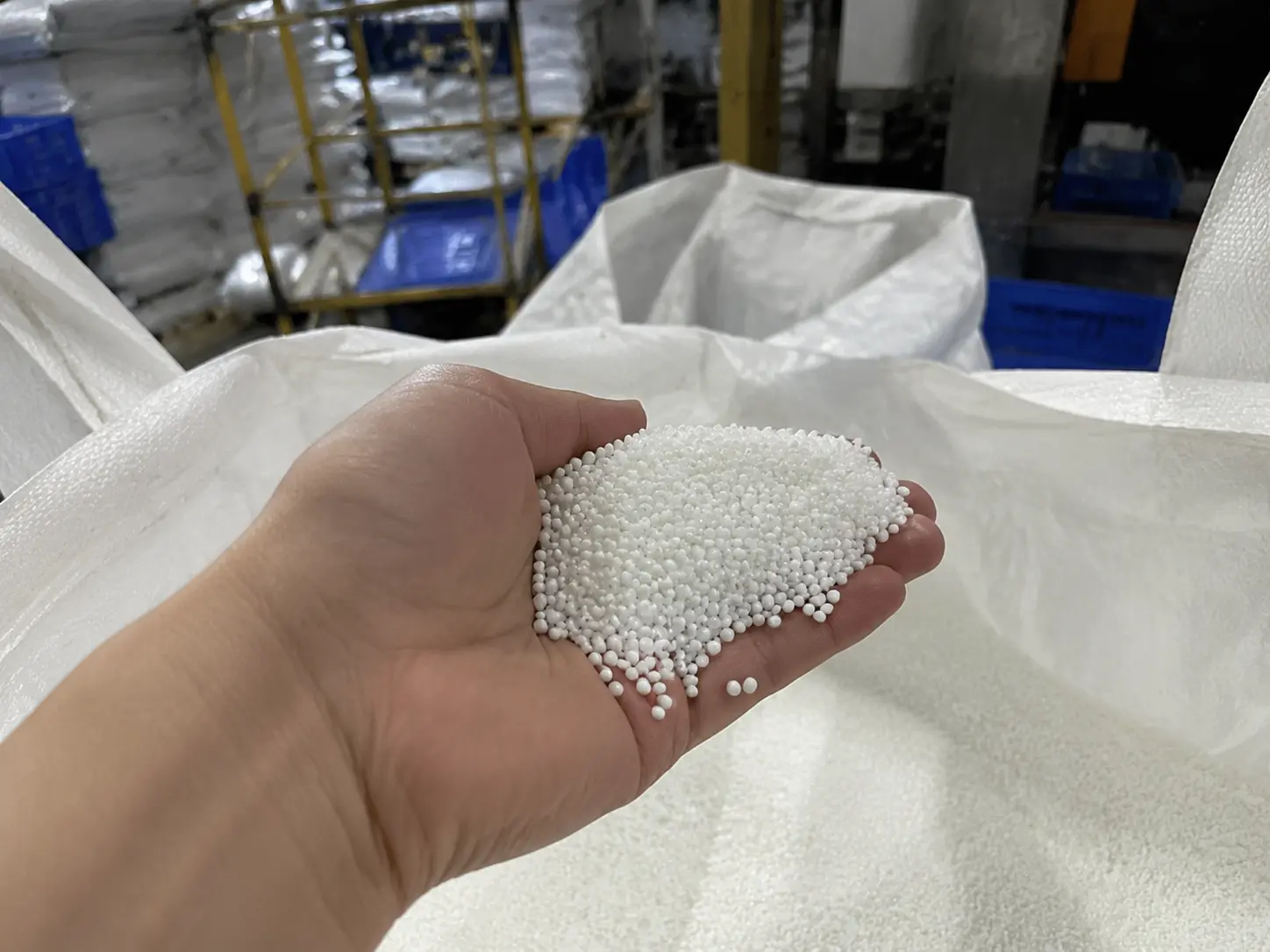
FR-PP is one of our standing grades — white granules, halogen-free, UL94 V-0 at 1.6 mm — and we build custom packages both directions: brominated + antimony where cost per rated meter wins, halogen-free where smoke or compliance rules. Every loading ladder is compounded on our partner factory’s twin-screw line and burn-tested in the UL94 vertical chamber at our partner factory, with LOI data and an accredited third-party laboratory report in the document pack. For pipe and sheet specifically, tell us the wall thickness range, the line type (mono/co-ex, corrugator), and the exact standard your customer cites — UL94 class, a flame-spread code, or FM 4910 — because that last one changes the formulation target, not just the paperwork.
Request a quote with your PP grade, wall spec and target standard — we will propose the package and send a burn-tested sample to run on your own line.
FAQ
Is polypropylene pipe fire resistant?
Standard PP pipe is not — PP has an oxygen index around 17–18 and burns readily. Flame retardant PP pipe uses a compounded FR package to self-extinguish (typically UL94 V-0), which is why fume exhaust and duct systems specify FR grades rather than ordinary pressure-pipe PP.
What is FM 4910 and does UL94 V-0 satisfy it?
FM 4910 is a cleanroom materials flammability protocol used by the semiconductor industry; it measures fire propagation and smoke damage potential together. UL94 V-0 does not automatically satisfy it — a compound can be V-0 and still fail FM 4910 on smoke. Confirm which standard your end customer requires before formulating.
What flame retardant is used in polypropylene sheet?
Two commercial routes: brominated flame retardants with antimony trioxide synergist (efficient, economical) or halogen-free intumescent systems based on ammonium polyphosphate (lower smoke, cleaner compliance). Sheet extrusion favors thermally stable, well-dispersed packages that will not plate out on the die during long runs.
Can flame retardant PP sheet be welded and thermoformed?
Yes — FR-PP sheet is routinely butt- and rod-welded into tanks and benches, and thermoformed. Two cautions: qualify welds using the FR compound itself, and remember thermoforming thins the wall, so the rating must hold at the thinnest formed section.
Flame retardant PP or PVC for corrosive exhaust duct?
Both appear in duct systems. PP offers broader chemical resistance (especially to solvents and some caustics) and stays weldable; PVC brings more inherent flame resistance but heavier smoke and HCl when it does burn. The governing fire code, the chemistry in the airstream and operating temperature usually decide — and either way the compound needs a proper FR package for duct duty.
Final Thoughts
Pipe and sheet are extrusion problems as much as flame retardant problems: high loading kills melt strength, and PP has little to spare. Expect to trade wall tolerance or line speed. Our PP additive systems and PP masterbatch both cover profile extrusion – tell us the wall thickness and line speed and we will say what is realistic before you trial.
—— Rectivas Materials 团队 技术工程师老陈