Rectivas Materials · Flame retardant manufacturer and formulation partner sales@rectivas.com  ·  WhatsApp +86 180 3191 1520

Flame Retardant Building Materials

Flame retardant additives, masterbatch and ready-to-extrude compounds for building material producers — pipes and profiles, panels, ceiling and wall systems, cable management, membranes. Engineered against the standard your specifier actually names: ASTM E84 Class A, EN 13501 Euroclass, or your market’s equivalent.

StandardsASTM E84 · EN 13501 · NFPA 286
FormsPowder · masterbatch · compound
SystemsMineral · intumescent · brominated
Hard partSmoke, not flame spread
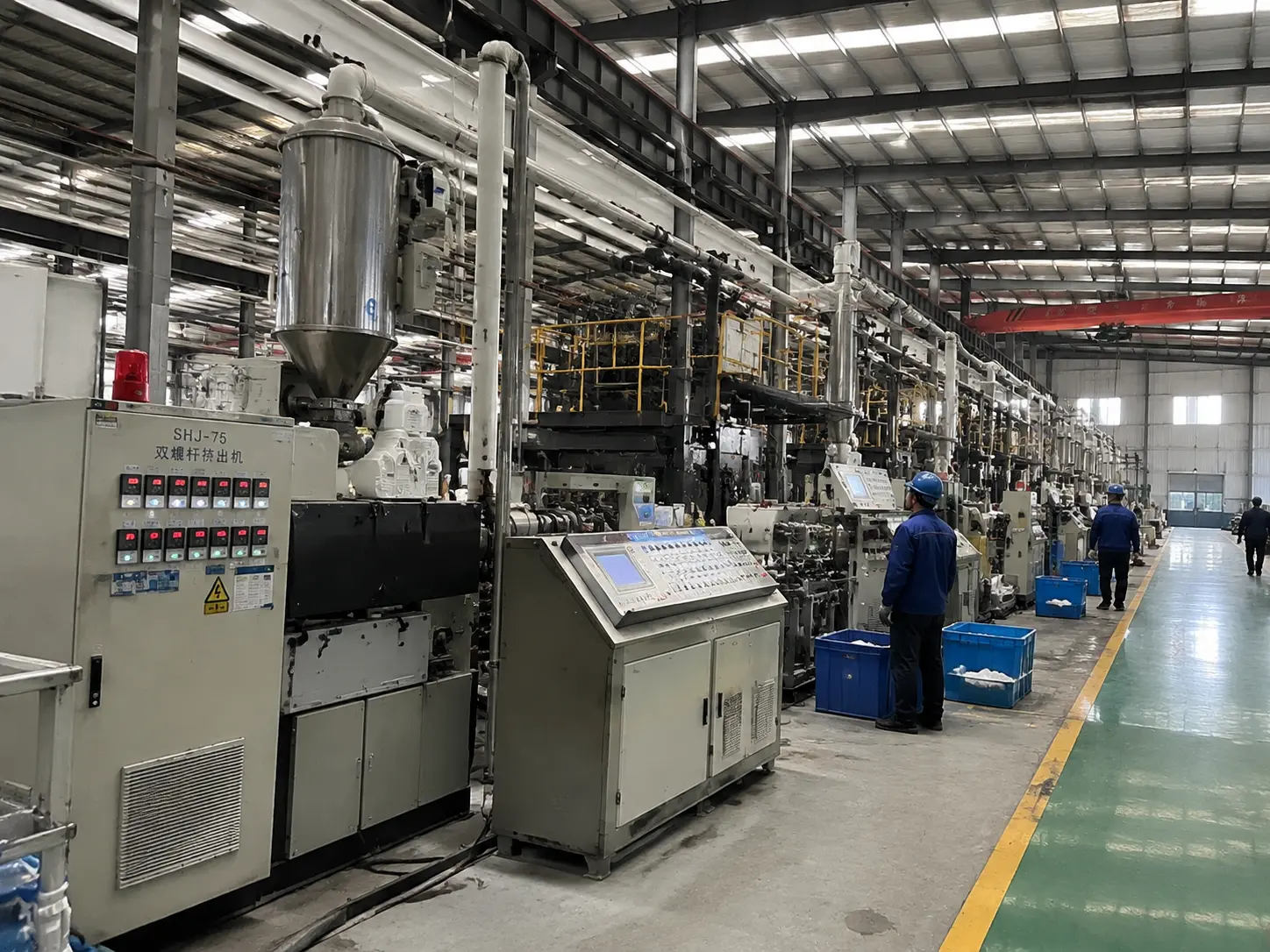
Production line compounding flame retardant materials for building product manufacturers Fig. BM01 — compounding for construction volumes

Building products run in tonnage. Batch consistency is the requirement behind the requirement.

Construction supply
Form — powder / MB / compound
Goal — Class A, low smoke
Use — pipes, panels, systems
01 / 07Why This Sector Differs

Building Materials Play by Different Rules

Most plastics are flame retarded to UL94 — a small bar, a small flame, a bench test. Building products are judged by full-scale tests on the installed assembly, with a smoke limit that is usually harder to clear than the flame limit, and a service life measured in decades rather than years.

Judged by: fire class, not UL94 rating Binding constraint: smoke developed index Timescale: decades of service — retention matters
BM-01

Smoke Is the Real Gate

Both ASTM E84 and EN 13501 impose a smoke limit alongside flame spread. Burning polymer smokes far more than the wood baseline these tests are calibrated against — so panels routinely pass flame spread and fail on smoke.

  • E84 smoke developed index ≤450 for all classes
  • Euroclass carries separate s1–s3 smoke sub-classes
  • Pushes formulation toward mineral and char systems
BM-02

The Assembly Is Tested, Not the Pellet

Facing, adhesive, air gap and substrate all participate in a building fire. A compliant core behind a combustible facing can produce a fire no material certificate predicted.

  • Certify the finished article at production thickness
  • Foam plastics often routed to NFPA 286 room corner test
  • Facings and membranes need their own qualification
BM-03

Decades, Not Years

A cable conduit installed today may still be in a wall in 2060. Flame retardant that migrates out over that period takes the fire performance with it — a risk most sectors never have to price in.

  • Low-migration chemistry strongly preferred
  • Heat, humidity and UV ageing then re-burn
  • See our ageing guide
02 / 07Standards

Which Standard Governs Your Product

These systems are not convertible into one another. A project selling into both North America and Europe needs both tests run — budget for that at the start, not after the first certificate.

StandardRegionWhat It MeasuresCommon Target
ASTM E84 / UL 723North AmericaFlame spread + smoke in a Steiner tunnelClass A — FSI ≤25, SDI ≤450
NFPA 286North AmericaFull-scale room corner burnRequired where foam plastic is left exposed
EN 13501-1EuropeReaction to fire, with smoke and droplet sub-classesEuroclass B-s1,d0 typical for facades
GB 8624ChinaCombustion performance gradingB1 grade common for interior products
UL94GlobalBench-scale bar testUseful for pre-screening only — not a building spec

The last row is worth stating plainly: a UL94 V-0 rating does not make a product Class A, and a supplier quoting one when your specifier asked for the other has answered a different question. We use UL94 and LOI to pre-screen formulations cheaply at our partner factory’s lab, then you certify the finished article at a tunnel lab — the full mechanics are in our guide to ASTM E84 Class A.

03 / 07Product Categories

What We Supply Into

Six building product families where a compounded polymer carries the fire requirement — and an honest note on where our supply ends.

Product FamilyTypical PolymerUsual SystemRelated Page
Pipes, ducts & profilesPP, PE, PVCIntumescent APP; smoke suppressants in PVCFR PP pipe & sheet
Wall & ceiling panels, linersPP, PVC, compositesMineral loading or intumescent, smoke-drivenPVC flame retardant
Cable management & conduitPVC, PP, PAHalogen-free where LSZH policy appliesLSZH compounds
Membranes, tarpaulin & coated fabricPVC-coated polyesterPhosphate ester plasticizer + ATH + synergistFR tarpaulin
Foam insulation (polyolefin)PE, PP foamIntumescent or mineral, compounded before foamingFR insulation guide
Wood-plastic composite (WPC)PP/PE + wood flourIntumescent systems; high filler already present

Where our supply ends: we do not make finished building products, and we do not supply PolyFR for EPS/XPS board or reactive polyols for PU/PIR foam — those come from specialty polymer producers, not an additive compounder. If your project needs those, we will say so in the first email instead of selling you something adjacent.

04 / 07Systems

Chemistry That Suits This Sector

The smoke limit and the long service life between them narrow the field considerably — which is why construction formulations look different from electronics formulations.

S-01

Mineral Hydroxides

The default for smoke-critical work. MDH and ATH release water instead of soot, cooling the substrate and diluting fuel gases — the cleanest smoke profile available, at the cost of 50–65% loading.

  • Best smoke numbers; permanent, no migration
  • High loading reshapes mechanicals and line speed
S-02

Intumescent Systems

Where mineral loading would wreck a thin profile, an APP-based intumescent package builds a foamed char at 18–25% and shuts the flame front down with far less filler.

  • Low smoke — carbon stays in the char
  • Use coated APP grades where damp service is likely
S-03

PVC and Smoke Suppression

Rigid PVC self-extinguishes on its own chlorine, so building profiles usually need smoke controlled rather than flame — zinc borate or zinc stannate with ATH.

  • Antimony-lean and antimony-free routes both available
  • Watch plasticizer migration in flexible grades
05 / 07Selection

What Decides Your Formulation

Give us these nine and we can propose a real system rather than a catalogue page.

01Target standard and class
02Destination market(s)
03Base polymer and grade
04Product thickness / profile
05Process: extrusion, moulding, coating
06Smoke limit severity
07Indoor / outdoor / damp service
08Mechanical and appearance requirements
09Annual tonnage
06 / 07Capability

How We Support Building Product Makers

Construction runs in tonnage and certifies once. Both facts put batch consistency ahead of almost everything else — a certificate earned on one batch has to hold for every batch after it.

  • C-01All three supply formats: powder additives, masterbatch, and ready-to-extrude compound
  • C-02Formulation developed against your standard, polymer and profile thickness
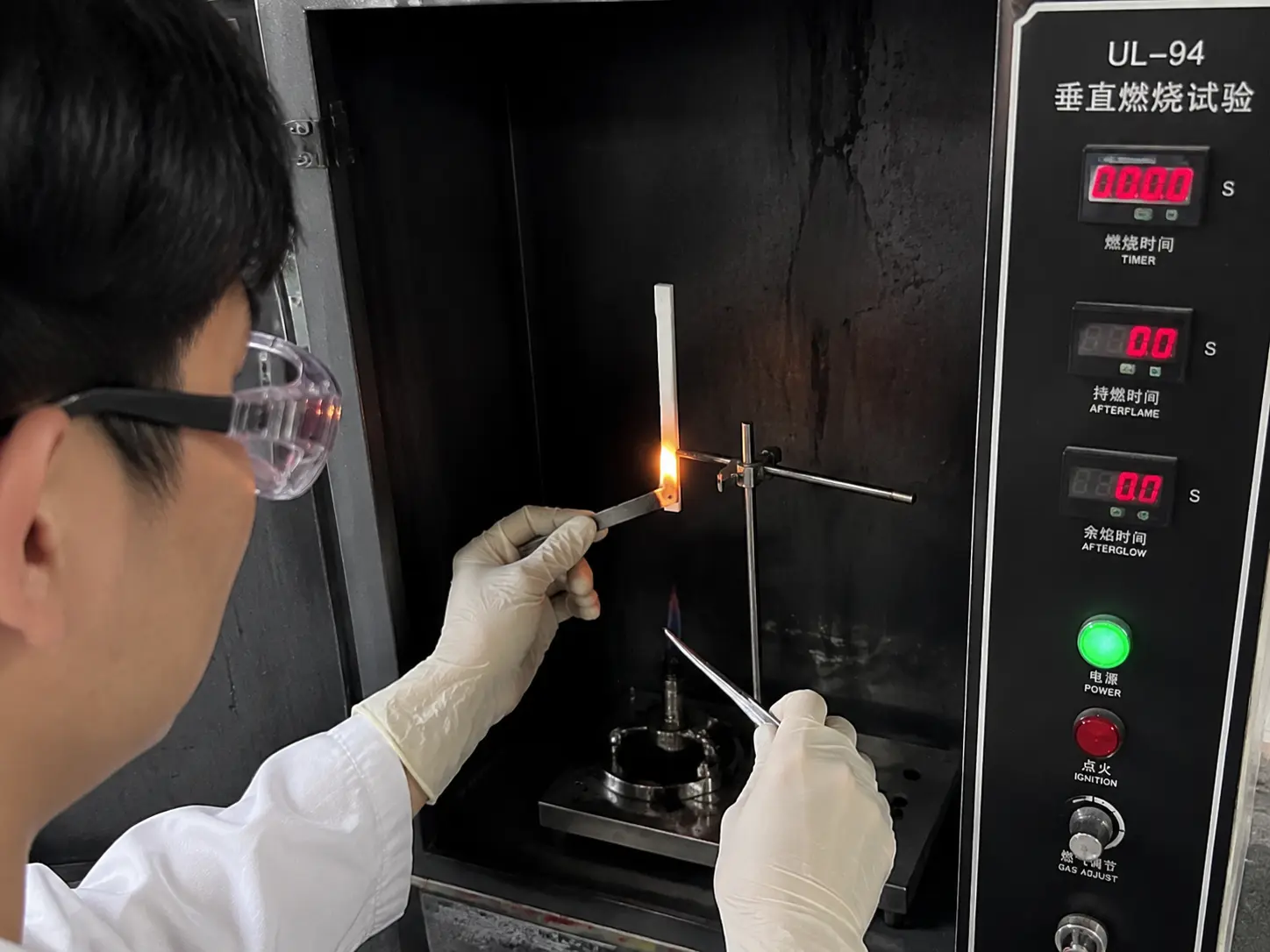
  • C-03UL94 and LOI pre-screening at our partner factory’s burn lab before you book full-scale tunnel or SBI testing
  • C-04Ageing verification for products with decades-long service life
  • C-05TDS / SDS / COA; third-party reports arranged through an accredited laboratory
  • C-06batch traceability from the ISO 9001 certified factories we source from — the certificate has to hold across every future lot
  • C-07Tonnage-scale export supply from our partner factory’s SHJ-75 line
Pre-screening a building material formulation by burn test before full-scale certificationFig. BM02 — bench pre-screeningCheap screening before expensive full-scale testing.
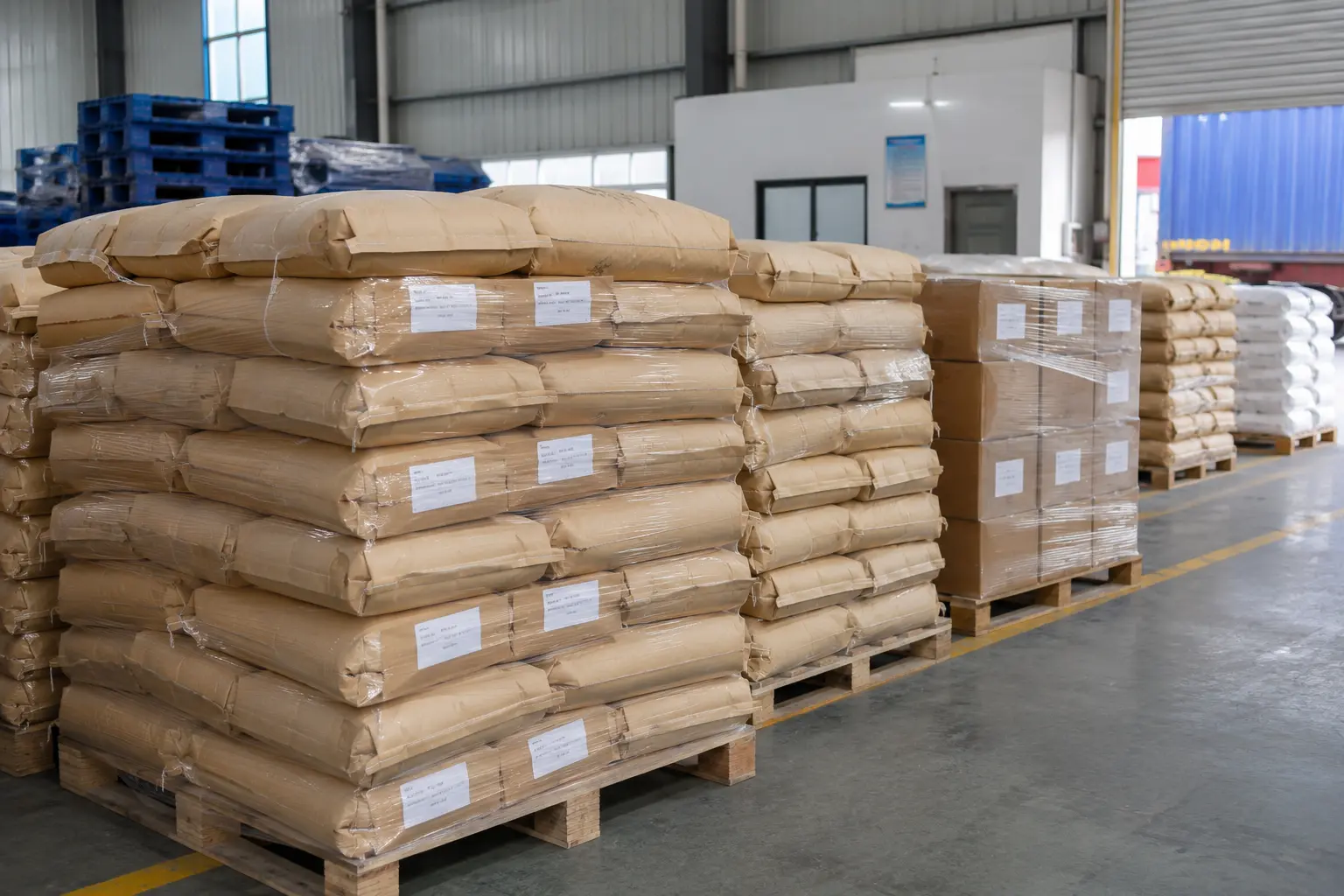
Palletized export supply of flame retardant for construction volumesFig. BM03 — tonnage supplyBig bags and palletized delivery for construction volumes.
07 / 07FAQ

Questions From Building Product Makers

Direct answers for technical and procurement teams in construction supply.

What fire rating do plastic building materials need?

In North America, ASTM E84 Class A for most exposed interior surfaces — flame spread index ≤25 and smoke developed index ≤450. In Europe, an EN 13501-1 Euroclass, typically B-s1,d0 or better for facades and escape routes. Foam plastics left exposed generally need full-scale room corner testing such as NFPA 286 rather than E84 alone.

Why is smoke harder to pass than flame spread?

Because both test systems impose a smoke limit, and burning polymer smokes far more than the wood baseline they are calibrated against. It is the reason gas-phase halogen chemistry — the most efficient per kilogram — is often the wrong answer here, and mineral or char-forming systems dominate.

Is UL94 V-0 the same as Class A?

No, and conflating them is a common and expensive error. UL94 is a bench-scale bar test for moulding materials; Class A comes from a full-scale tunnel test on the building product as installed. A V-0 compound is a promising starting point, not a certification.

Do you supply finished building products?

No. We supply the flame retardant layer — additives, masterbatch and compounds — to producers of pipes, panels, profiles, membranes and foam. We also do not supply PolyFR for polystyrene board or reactive polyols for PU/PIR systems; those come from specialty polymer producers.

Can one formulation satisfy both ASTM E84 and EN 13501?

Often yes, but it has to be designed for both from the start and tested under both — the two systems are not convertible, and neither certificate substitutes for the other. Formulate against the stricter target and budget for both tests rather than retrofitting after a failure.
Discuss Your Fire Class Target

Tell us the standard your specifier named, the destination market, your polymer and profile, and the process you run. We will propose a system, pre-screen it in our burn lab, and tell you honestly what is achievable before you book full-scale testing.

Include in your inquiryBM-RFQ
  • Standard & classASTM E84 Class A, Euroclass B-s1,d0, GB 8624 B1…
  • ProductPipe, profile, panel, membrane, foam, WPC
  • Polymer & thicknessBase resin grade and wall or sheet thickness
  • ProcessExtrusion, moulding, coating, foaming
  • Market & volumeDestination market(s) and annual tonnage