Rectivas Materials · Flame retardant manufacturer and formulation partner sales@rectivas.com  ·  WhatsApp +86 180 3191 1520

Flame Retardant for Wire and Cable

Cable is where flame retardancy gets judged hardest: not one test but four — flame propagation, smoke density, acid gas and sometimes circuit integrity — on a product that has to stay flexible, survive extrusion at tonnage, and last thirty years in a wall. We supply the mineral, synergist and compound layer of that problem.

StandardsIEC 60332 · 61034 · 60754 · CPR
FormsPowder · masterbatch · compound
Main systemATH / MDH at 55–65%
Hard partMechanicals at high loading
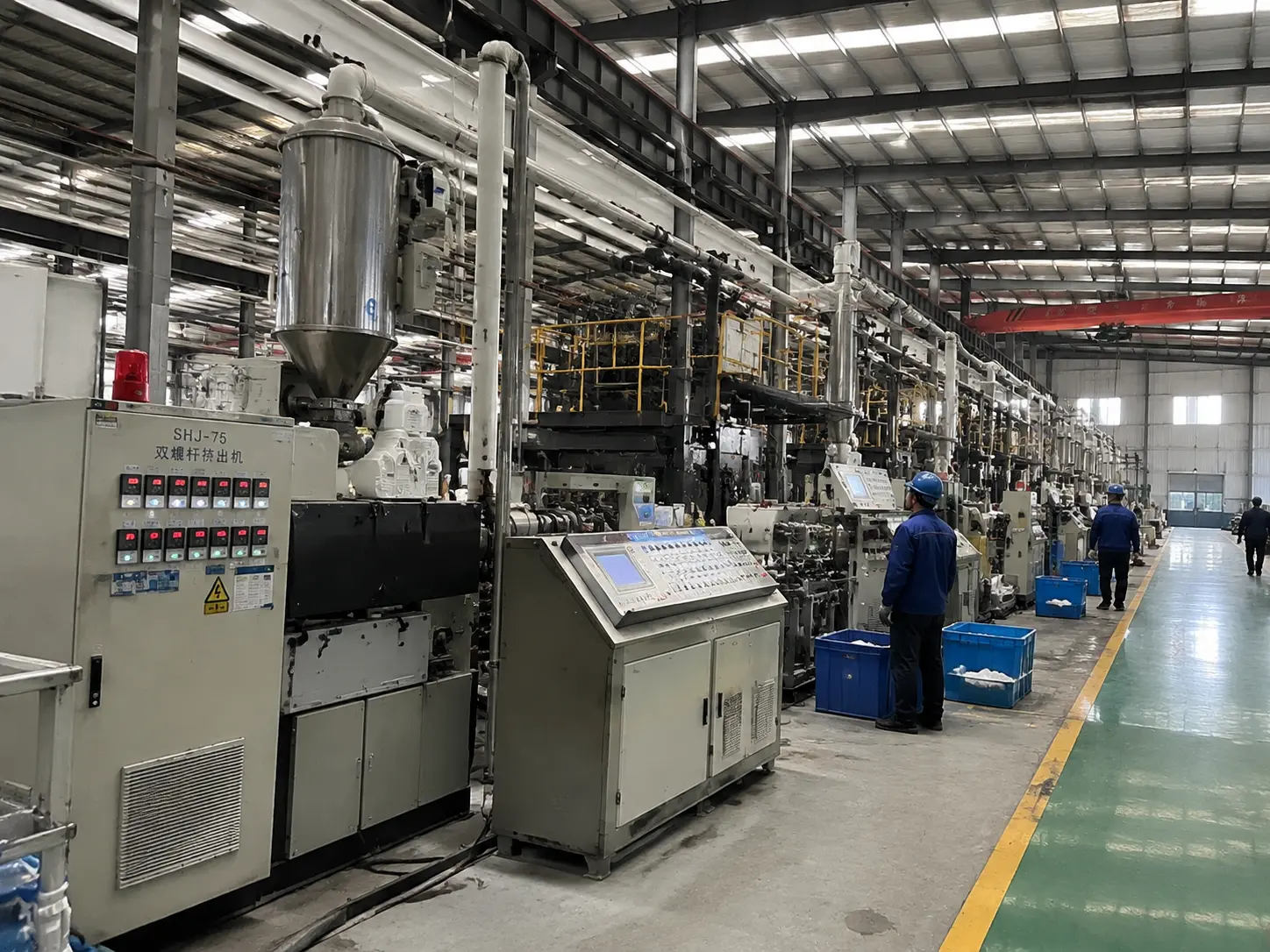
Compounding line producing mineral filled flame retardant material for cable manufacturers Fig. WC01 — compounding at cable volumes

Cable runs in tonnage and certifies once. Batch consistency is the real requirement.

Cable supply
Form — powder / MB / compound
Goal — low smoke, zero halogen
Use — jackets, insulation, fillers
01 / 07Why Cable Is Different

Four Requirements, Not One

Most plastics carry a single flame rating. A cable specification typically stacks flame propagation, smoke density and acid gas emission — and for life-safety circuits, fire survival on top. Passing one while failing another is the normal failure mode, and the reason cable formulation looks nothing like enclosure formulation.

Judged by: propagation + smoke + acid gas Binding constraint: mechanicals at 55–65% filler Timescale: 30-year service in walls and ducts
WC-01

Smoke Kills Before Flame

In tunnels, stairwells and plant rooms, dense smoke blinds escape routes long before the fire arrives. This is why LSZH exists as a material class and why smoke density is often the clause that decides the formulation.

  • IEC 61034: ≥60% light transmittance in the 3 m cube
  • Mineral systems release water vapour, not soot
  • See LSZH vs PVC
WC-02

Acid Gas Destroys Equipment

Burning PVC releases hydrogen chloride, which corrodes switchgear and electronics that the fire never touched. In data centres and control rooms this is an asset-protection argument, not just a life-safety one.

  • IEC 60754: <0.5% HCl equivalent for LSZH
  • Drives halogen-free policy in enclosed infrastructure
WC-03

The Loading Problem

Mineral hydroxides work thermally, not catalytically, so performance scales with quantity. At 55–65% filler the compound is more mineral than polymer — and elongation, tensile strength and line speed all have to survive that.

  • Particle size and surface treatment decide mechanics
  • Coupling agents and dispersion are not optional
02 / 07Standards

The Standards Map

Cable fire testing splits by region and by what is being protected. These are not interchangeable, and a cable selling into both Europe and North America needs both routes.

StandardWhat It TestsTypical Requirement
IEC 60332-1Single vertical wire, flame propagationBaseline for most cable types
IEC 60332-3Bunched cables in a vertical tray — far harderCategories A, B, C, D by fuel load
IEC 61034Smoke density (3 m cube)≥60% light transmittance
IEC 60754-1/-2Halogen acid gas content and pH/conductivity<0.5% HCl equivalent for LSZH
IEC 60331Circuit integrity during fireFire resistant, not flame retardant — mica tape territory
EN 13501-6 / CPREuroclass for construction cablesB2ca-s1a,d1,a1 typical for demanding builds
NFPA 262 / UL 1666US plenum and riser burn testsEarns CMP/CMR, OFNP/OFNR listings

Two distinctions worth getting right before formulating: flame retardant is not fire resistant — the first slows spread, the second keeps the circuit alive, and they are achieved by completely different means (our article on fire resistant vs flame retardant cable covers this). And a US plenum listing is not an LSZH claim — most OFNP cable is fluoropolymer based, which is halogenated by definition; see OFNP vs LSZH.

03 / 07By Cable Type

Where We Supply Into

Flame retardancy lives mostly in the jacket and insulation. Below is what each cable family typically needs — and where our supply stops.

Cable TypeCompoundUsual SystemRelated Page
LSZH power & control cablePE / EVA polyolefinATH or MDH at 55–65% + coupling agentLSZH compounds
PVC power & building wirePlasticized PVCSb₂O₃ or zinc synergist + ATH for smokeFR PVC cable
Fibre optic cableLSZH or PVC jacketMineral systems; tight particle controlFR fibre optic cable
EV charging & flexible cableTPU, TPE, POEHalogen-free packages; flexibility criticalFR TPU
XLPE insulated cableCrosslinked PEMineral in jacket; insulation rarely filled
Fire survival cableMica tape + LSZH jacketBarrier technology, not additive chemistryFire resistant vs FR

Where our supply ends: we do not draw conductors, extrude cable, or produce mica tape, fluoropolymer insulation or silicone base compounds. We supply the flame retardant layer to cable makers and to the compounders who serve them — and where a project needs mica tape or FEP, we will say so rather than propose something adjacent.

04 / 07Systems

Chemistry for Cable

The smoke and acid gas clauses eliminate most efficient gas-phase chemistry, which is why cable formulation is dominated by minerals and by synergists that clean up what halogen systems do badly.

S-01

Mineral Hydroxides — the LSZH Backbone

MDH and ATH absorb heat, release water and leave an inert oxide layer. The cleanest smoke profile available, and the reason LSZH is possible at all.

  • MDH for higher processing temperatures (~330 °C)
  • ATH where ~200 °C decomposition suits the line
  • Surface treatment decides mechanical retention
S-02

Synergists for PVC Cable

PVC self-extinguishes on its own chlorine, so the work is smoke suppression and antimony reduction — zinc borate for lean-antimony packages, zinc stannate where antimony must go entirely.

  • Zinc borate: up to ~75% Sb₂O₃ replacement
  • Zinc stannate: full antimony removal proven in flexible PVC
S-03

Char Boosters and Anti-Drip

Small additions that fix specific clauses — char sealing to help bunched-cable propagation tests, and drip control where the vertical test punishes flaming drops.

05 / 07Selection

What Decides a Cable Formulation

Nine inputs. With these we can propose a real system instead of a product list.

01Standards and categories required
02Destination market (IEC / CPR / NEC)
03Base polymer (PE, EVA, PVC, TPU)
04Halogen policy
05Jacket thickness and cable construction
06Mechanical targets (elongation, tensile)
07Extrusion temperature and line speed
08Service environment and expected life
09Annual tonnage
06 / 07Capability

How We Support Cable Makers

Cable certifies once and then runs for years. That puts batch consistency ahead of everything — a certificate earned on one lot has to hold for every lot after it.

  • C-01Mineral systems with controlled particle size and surface treatment for mechanical retention at high loading
  • C-02All three formats: powder, masterbatch, and ready-to-extrude compound
  • C-03Antimony-lean and antimony-free package design for PVC cable
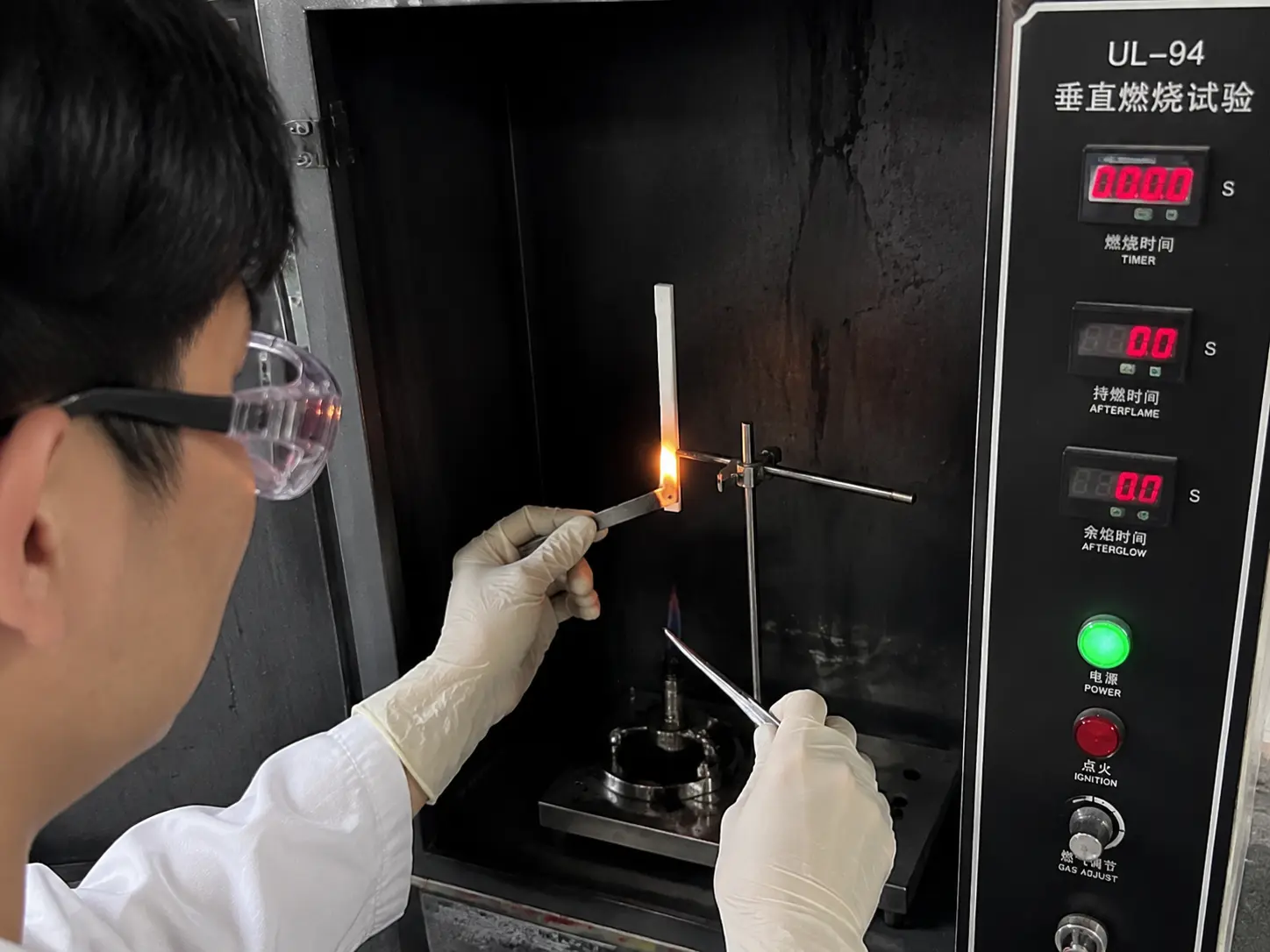
  • C-04UL94 and LOI pre-screening in our own burn lab before you book full-scale cable testing
  • C-05TDS / SDS / COA; third-party reports via CTI (Hebei) Testing & Certification
  • C-06Batch traceability under ISO 9001 — what makes your certification hold across future production
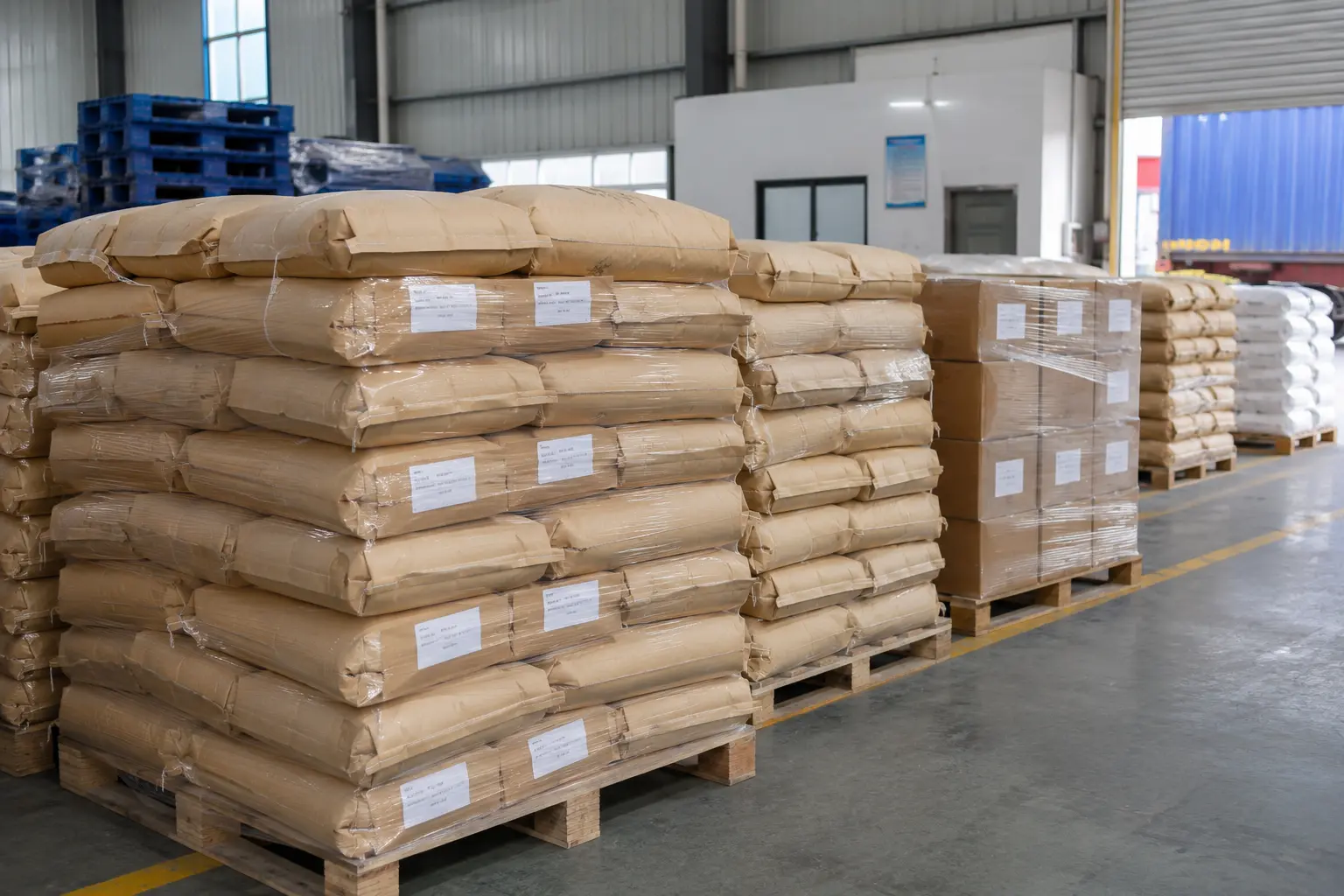
  • C-07Tonnage-scale export supply from our SHJ-75 compounding line
Bench burn screening of a cable jacket compound before full-scale certificationFig. WC02 — bench pre-screeningCheap screening before expensive cable-level testing.
Palletized export supply of mineral flame retardant for cable compoundsFig. WC03 — tonnage supplyBig bags and palletized delivery for cable volumes.
07 / 07FAQ

Questions From Cable Manufacturers

Direct answers for technical and procurement teams in cable supply.

Which standards govern flame retardant cable?

IEC 60332-1 (single wire) and 60332-3 (bunched) for propagation, IEC 61034 for smoke, IEC 60754 for acid gas, IEC 60331 for circuit integrity. Europe adds CPR Euroclasses for construction cable; North America uses NEC listings earned via NFPA 262 and UL 1666. A cable sold into both regions needs both test routes.

Why do LSZH compounds need 55–65% filler?

Because mineral hydroxides work thermally rather than catalytically — the cooling and water release scale with how much material is present. There is no low-loading version of this mechanism, which is why surface treatment and dispersion decide whether the compound still has usable elongation and tensile strength.

Can I reach LSZH performance without losing mechanical properties?

Partly. Surface-treated fine-particle grades, coupling agents and correct dispersion recover a large share of what high loading costs, and compound-form supply removes dispersion variability from your line. But some mechanical trade-off at 60% mineral is physics, not formulation skill — anyone promising none is overselling.

Is a plenum-rated cable halogen-free?

Usually not. Most OFNP and CMP cable achieves its rating with fluoropolymer or low-smoke PVC, both halogenated. If your specification requires halogen-free, it must be stated explicitly — “plenum rated” does not imply it.

Do you supply finished cable compound or only additives?

Both. Powder additives for compounders with their own twin-screw capacity, masterbatch where dosing suits the line, and ready-to-extrude compound where you would rather run a single material stream. Which is cheaper per finished metre depends on your equipment and volume.

Discuss Your Cable Specification

Tell us the standards and categories required, the destination market, your base polymer and jacket construction, and your mechanical targets. We will propose a system, pre-screen it in our burn lab, and say honestly what is achievable before you book cable-level testing.

Include in your inquiryWC-RFQ
  • StandardsIEC 60332-3 category, 61034, 60754, CPR class, NEC listing
  • Cable typePower, control, fibre optic, EV charging, fire survival
  • Base polymerPE, EVA, PVC, TPU, XLPE
  • Mechanical targetsElongation and tensile minimums
  • Market & volumeDestination market(s) and annual tonnage