Rectivas Materials · Flame retardant manufacturer and formulation partner sales@rectivas.com  ·  WhatsApp +86 180 3191 1520

Flame Retardant Compound

The third form: not a powder you have to disperse, not a concentrate you have to dose — a finished pellet that arrives ready to mould at UL94 V-0. FR-PP, FR-ABS, FR-PA6, FR-PA66, FR-PC, FR-PBT and FR-PPO grades, compounded on our partner factory’s twin-screw line and burn-tested before they ship.

FormFinished pellets · ready to mould
GradesFR-PP · ABS · PA · PC · PBT · PPO
Typical ratingUL94 V-0 @ 1.6 mm
SystemsHalogen-free · brominated
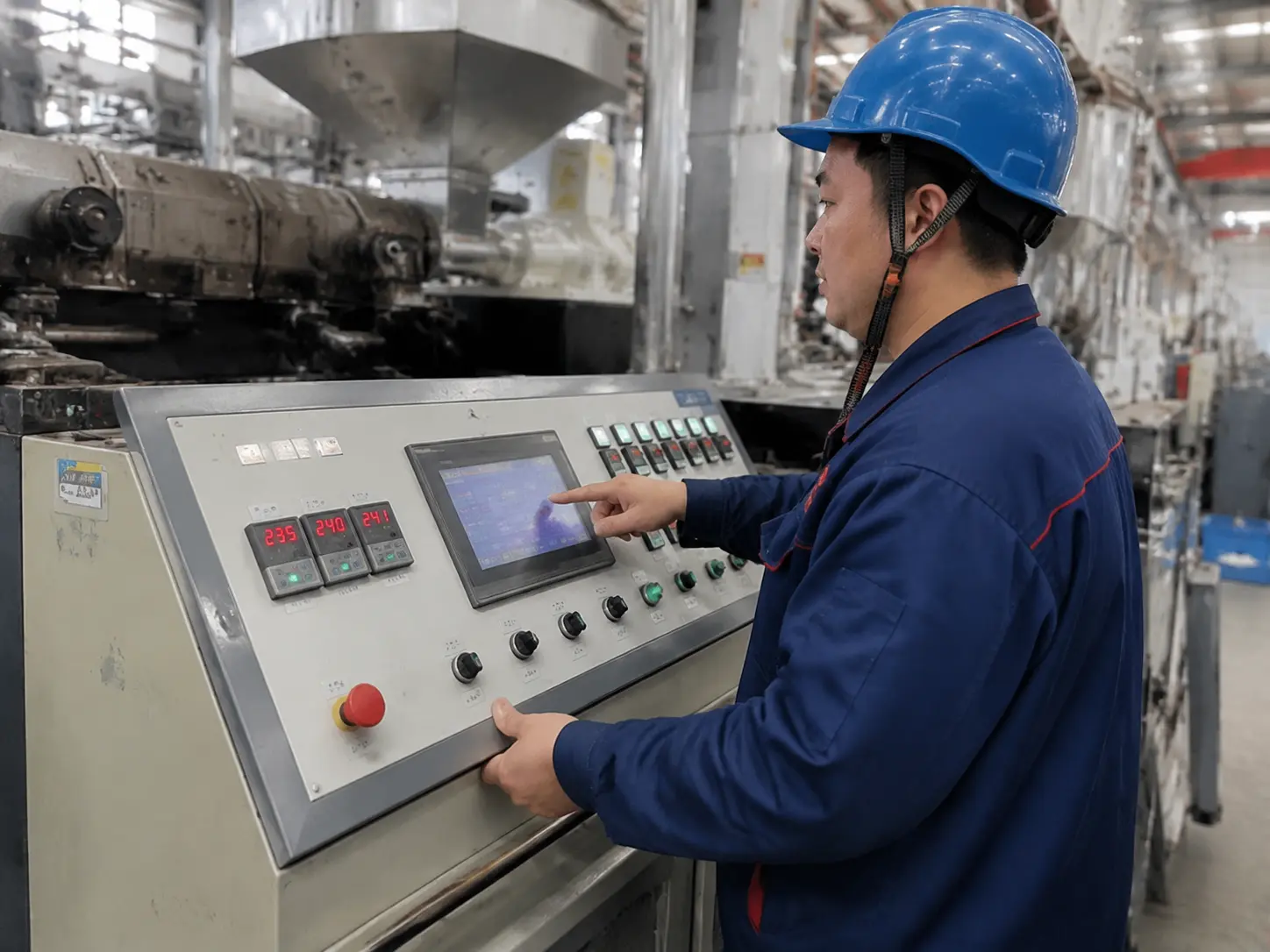
SHJ-75 twin-screw compounding line producing flame retardant compound at Rectivas Fig. FRC01 — SHJ-75 twin-screw line

Compounds are produced on our own extrusion line, not bought in and relabelled.

FR series
Form — white granules
Rating — UL94 V-0 (1.6 mm)
Use — auto parts, E&E components
01 / 07Definition

What Is a Flame Retardant Compound?

A finished thermoplastic in which the flame retardant is already dispersed at the correct loading, supplied as pellets you feed straight into your moulding machine. No dosing calculation, no second material stream, no dispersion equipment — the compounding work has already happened on our twin-screw line.

Form: finished pellets · single material stream Buyer: moulders without compounding capability Trade: consistency over inventory flexibility
FRC-01

Dispersion Is Already Solved

The single largest source of flame retardant field failures is inadequate dispersion on a moulding machine that was never built to mix. In a compound, that work was done on equipment designed for it.

  • No agglomerates, no unprotected spots in the part
  • No back pressure or screw modifications needed
  • Burn results consistent shot to shot
FRC-02

One Material, One Setting

No let-down ratio to calculate, no second feeder to calibrate, no hopper segregation between two pellet types — and no risk of an operator confusing masterbatch percentage with active percentage.

  • Removes the most common dosing error
  • Gravimetric feeder not required
  • Simpler regrind accounting
FRC-03

The Whole Property Set Is Engineered

Flame rating, impact, flow and colour are balanced together in one formulation rather than emerging from whatever happens when three materials meet in your barrel.

  • Base resin selected for the finished part
  • Colour compounded in, better shade consistency
  • Glass fibre and other fillers integrated
02 / 07Grades

Our Compound Grades

These are the product codes on our own bags and technical data sheets — the grades our compounding line runs day to day.

GradeBase ResinTypical RatingTypical ApplicationsRelated Page
FR-PPPolypropyleneUL94 V-0 @ 1.6 mmAuto parts, electrical components, housingsFR polypropylene
FR-ABS / FR-A6ABS and impact variantUL94 V-0Enclosures, appliance housings, consumer electronicsFR ABS
FR-PA6 / FR-PA66Nylon 6 / Nylon 66UL94 V-0, glass-filled on requestConnectors, switch parts, E&E componentsFR nylon
FR-PCPolycarbonateUL94 V-0 (1.5 mm typical for PC)Transparent and technical housings, sheetFR polycarbonate
FR-PBTPBT polyesterUL94 V-0, glow wire on requestConnectors, bobbins, automotive electricalFR PBT guide
FR-PPO / PPEPPO / PPE blendsUL94 V-0, halogen-freeElectrical enclosures, high-heat parts

Halogen-free and brominated systems are both available. Glass-filled variants, custom colours and thinner-wall ratings are developed per project — every rating is specific to a thickness, colour and grade, so we qualify what you will actually mould rather than quoting a headline number.

03 / 07Comparison

Compound vs Masterbatch vs Additive

Three formats, one chemistry problem. Which one suits you is decided by your equipment and your loading level, not by which is objectively best.

CompoundMasterbatchAdditive (powder)
What you receiveFinished pellets, ready to mouldConcentrate pellets to dosePowder or liquid to compound
Equipment neededMoulding machine onlyMoulding machine + accurate feederTwin-screw compounding line
Dispersion riskNone — already doneModerate, rises with loadingYours to manage
Material costHighest per kgMiddleLowest per kg
FlexibilityOne SKU per grade/colourOne base resin serves many partsFull formulation control
Best whenHigh loading, no compounding line, consistency criticalModerate loading, mixed productionYou compound anyway, volume is large

Choose Compound When…

The dosing and dispersion work is not worth doing on your own line.

  • Required loading would exceed ~40% masterbatch addition
  • You mould but do not compound
  • Dispersion problems are producing rejects
  • Batch consistency matters more than inventory flexibility
  • Colour matching is tight — see colour matching

Choose Masterbatch or Additive When…

Flexibility or material cost outweighs the convenience.

04 / 07Systems

What Goes Into the Compound

The chemistry inside a compound is the same chemistry we sell as additives — the difference is that we have already selected, balanced and dispersed it for the resin.

S-01

Halogen-Free Systems

Phosphinate and nitrogen chemistry for polyamide and polyester grades, intumescent systems for polyolefins, mineral hydroxides where smoke matters.

S-02

Brominated Systems

Where halogen is accepted and efficiency per kilogram is the priority — typically with an antimony or zinc-based synergist.

S-03

Anti-Drip and Stabilisation

Anti-drip agents where V-0 forbids flaming drips, plus the thermal and UV stabiliser package the part’s service life requires.

05 / 07Selection

What Decides Your Compound Specification

Nine inputs. Give us these and we can quote a real grade instead of a catalogue number.

01Base resin and grade
02Wall thickness at the rated section
03Target rating (V-0, V-2, 5VA)
04Halogen policy
05Glass or filler content
06Additional tests (glow wire, CTI)
07Colour requirement
08Service environment and life
09Annual volume
06 / 07Capability

How We Produce Compounds

Compounding is the part of this business we own outright — our partner factory’s twin-screw line, our partner factory’s burn lab, our own batch records.

  • C-01SHJ-75 twin-screw extrusion line, operated in-house
  • C-02Formulation development against your resin, thickness and full test stack
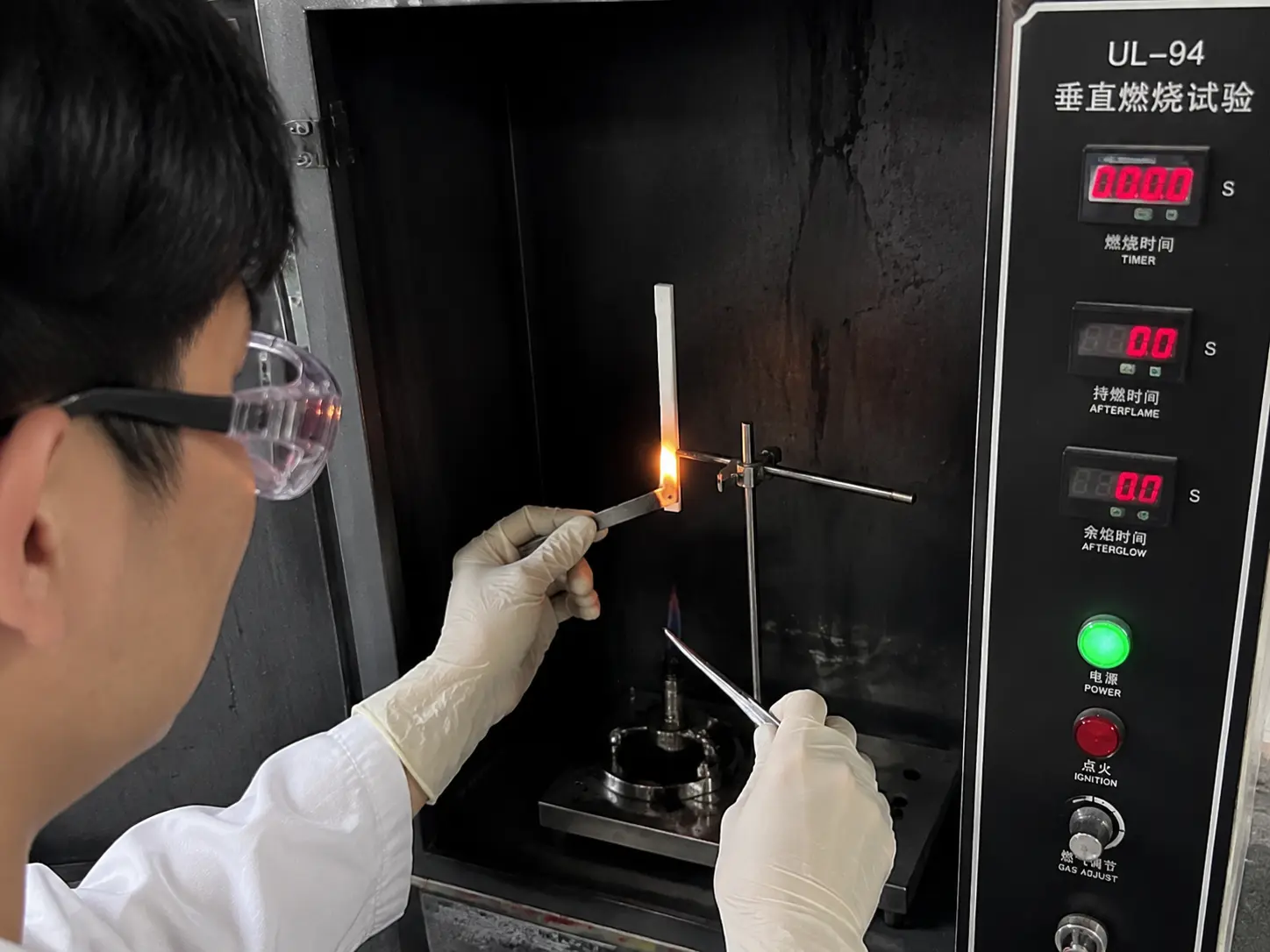
  • C-03UL94 and LOI verification at our partner factory’s burn lab before shipment
  • C-04Custom colour compounded in, burn-tested per colour
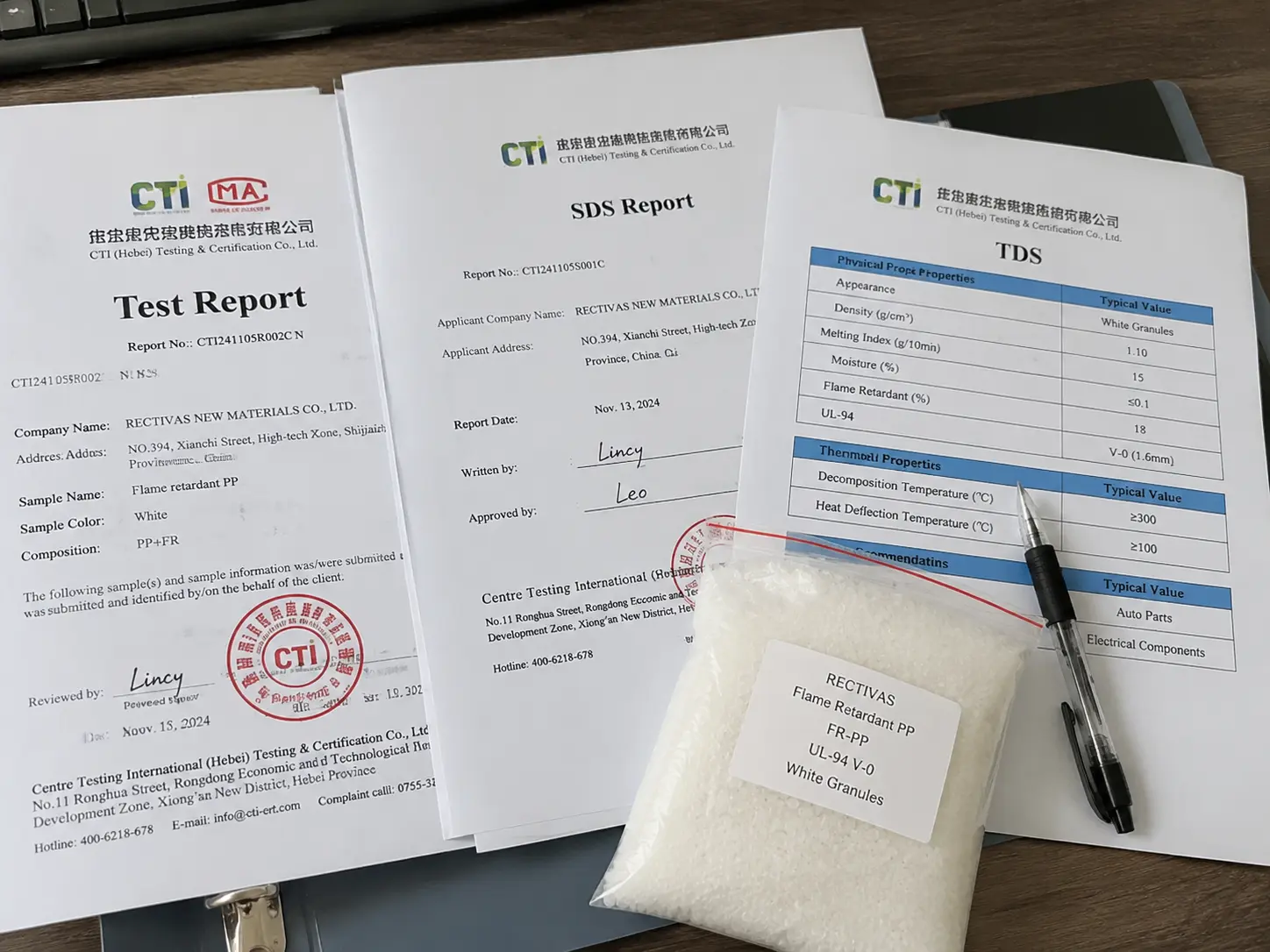
  • C-05TDS / SDS / COA documentation; third-party reports arranged through an accredited laboratory
  • C-06Batch traceability from raw material to shipped lot under ISO 9001
  • C-07Export packaging and worldwide delivery — see our manufacturer page
UL94 vertical burn test verifying a flame retardant compound before shipmentFig. FRC02 — burn verificationEvery compound grade is burn-tested before it ships.
TDS, SDS and COA documentation supplied with flame retardant compoundFig. FRC03 — documentationTDS, SDS and batch COA with every shipment.

When Compound Is the Wrong Answer

Finished compound is the easiest thing we sell and the most expensive per kilo, so it is worth being direct about when it does not pay for itself.

Your SituationBetter Route
You own twin-screw compounding and run steady volumeBuy powder additives. You are paying us to do something you already do, and paying freight on resin you could buy locally.
Loading is modest and dosing on your line is stableMasterbatch costs less per finished part and keeps your resin sourcing flexible.
You must keep a specific resin grade you already qualifiedAdditives or masterbatch into your own resin. Our compound uses our base resin, and swapping that means re-qualification.
Loading above roughly 40–50%, or dispersion keeps costing you scrapCompound is the right answer. Dosing that much on a moulding machine does not work reliably, and scrap is more expensive than the premium.

The lock-in question, since buyers rarely ask it out loud. Buying finished compound does tie your part to our formulation — if you re-source later, expect burn testing and possibly re-certification, because a different producer’s V-0 grade is a different material even at the same nominal rating. That is a real cost and you should price it in before switching either way. What reduces it: keep your qualification documents at your own thickness and colour, and ask us for the test data in a form your next supplier could be measured against. We would rather you hold a portable qualification than a dependency.

07 / 07FAQ

Buyer Questions About Compounds

Direct answers for moulders and procurement comparing the three formats.

What is a flame retardant compound?

A finished, ready-to-mould plastic with the flame retardant already dispersed at the correct loading, supplied as pellets. Unlike additives (powder you compound yourself) or masterbatch (a concentrate you dose), a compound requires no dosing, no dispersion equipment and no let-down calculation.

When should I buy compound instead of masterbatch?

When the required loading would exceed roughly 40% masterbatch addition, when your line has no compounding capability, when dispersion is causing rejects, or when batch consistency matters more than inventory flexibility. Masterbatch remains better if you want one base resin serving both flame retardant and standard production.

Is compound more expensive than buying masterbatch?

Per kilogram, yes — you are paying for a compounding step. Per finished part the comparison often narrows or reverses once dispersion rejects, dosing errors, feeder equipment and cleaning stops are counted. The full calculation is in our cost per part guide.

Can you match an existing compound I currently buy?

Usually yes. Send the current material’s TDS, a retained sample if you have one, and the properties that actually matter to your part. We match against the property set and burn-test the result rather than guessing at a competitor’s formulation — and we will tell you if something in the spec is not reproducible.

What is the minimum order for a custom compound grade?

Standard grades start from typical production quantities; custom formulations need enough volume to justify a dedicated compounding run. Sample quantities for line trials are handled separately from production MOQ — tell us your annual volume at RFQ stage and we will confirm what is workable.
Request a Compound Data Sheet

Tell us the resin, wall thickness at the rated section, target rating, halogen policy and colour. We will confirm the grade, send the TDS, and arrange a sample for your own moulding trial and burn testing.

Include in your inquiryFRC-RFQ
  • ResinPP, ABS, PA6/PA66, PC, PBT, PPO…
  • Wall thicknessAt the rated test point, in mm
  • Test stackUL94 rating, glow wire, CTI if applicable
  • Halogen policyHalogen-free required, or brominated acceptable
  • Colour & volumeColour standard and expected annual demand