Rectivas Materials · Flame retardant manufacturer and formulation partner sales@rectivas.com  ·  WhatsApp +86 180 3191 1520

DBDPE Flame Retardant (Decabromodiphenyl Ethane)

The workhorse of modern brominated flame retardancy: ~82% bromine in a molecule built to replace banned decaBDE — same efficiency class, higher thermal and UV stability, and outside the PBDE restriction lists. Supplied as powder and pre-synergized packages with antimony trioxide for PP, PE, HIPS, ABS, PBT, PA and wire & cable.

Bromine content~82%
Thermal stability>330°C onset
SynergistSb₂O₃ ~3:1 · ZB optional
StatusNon-PBDE · RoHS-workable
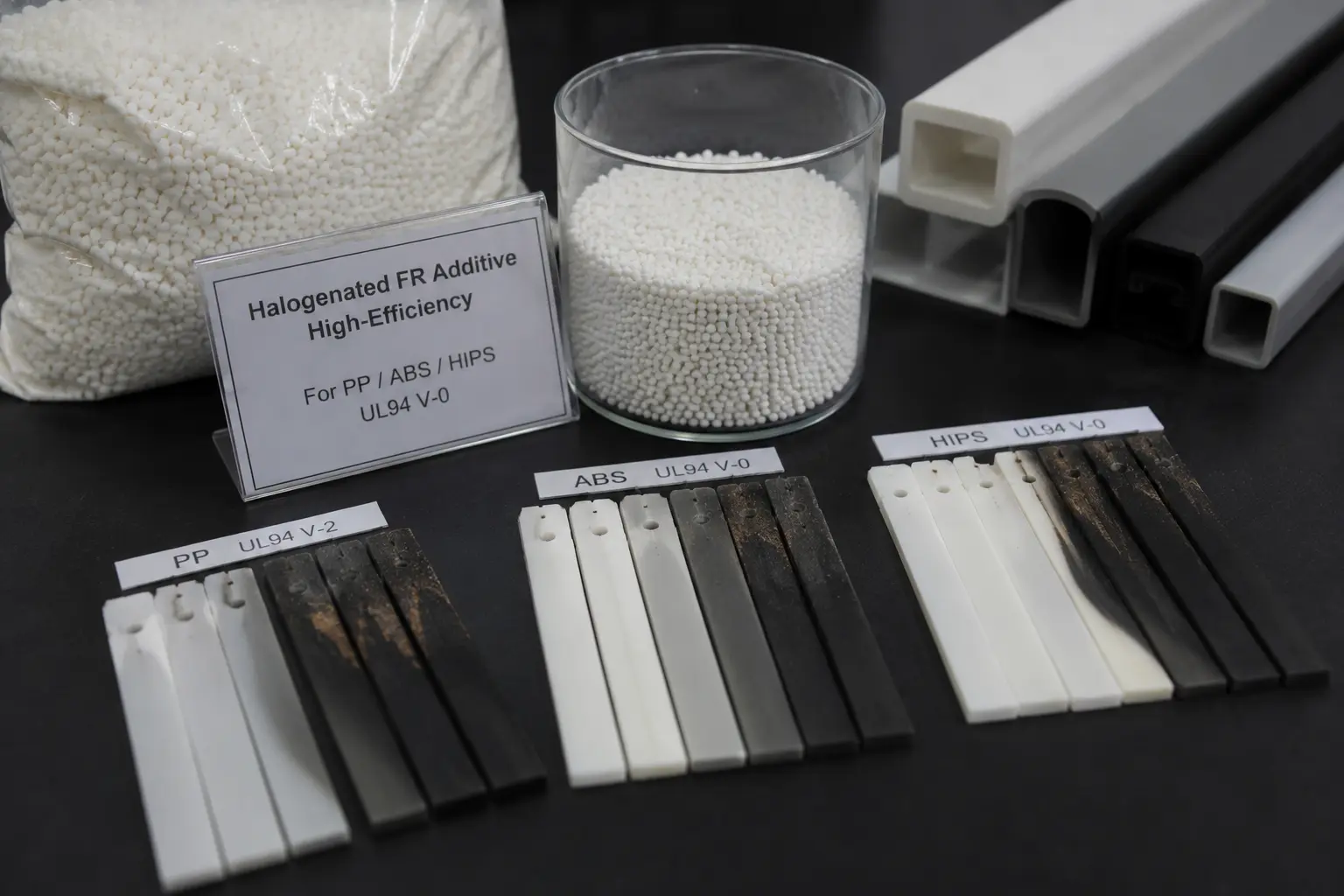
DBDPE brominated flame retardant additive with UL94 test bars Fig. DB01 — brominated additive & UL94 bars

DBDPE-based compound specimens after vertical burn testing.

DBDPE series
Form — powder / synergized package
Goal — V-0 at low loading
Use — PP, PE, HIPS, ABS, PBT, PA
01 / 07Definition

What Is DBDPE?

Decabromodiphenyl ethane is decaBDE’s legal successor: swap the ether oxygen for an ethane bridge and the molecule leaves the PBDE family entirely — keeping the ten bromines and the efficiency, dropping the restriction baggage. That one-atom difference is why the market migrated here.

Role: primary brominated FR, gas-phase action Profile: non-PBDE · non-blooming · UV-stable Forms: powder · pre-synergized package · masterbatch
DB-01

The decaBDE Replacement

Same bromine count and application map as the banned legacy molecule, without PBDE classification — the drop-in path for formulations that had to leave decaBDE behind.

  • Outside RoHS PBDE and EU POPs deca-BDE listings
  • Familiar processing window for converted recipes
  • Monitored under ECHA’s aromatic BFR review
DB-02

High Thermal & UV Stability

Decomposition onset above ~330 °C means DBDPE survives PBT and PA processing where lesser bromine sources gas out — and it resists the UV yellowing that plagued older grades.

  • Suits engineering plastics, not just polyolefins
  • Low bloom — stays in the part, off the surface
  • Color-stable parts, including whites
DB-03

Always a Team Player

Like every bromine source, DBDPE performs with antimony trioxide at roughly 3:1 Br:Sb — and takes zinc borate substitution where antimony cost or scrutiny bites.

  • Pre-synergized packages ready to dose
  • Antimony-lean variants available
  • PTFE anti-drip added for V-0 where needed
02 / 07Mechanism

How DBDPE Works

Classic gas-phase bromine chemistry — the flame is poisoned, not smothered.

D-01

Bromine Release

In the flame zone DBDPE releases bromine species that convert to HBr — timed by its high decomposition onset to match engineering-plastic burn conditions.

D-02

Radical Quenching

HBr scavenges the H• and OH• radicals that drive combustion — the chain reaction stalls and the flame self-extinguishes.

D-03

Antimony Amplification

Antimony trioxide converts the bromine into volatile antimony halides that carry it deeper into the flame — the synergy that reaches V-0 at total loadings mineral systems cannot approach.

03 / 07Applications

Where DBDPE Is Used

Wherever a halogen-tolerant spec wants V-0 at the lowest total loading — from commodity polyolefins to glass-filled engineering plastics.

PolymerTypical DBDPE LoadingPackageKey TargetsRelated Page
PP / PE8–15%+ Sb₂O₃ ~3:1UL94 V-2 / V-0 at low costFR polyethylene guide
HIPS / ABS12–18%+ Sb₂O₃, anti-dripUL94 V-0 @ 1.6 mm, E&E housingsFR ABS
PBT / PA (glass-filled)14–20%+ Sb₂O₃, thermal stabilizersV-0 on GF grades; survives 250–300 °C meltFR PBT guide
Wire & cable (halogen-tolerant)10–18%+ Sb₂O₃ / ZB blendsJacket flame ratings where LSZH is not requiredFR PVC cable guide
Elastomers & TPE10–16%+ Sb₂O₃Industrial parts, halogen-tolerant specs—
04 / 07Comparison

DBDPE vs decaBDE: One Atom, Different Fate

Buyers still ask for “deca” — the answer matters at customs. Same performance class, different molecule, different legal status.

DBDPE (Decabromodiphenyl Ethane)

The compliant workhorse — an ethane bridge keeps it outside the PBDE family.

  • Not a PBDE: outside RoHS PBDE limits and EU POPs deca-BDE listing
  • Higher thermal stability and UV resistance than decaBDE
  • Watch item: within ECHA’s aromatic BFR review scope — monitor for new designs
  • Full brominated examples & banned list →

decaBDE (Decabromodiphenyl Ether)

The banned legacy — an ether link makes it a PBDE, with everything that follows.

  • Restricted under EU POPs; PBDE limit cut to 10 mg/kg (Nov 2025)
  • RoHS-restricted in electronics since 2006 (PBDE class)
  • Legacy stocks and recycled streams are a customs risk — test incoming regrind
  • No compliant path for new formulations
05 / 07Selection

What Decides a DBDPE Package

The molecule is standard; the package around it is where compounds pass or fail — ratio, stabilization, dispersion and drip control are formulation work.

01Host resin & process temp
02UL94 class at your wall
03Br : Sb ratio & antimony-lean target
04Anti-drip requirement (V-0)
05Particle size & dispersion
06Color & UV exposure
07Destination market compliance
08Recycled content policy
09Cost per rated part
06 / 07Manufacturing

DBDPE Supply from Rectivas

We supply DBDPE as powder and as pre-synergized packages — antimony ratio dialed for your resin, anti-drip included where V-0 demands it, antimony-lean variants with zinc borate on request. Every package ships with third-party regulated-substance test reports, because brominated chemistry gets audited.

Forms: powder · synergized package · masterbatch Testing: UL94 screening we arrange · LOI ladders Documents: TDS · SDS · COA · an accredited third-party laboratory RoHS/REACH reports
  • C-01Br : Sb ratio design per resin and wall thickness
  • C-02Antimony-lean packages (zinc borate substitution)
  • C-03Twin-screw loading ladders and burn verification
  • C-04Thermal stabilization for PBT / PA processing
  • C-05Pre-dispersed masterbatch supply
  • C-06Regulated-substance reports per batch (RoHS / REACH)
  • C-07Export packaging and worldwide delivery
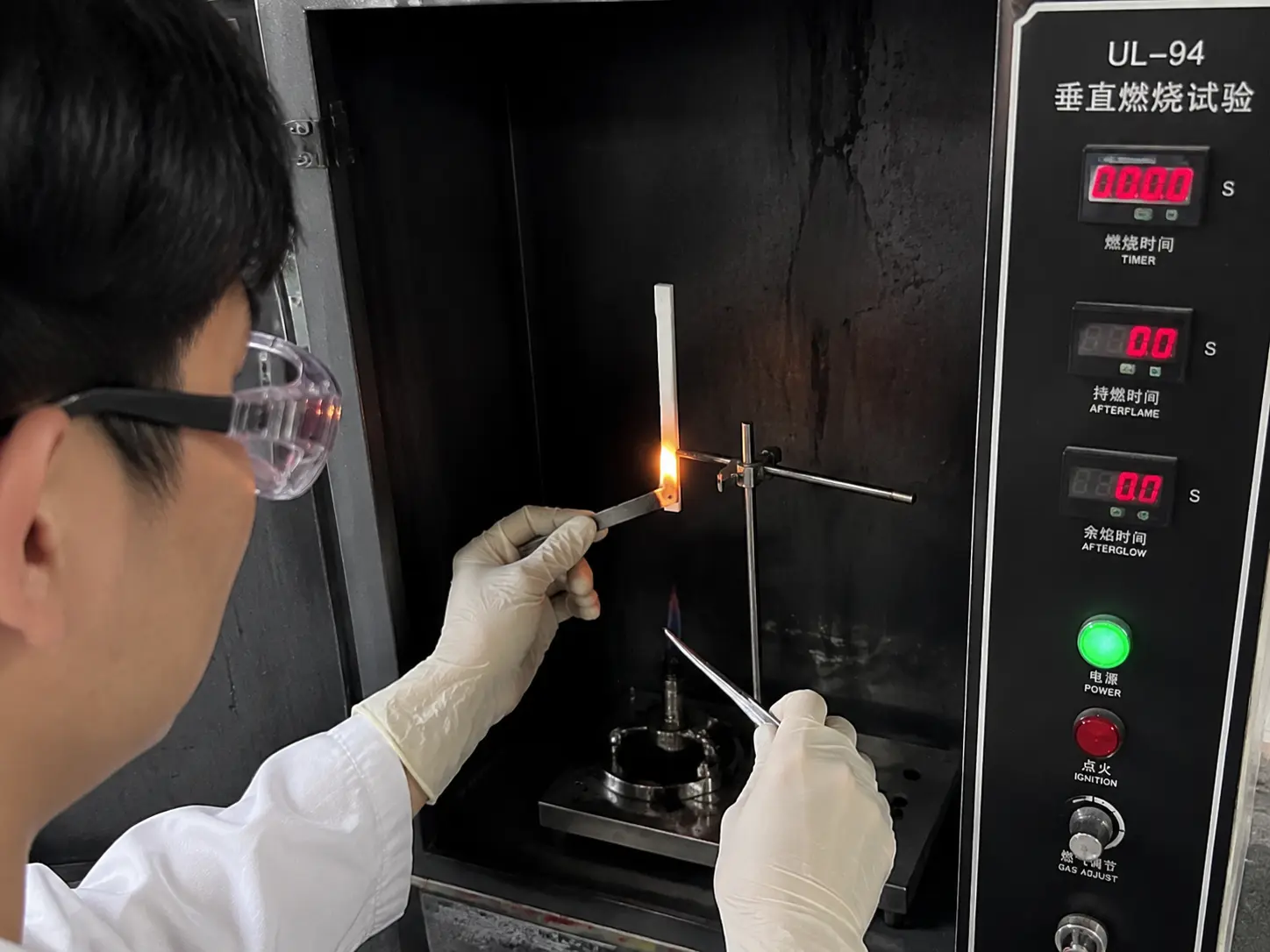
UL94 burn verification of a DBDPE brominated compoundFig. DB02 — burn verification at our partner factory’s labEvery Br:Sb ratio is burn-tested before we quote it.
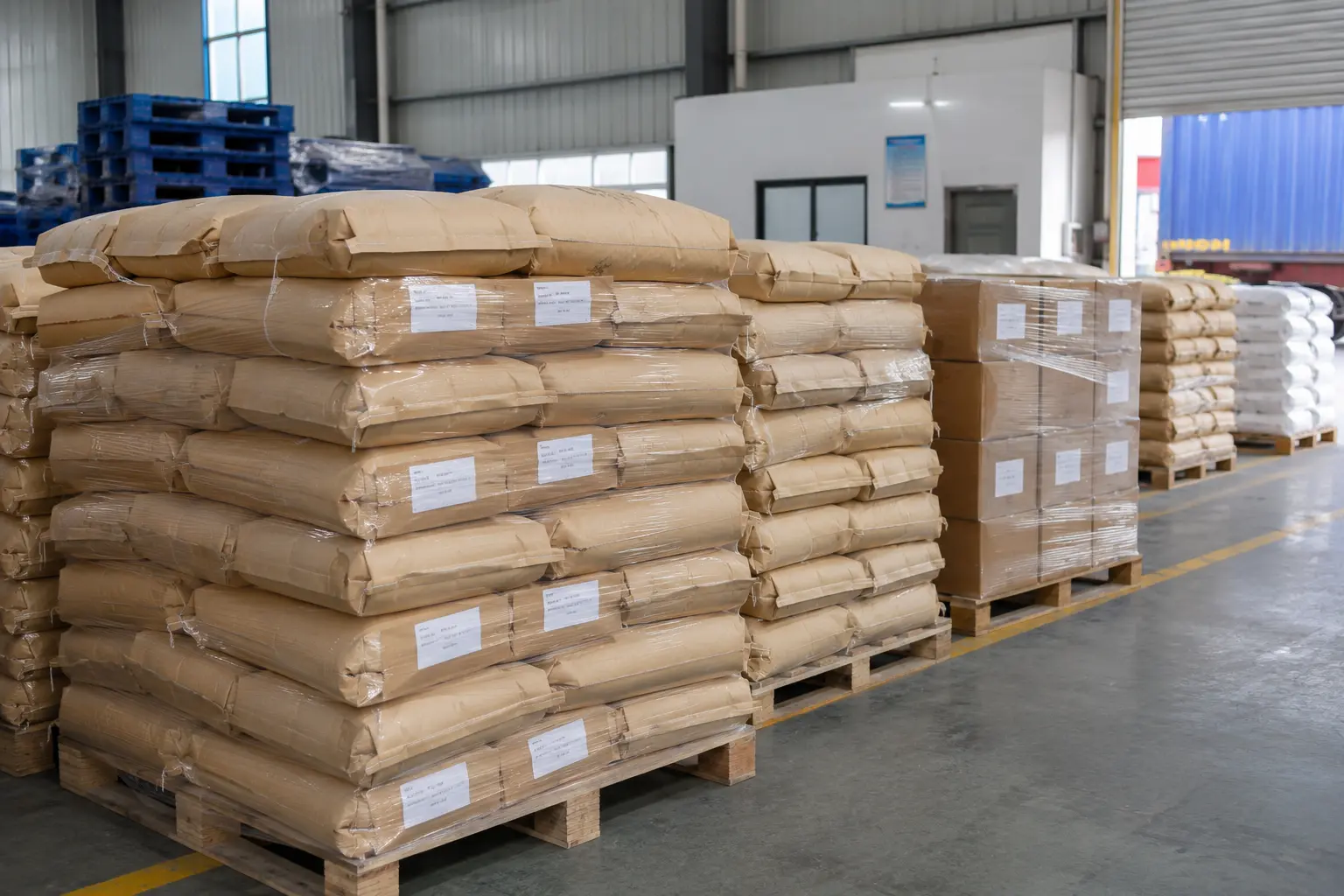
Export packaging of DBDPE flame retardant powderFig. DB03 — export packagingBags, big bags and palletized supply for overseas buyers.

What Decides DBDPE Pricing, and How Long You Can Rely on It

Two questions come up on every DBDPE enquiry: why quotes differ so much, and whether it is still a safe thing to design around. Straight answers to both.

The QuestionThe Answer
Why is that other quote cheaper?Usually bromine content, particle size or whether antimony synergist is included in the comparison. Normalise quotes on active bromine and ask for the particle size distribution before ranking them.
How much antimony do I need with it?The usual bromine-to-antimony ratio is around 3:1. If antimony cost is the problem, zinc borate replaces a large share of it before you consider leaving brominated chemistry at all.
Is DBDPE legal?Yes, and fully RoHS compliant — RoHS restricts only PBB and PBDE. It is the mainstream replacement for banned PBDE grades.
Will it stay legal?This is where we will be blunt. DBDPE is a non-polymeric aromatic additive, which is exactly the profile ECHA is preparing a restriction dossier on. Nothing is prohibited today, but it carries the most regulatory horizon of anything in our range.

What we would advise, depending on your cycle. If your product turns over quickly, DBDPE remains the most cost-effective route to V-0 in ABS and HIPS and the risk is commercial rather than technical. If you carry multi-year certification cycles, get a halogen-free package qualified in parallel now — not to switch today, but so that switching later is a decision rather than an emergency. Any supplier telling you DBDPE has no regulatory horizon is either not reading the files or hoping you are not.

07 / 07FAQ

Buyer Questions About DBDPE

Direct answers for formulators and procurement evaluating decabromodiphenyl ethane before sampling.

What is DBDPE flame retardant?

Decabromodiphenyl ethane — a brominated flame retardant with ~82% bromine, built as the non-PBDE successor to banned decaBDE. An ethane bridge replaces the ether link, taking it out of the PBDE family while keeping the ten-bromine efficiency.

Is DBDPE banned like decaBDE?

No. decaBDE is restricted under RoHS and the EU POPs Regulation as a PBDE; DBDPE is chemically distinct and outside those lists. It does sit within ECHA’s ongoing aromatic-BFR review, so monitor its status when designing long-lifecycle products.

How much DBDPE is needed for UL94 V-0?

Typically 8–15% in polyolefins and 12–20% in styrenics and glass-filled engineering plastics, always with antimony trioxide near a 3:1 Br:Sb ratio and PTFE anti-drip where V-0 requires it. The exact ladder depends on wall thickness — we burn-test before quoting.

DBDPE or brominated polystyrene — which for PA and PBT?

Both serve glass-filled engineering plastics. DBDPE offers the higher bromine content per kilogram; polymeric brominated polystyrene wins where migration resistance and electrical properties lead. We quote both routes with the trade-off math for your part.

Request a DBDPE Recommendation

Send your resin, UL94 class and wall thickness, color/UV requirements and destination market. We will design the Br:Sb package — conventional or antimony-lean — and prove it at our partner factory’s burn lab with the compliance paperwork your customs will ask for. If the number on the quote is what you are really trying to understand, the feedstock behind it is broken down in decabromodiphenyl ethane price.

Include in your inquiryDB-RFQ
  • Host resinPP, PE, HIPS, ABS, PBT, PA or elastomer
  • Target ratingUL94 class at your actual wall thickness
  • Antimony policyConventional 3:1 or antimony-lean package
  • MarketDestination compliance (RoHS / REACH docs)
  • Trial volumeSample quantity and expected annual demand