Rectivas Materials · Flame retardant manufacturer and formulation partner sales@rectivas.com  ·  WhatsApp +86 180 3191 1520

DBDPE Flame Retardant (Decabromodiphenyl Ethane)

The workhorse of modern brominated flame retardancy: ~82% bromine in a molecule built to replace banned decaBDE — same efficiency class, higher thermal and UV stability, and outside the PBDE restriction lists. Supplied as powder and pre-synergized packages with antimony trioxide for PP, PE, HIPS, ABS, PBT, PA and wire & cable.

Bromine content~82%
Thermal stability>330°C onset
SynergistSb₂O₃ ~3:1 · ZB optional
StatusNon-PBDE · RoHS-workable
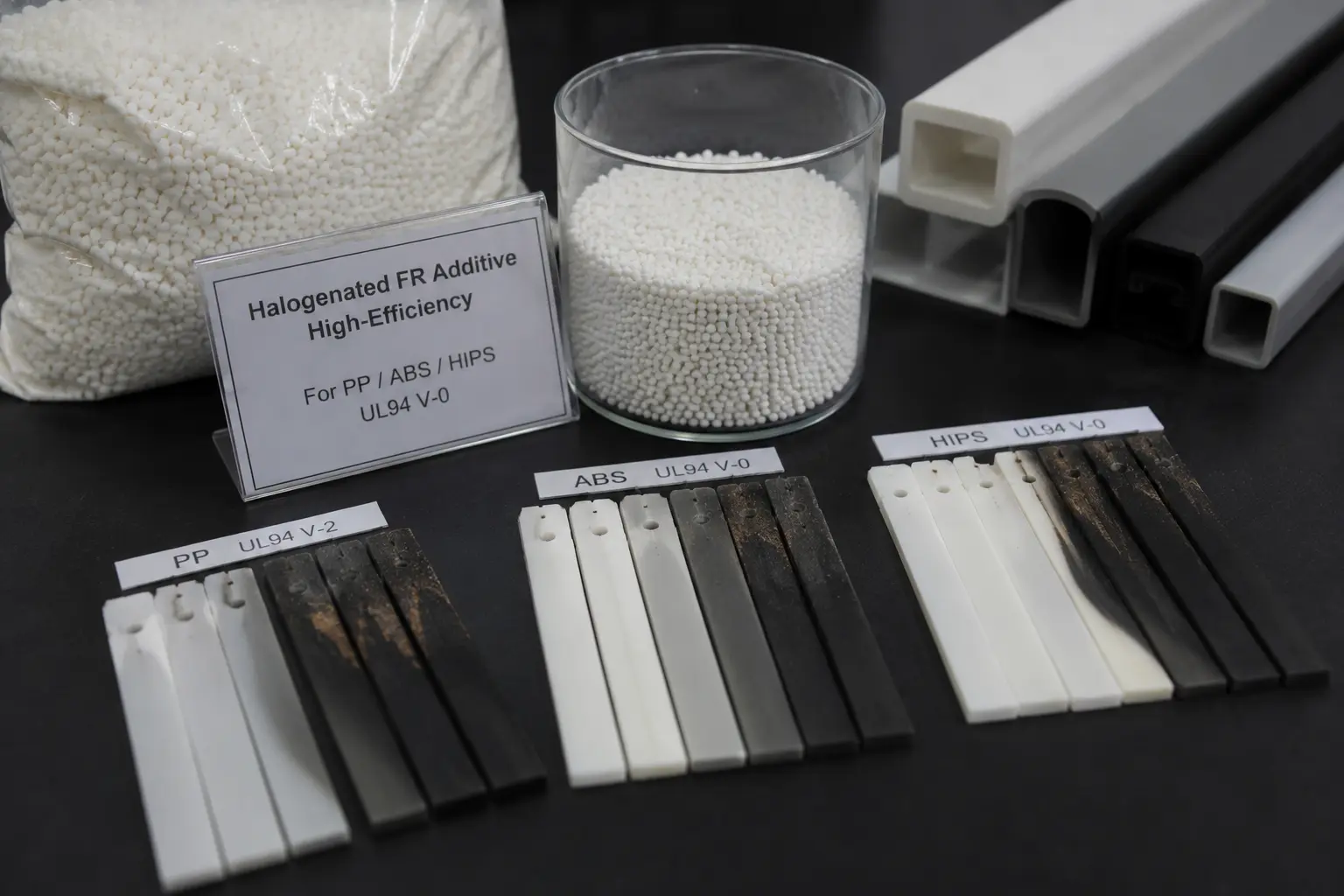
DBDPE brominated flame retardant additive with UL94 test bars Fig. DB01 — brominated additive & UL94 bars

DBDPE-based compound specimens after vertical burn testing.

DBDPE series
Form — powder / synergized package
Goal — V-0 at low loading
Use — PP, PE, HIPS, ABS, PBT, PA
01 / 07Definition

What Is DBDPE?

Decabromodiphenyl ethane is decaBDE’s legal successor: swap the ether oxygen for an ethane bridge and the molecule leaves the PBDE family entirely — keeping the ten bromines and the efficiency, dropping the restriction baggage. That one-atom difference is why the market migrated here.

Role: primary brominated FR, gas-phase action Profile: non-PBDE · non-blooming · UV-stable Forms: powder · pre-synergized package · masterbatch
DB-01

The decaBDE Replacement

Same bromine count and application map as the banned legacy molecule, without PBDE classification — the drop-in path for formulations that had to leave decaBDE behind.

  • Outside RoHS PBDE and EU POPs deca-BDE listings
  • Familiar processing window for converted recipes
  • Monitored under ECHA’s aromatic BFR review
DB-02

High Thermal & UV Stability

Decomposition onset above ~330 °C means DBDPE survives PBT and PA processing where lesser bromine sources gas out — and it resists the UV yellowing that plagued older grades.

  • Suits engineering plastics, not just polyolefins
  • Low bloom — stays in the part, off the surface
  • Color-stable parts, including whites
DB-03

Always a Team Player

Like every bromine source, DBDPE performs with antimony trioxide at roughly 3:1 Br:Sb — and takes zinc borate substitution where antimony cost or scrutiny bites.

  • Pre-synergized packages ready to dose
  • Antimony-lean variants available
  • PTFE anti-drip added for V-0 where needed
02 / 07Mechanism

How DBDPE Works

Classic gas-phase bromine chemistry — the flame is poisoned, not smothered.

D-01

Bromine Release

In the flame zone DBDPE releases bromine species that convert to HBr — timed by its high decomposition onset to match engineering-plastic burn conditions.

D-02

Radical Quenching

HBr scavenges the H• and OH• radicals that drive combustion — the chain reaction stalls and the flame self-extinguishes.

D-03

Antimony Amplification

Antimony trioxide converts the bromine into volatile antimony halides that carry it deeper into the flame — the synergy that reaches V-0 at total loadings mineral systems cannot approach.

03 / 07Applications

Where DBDPE Is Used

Wherever a halogen-tolerant spec wants V-0 at the lowest total loading — from commodity polyolefins to glass-filled engineering plastics.

PolymerTypical DBDPE LoadingPackageKey TargetsRelated Page
PP / PE8–15%+ Sb₂O₃ ~3:1UL94 V-2 / V-0 at low costFR polyethylene guide
HIPS / ABS12–18%+ Sb₂O₃, anti-dripUL94 V-0 @ 1.6 mm, E&E housingsFR ABS
PBT / PA (glass-filled)14–20%+ Sb₂O₃, thermal stabilizersV-0 on GF grades; survives 250–300 °C meltFR PBT guide
Wire & cable (halogen-tolerant)10–18%+ Sb₂O₃ / ZB blendsJacket flame ratings where LSZH is not requiredFR PVC cable guide
Elastomers & TPE10–16%+ Sb₂O₃Industrial parts, halogen-tolerant specs
04 / 07Comparison

DBDPE vs decaBDE: One Atom, Different Fate

Buyers still ask for “deca” — the answer matters at customs. Same performance class, different molecule, different legal status.

DBDPE (Decabromodiphenyl Ethane)

The compliant workhorse — an ethane bridge keeps it outside the PBDE family.

  • Not a PBDE: outside RoHS PBDE limits and EU POPs deca-BDE listing
  • Higher thermal stability and UV resistance than decaBDE
  • Watch item: within ECHA’s aromatic BFR review scope — monitor for new designs
  • Full brominated examples & banned list →

decaBDE (Decabromodiphenyl Ether)

The banned legacy — an ether link makes it a PBDE, with everything that follows.

  • Restricted under EU POPs; PBDE limit cut to 10 mg/kg (Nov 2025)
  • RoHS-restricted in electronics since 2006 (PBDE class)
  • Legacy stocks and recycled streams are a customs risk — test incoming regrind
  • No compliant path for new formulations
05 / 07Selection

What Decides a DBDPE Package

The molecule is standard; the package around it is where compounds pass or fail — ratio, stabilization, dispersion and drip control are formulation work.

01Host resin & process temp
02UL94 class at your wall
03Br : Sb ratio & antimony-lean target
04Anti-drip requirement (V-0)
05Particle size & dispersion
06Color & UV exposure
07Destination market compliance
08Recycled content policy
09Cost per rated part
06 / 07Manufacturing

DBDPE Supply from Rectivas

We supply DBDPE as powder and as pre-synergized packages — antimony ratio dialed for your resin, anti-drip included where V-0 demands it, antimony-lean variants with zinc borate on request. Every package ships with third-party regulated-substance test reports, because brominated chemistry gets audited.

Forms: powder · synergized package · masterbatch Testing: in-house UL94 · LOI ladders Documents: TDS · SDS · COA · CTI (Hebei) RoHS/REACH reports
  • C-01Br : Sb ratio design per resin and wall thickness
  • C-02Antimony-lean packages (zinc borate substitution)
  • C-03Twin-screw loading ladders and burn verification
  • C-04Thermal stabilization for PBT / PA processing
  • C-05Pre-dispersed masterbatch supply
  • C-06Regulated-substance reports per batch (RoHS / REACH)
  • C-07Export packaging and worldwide delivery
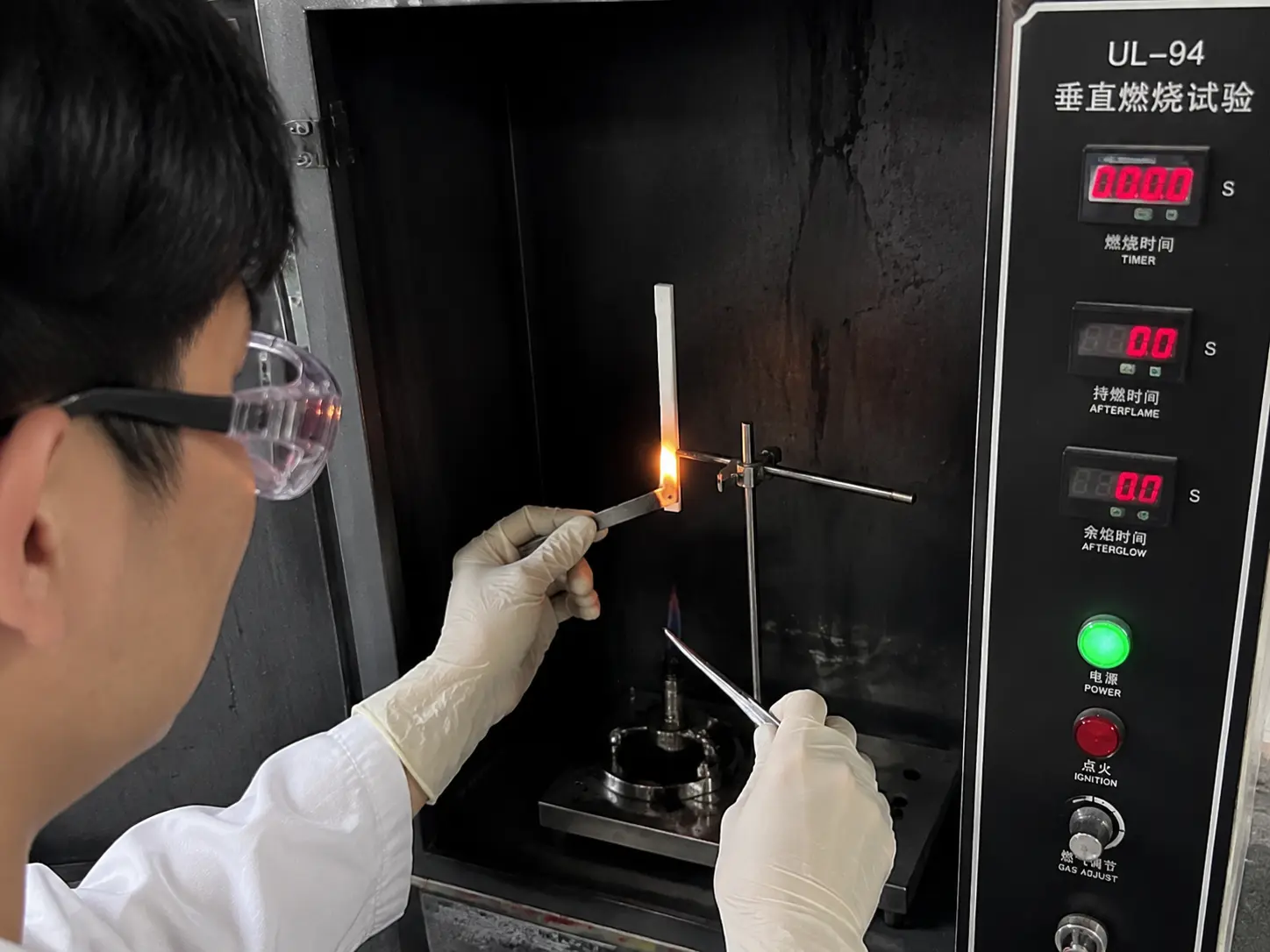
UL94 burn verification of a DBDPE brominated compoundFig. DB02 — burn verification in our labEvery Br:Sb ratio is burn-tested before we quote it.
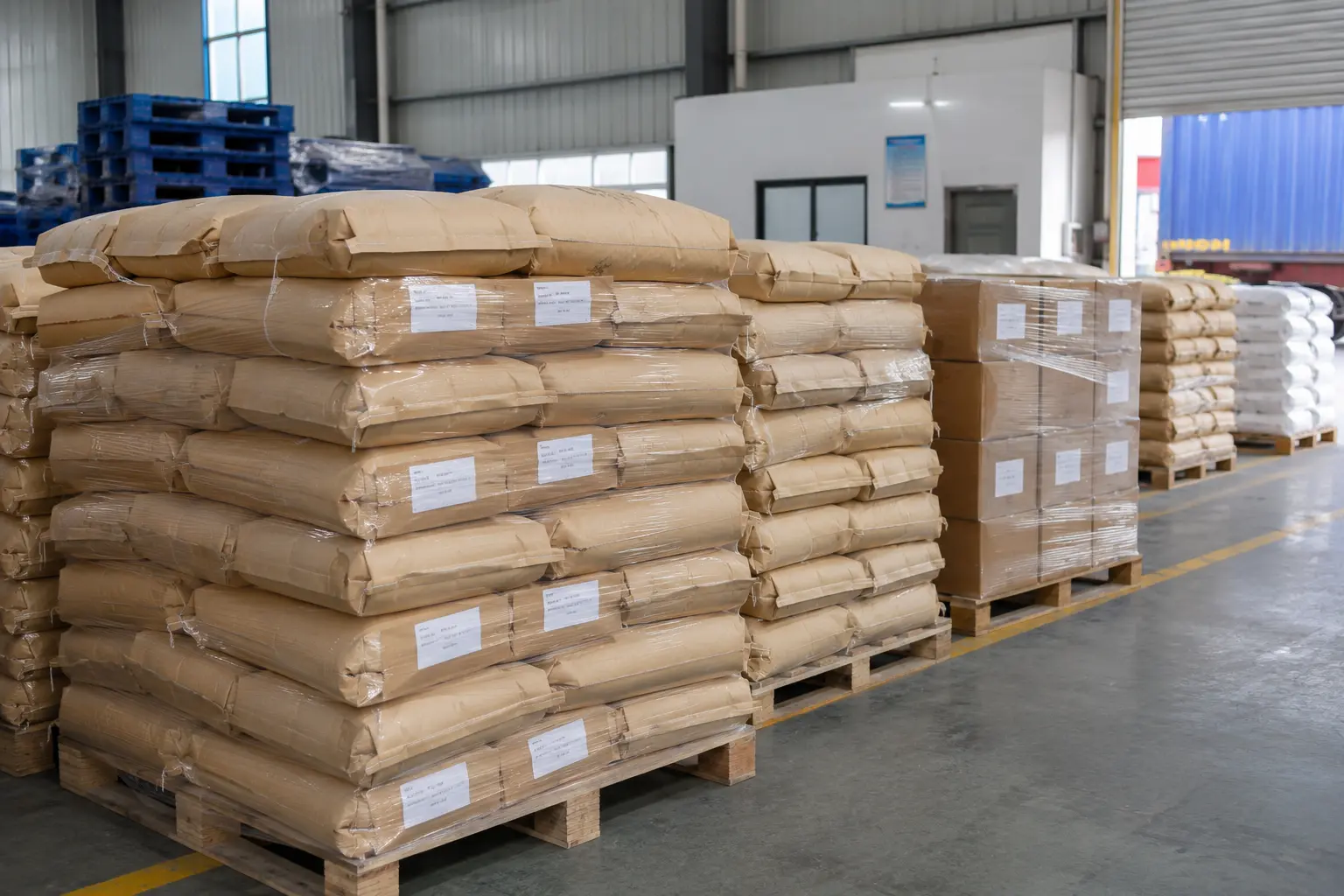
Export packaging of DBDPE flame retardant powderFig. DB03 — export packagingBags, big bags and palletized supply for overseas buyers.
07 / 07FAQ

Buyer Questions About DBDPE

Direct answers for formulators and procurement evaluating decabromodiphenyl ethane before sampling.

What is DBDPE flame retardant?

Decabromodiphenyl ethane — a brominated flame retardant with ~82% bromine, built as the non-PBDE successor to banned decaBDE. An ethane bridge replaces the ether link, taking it out of the PBDE family while keeping the ten-bromine efficiency.

Is DBDPE banned like decaBDE?

No. decaBDE is restricted under RoHS and the EU POPs Regulation as a PBDE; DBDPE is chemically distinct and outside those lists. It does sit within ECHA’s ongoing aromatic-BFR review, so monitor its status when designing long-lifecycle products.

How much DBDPE is needed for UL94 V-0?

Typically 8–15% in polyolefins and 12–20% in styrenics and glass-filled engineering plastics, always with antimony trioxide near a 3:1 Br:Sb ratio and PTFE anti-drip where V-0 requires it. The exact ladder depends on wall thickness — we burn-test before quoting.

DBDPE or brominated polystyrene — which for PA and PBT?

Both serve glass-filled engineering plastics. DBDPE offers the higher bromine content per kilogram; polymeric brominated polystyrene wins where migration resistance and electrical properties lead. We quote both routes with the trade-off math for your part.

Request a DBDPE Recommendation

Send your resin, UL94 class and wall thickness, color/UV requirements and destination market. We will design the Br:Sb package — conventional or antimony-lean — and prove it in our burn lab with the compliance paperwork your customs will ask for.

Include in your inquiryDB-RFQ
  • Host resinPP, PE, HIPS, ABS, PBT, PA or elastomer
  • Target ratingUL94 class at your actual wall thickness
  • Antimony policyConventional 3:1 or antimony-lean package
  • MarketDestination compliance (RoHS / REACH docs)
  • Trial volumeSample quantity and expected annual demand