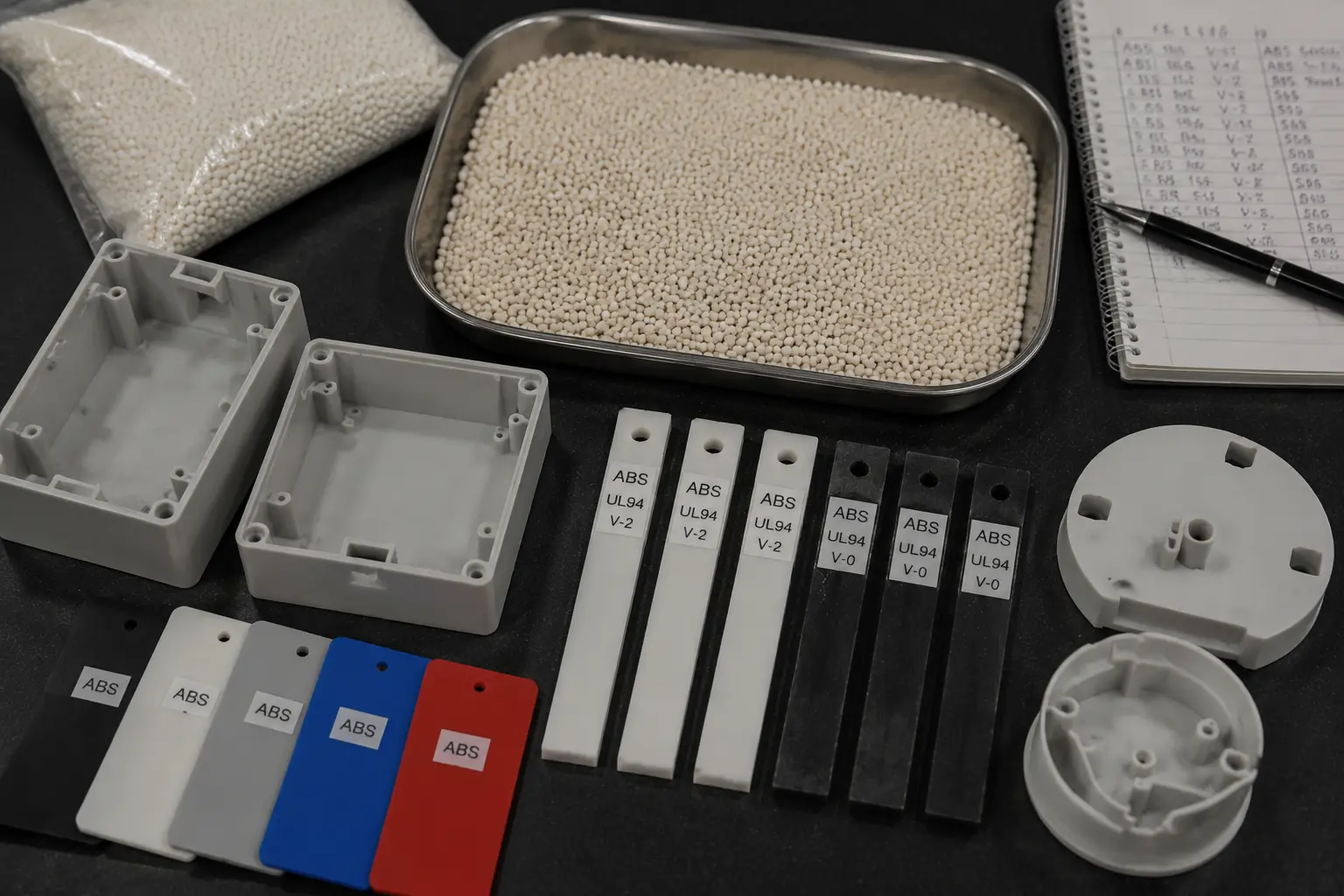
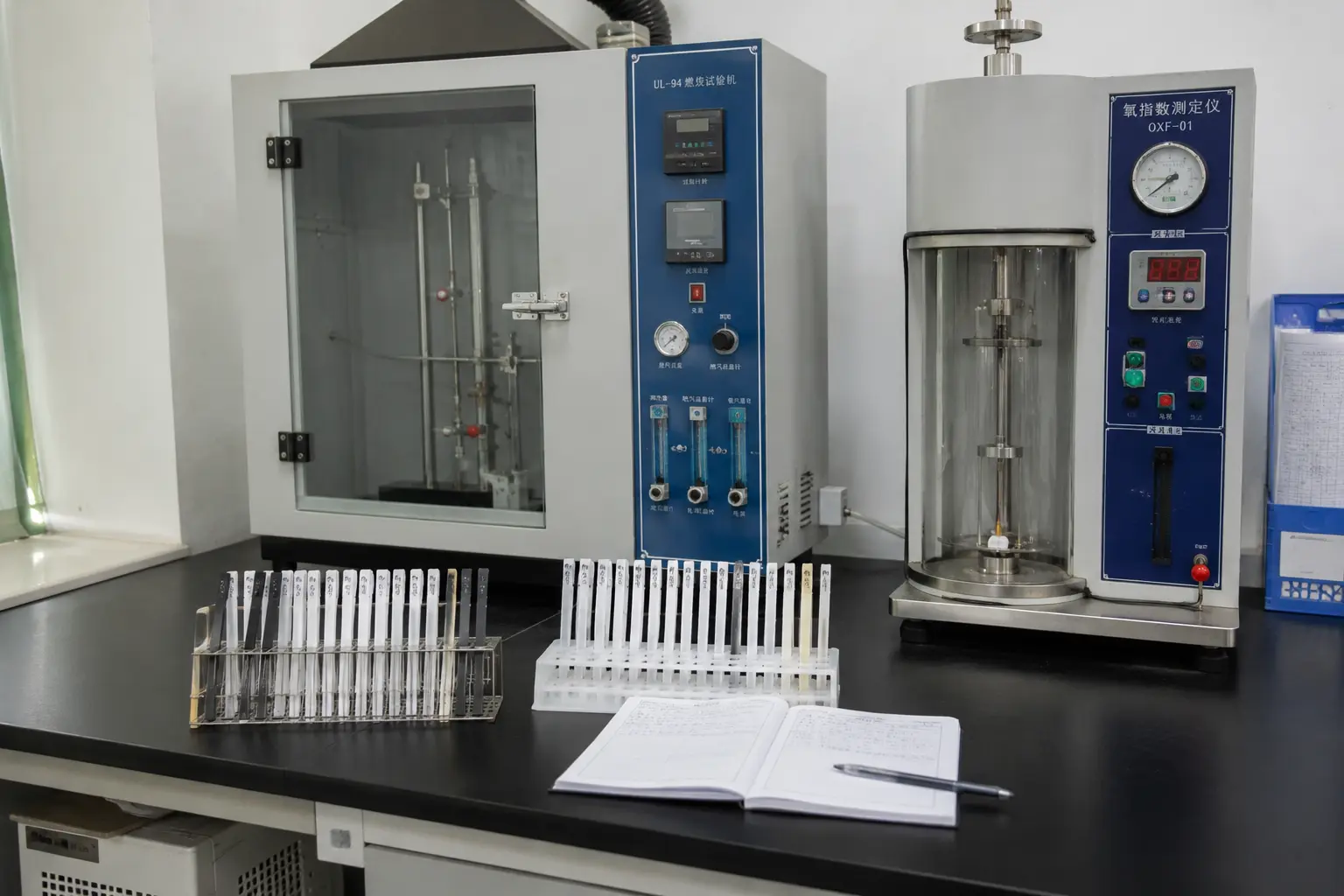
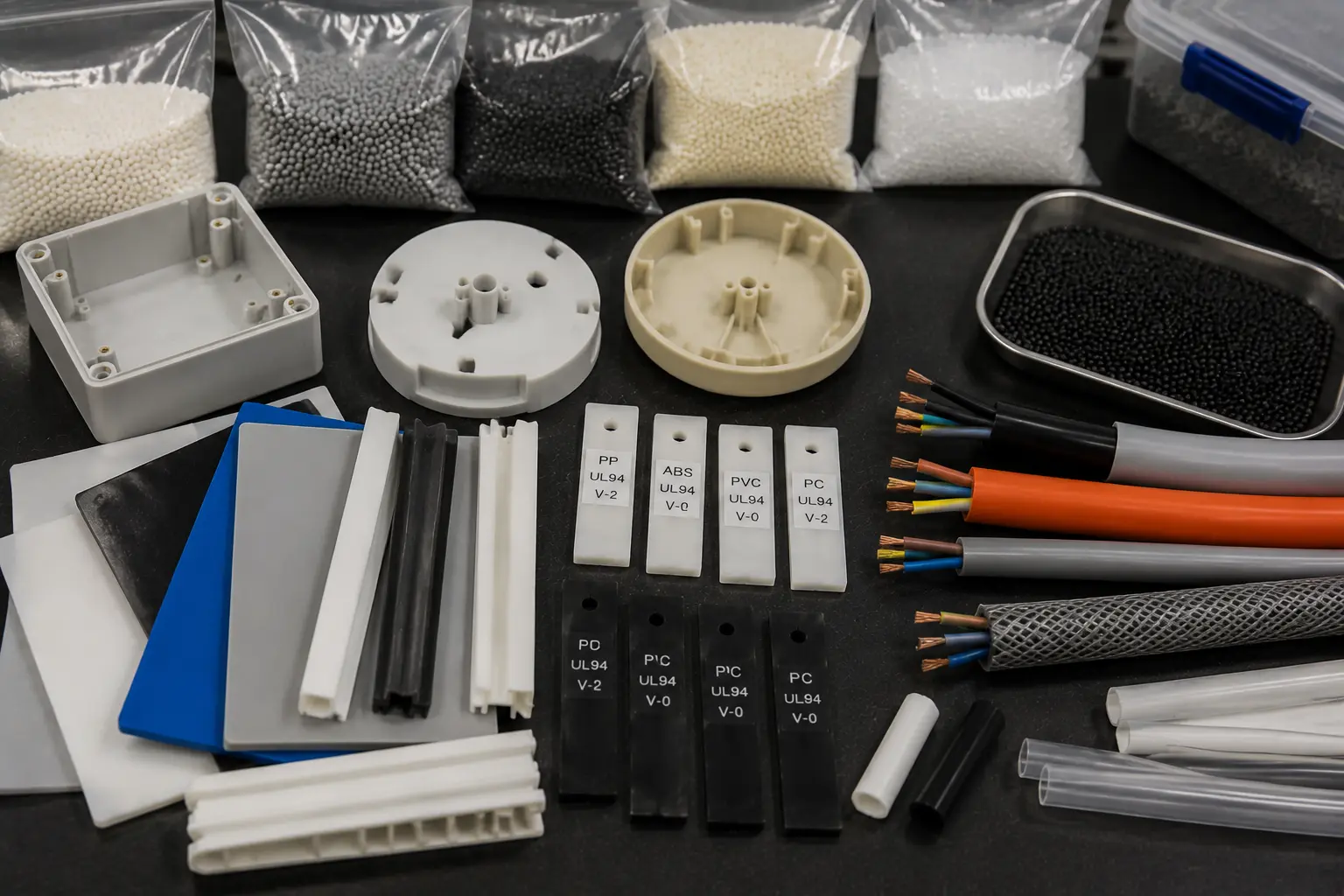
Does a UL94 V-0 rating mean the part will pass glow wire?
No, and assuming it does is a common way to lose a month. UL94 applies a small flame and then takes it away, which rewards gas-phase chemistry that interrupts the flame reaction. The glow wire test presses a hot element against the material and keeps it there — there is no flame to interrupt, so what counts is char formation and thermal stability. Efficient brominated systems often reach V-0 comfortably and still miss GWIT 775 °C. Specify and test the two separately.
Why does a 600 V CTI requirement usually mean halogen-free?
Because tracking is about what the surface leaves behind under voltage and contamination. Brominated packages with antimony trioxide tend to form a conductive carbon path more readily, which typically puts them in PLC 2 or 3. Phosphorus and nitrogen-phosphorus systems track better and are the realistic route to PLC 0 — CTI at or above 600 V, which is also the upper limit of the test method. In electronics, going halogen-free is frequently an electrical decision that happens to also satisfy an environmental policy.
Is “RoHS compliant” the same as “halogen-free”?
No. RoHS restricts two brominated groups, PBB and PBDE. Most brominated flame retardants in current use are fully RoHS compliant, so a RoHS certificate tells you nothing about halogen content. Halogen-free in electronics means IEC 61249-2-21: bromine ≤ 900 ppm, chlorine ≤ 900 ppm, total halogen ≤ 1500 ppm. When an enquiry says “RoHS, halogen-free” we ask which one is the actual requirement, because the answer changes the chemistry and the price.
Which system should I use for glass-filled nylon connectors?
Aluminium diethylphosphinate, in practice. It handles PA66 processing temperatures and supports high CTI. What does not work is melamine cyanurate: it relies on promoting dripping to carry heat away, and glass fibre stops the part dripping, so most of the effect disappears. Reinforced grades also need more flame retardant than unfilled ones, because the fibres wick molten polymer toward the flame.
Do you supply additives, masterbatch or finished compound?
All three. Powder additives if you compound in-house, masterbatch where dosing on the moulding line suits you better, and ready-to-mould compound in our FR-PA6, FR-PA66, FR-PBT, FR-PC, FR-ABS and FR-PPO grades. Above roughly 40–50% additive loading, compound is usually the more sensible route than trying to dose that much on a moulding machine.